Tag Archives: health

Counting Calories and Recovery

numbers

It seems like something that would be counter-productive to suggest, but counting calories is a really important part of recovery – especially during the initial stages. Counting calories is very likely a large part of you or your child’s (or partner’s/sibling’s/friend’s et) eating disorder, so it can seem like madness to say ‘continue doing this’, but hear me out.

Whilst counting calories was used as a way to restrict, it now needs to be used as a way to heal. So we are turning around a negative habit and using it to make sure that the person recovering gets enough energy into their body. Getting enough energy is essential for recovery, and it is likely to be something that proves impossible to do unless someone is counting the calories of the person recovering.

For most people it will be you; the recoverer, that counts. Sometimes it will be parents or partners. Either way, those calories need to be counted because after an eating disorder, people have unreliable hunger cues. The body has gone so long without food that it has repressed the signals, and so it can take a long time for reliable hunger cues to return again and for the body to learn to expect food and give signs as to when it needs it. This can mean that eating can feel like a chore to some. It could mean that you will have no appetite and feel too full, but it is important to ensure that you continue eating adequately regardless. It could mean that you feel really hungry sometimes, but other times have no appetite. Respond to any hunger or cravings that you have, and continue eating enough even when you don’t have an appetite. You may have reliable hunger cues straight away, which would be great and would lead you to eat what you need to eat in order to recover. Responding to mental hunger is also really important. Mental hunger is just another signal from the brain to tell you that you are hungry. All signals come from the brain, and it is crucial to listen. So if you don’t feel the physical signs of hunger but are wanting or craving food, then it is necessary to listen to that signal and respond to it – always.

So how are you going to count calories? I would advise staying away from apps such as MyFitnessPal, as they can be incredibly triggering due to the fact that they try to suggest restrictive amounts to eat, and they are an app focused on weight loss. You could just use a ‘notes’ app and count it up yourself and keep the number on record for the day there, or you could write ‘500’ as many times as adds up to how much you need to eat on a sheet of paper or on a notes app on your phone, and just cross it off every time you reach 500 calories. This can mean that you know you are getting closer to your goal but don’t need to count the number if not thinking of the number helps. If your parents or partner are very involved in your recovery, they could do the counting for you if this is possible and more beneficial for your recovery.

Calorie counting can be triggering for many people, but the alternative of under-eating is much more harmful. Under-eating – which many people in recovery will do due to unreliable hunger cues if they do not count calories or have them counted for them – will mean that the body cannot heal. Mental and physical recovery are interconnected, so if the body is not getting enough energy, this will also impact on mental recovery also. Under-eating means that neither mental nor physical recovery will be able to take place, so counting calories until your hunger is reliable is a necessity. This is one habit that will have to be saved until a bit later to break – which is okay, because there are many habits and thought processes to manage, change, and break, and there has to be something that is saved until last (or later on)!

So you’ve been counting calories for a while and making sure you that you get the energy that your body needs. How do you know when you can stop counting and start going by hunger? When you start feeling like your hunger is happening in a reliable way which is consistent with when you should be eating and how much you should be eating, you can start thinking about testing out that hunger to make sure that it is naturally bringing you to the amount you need. A good way to test how reliable your hunger is, is to write out everything you eat for a week (or two weeks), and then count it up for each day, add it all up to get the total amount, and divide it by seven (or fourteen). The average figure should come to around the amount that is suggested as the minimum for you to eat during your recovery (this is around the amount that you should need forever). If it is three hundred to four hundred calories below that total, then I would really suggest that you continue to count calories as your hunger signals are likely to be unreliable. Most people will naturally and intuitively eat the amount recommended for them, or close to it, as this is the amount that an energy-balanced body needs each and every day. Some people do have hunger that is below or above the average (for example, someone who is expected to need 3000 calories for their age, gender, height, and activity levels could find that they naturally eat 2400, or 3600), and that is absolutely okay. However, if you are eating more than three hundred to four hundred less than what is recommended as adequate, it is more than likely that it is your hunger cues that are unreliable and you still have a little way to go before they are back to normal. If, say, 2400 calories is your normal hunger, eating 3000 for while longer will not have a negative effect on your recovery process, and will not have an impact on your weight. Your body will adapt to deal with the excess energy by putting it to good use (e.g. to continue repairing your body) or the metabolism will speed up to burn it off. (As a side note, when you are adding up your calories for those tester seven days, if one day has a really low amount, and another a higher amount, for example, 1000 calories one day and 4500 the next, this is a sign of unreliable hunger cues, even if the average does come to around the amount suggested for you. As a second side note, if you are consistently eating well above and beyond the minimum you require for recovery, your hunger cues are working and you are experiencing extreme hunger or higher energy needs still, which is totally normal for recovery).

So let’s say your hunger cues seemed reliable, and testing this out has shown that they are, now what? You can start trying to eat intuitively, but you will need to keep reassessing yourself to make sure your eating disorder is not sneaking in and manipulating the situation. It is important that you eat what you want, when you want, and don’t let the anxiety of stopping calorie counting come out in other ways, such as restricting certain foods types or resisting eating something you want because you are worried you are eating more now you have stopped counting. It is going to make you feel more out of control, but it is important to continue onwards, and not use any other behaviours.

But how do you go about stopping counting calories? Calorie counting is a hard habit to break. It can become so ingrained in you that it can happen even without consciously thinking. There will be different things that work for different people, but here is a list I put together with some suggestions about how to stop counting:

  1. Get yourself and your family to put labels over the calorie amounts on packets etc. This can deter you from looking and also remind you when out of habit you try to check that your goal is to not look and not to count.
  2. Get your family to serve you at dinner time, to challenge skewed perceptions of portion sizes, and to learn to relinquish control over amounts.
  3. Stop measuring foods or liquids.
  4. Eat intuitively for one day (or even one meal). In a week or so, try doing it for two days (or meals). Work your way up until you can ditch the habit altogether.
  5. Visit cafes, restaurants, cinemas, and other places that are uncaloried to get you used to eating meals where you don’t know the calories to face that anxiety and start to overcome it. You can then start trying to do this at home and challenging yourself there.
  6. Listen to your body and its signals (this is also something you should start doing as soon as you get into recovery, even when you are counting calories). Follow your body and tune in to what it is telling you, rather than going by calories you’ve already eaten today or any other calorie “rules” you are sticking by. Start learning to listen to mental and physical hunger, and also learn that you can also eat when you are not hungry if you fancy it.

There are only six suggestions here, and there will be countless other things that can help. If you have any tips that helped you or someone you know, write them in the comments below so that others can benefit from it too!

Counting calories and not counting calories are both big parts of the recovery process, and both relevant at different stages in your journey. Again, make sure that you are not using compensatory behaviours when you start trying to eat intuitively and stop counting calories, such as eating smaller portions, cutting out calorie dense foods, or not drinking liquid calories, out of anxiety. Learning to eat intuitively without compensating due to anxiety is a big part of recovery. You need to learn to eat what you want, when you want, without letting your ED get on the stage with you. Make sure it is not running the show, or even making compromises with you. It doesn’t have a place in the life that you are creating for yourself. This life is yours, and yours only.

Eating Disorders and Willpower: An Absurd Association

will power

Willpower. It’s something that we associate with strength. It is something that we admire in others, and it’s something we want for ourselves. And in this day and age, it is problematically associated with dieting and weight loss. The association even extends to restrictive eating disorders. I want to tell you how wrong it is to think that the two are synonymous.

I want to firstly consult the dictionary. Let’s take a look at the definition of “will”:

Will
noun

1. the faculty by which a person decides on and initiates action.
“she has an iron will”
synonyms: determination, firmness of purpose, fixity of purpose, will power, strength of character, resolution, resolve, resoluteness, purposefulness, single-mindedness, drive, commitment, dedication, doggedness, tenacity, tenaciousness, staying power, backbone, spine; More
2. control deliberately exerted to do something or to restrain one’s own impulses.
noun: willpower
“a stupendous effort of will”

A person with an eating disorder does not decide to have one. They do not have any power or control when developing or having an active eating disorder. They do not initiate action: the eating disorder does. They have no say in the matter whatsoever. So using “will” in the context of eating disorders is absurd.
Let’s also have a look at the definition of willpower itself:

noun
1. control of one’s impulses and actions; self-control.

Again, there is no control when it comes to an eating disorder. There is certainly no self-control. In actuality, it is the opposite that is true: someone with an eating disorder is completely out of control. They are not deciding to abstain from food or drink. They are not deciding to compulsively exercise. They are not deciding to vomit their meals into toilets and trash cans. They have no control over their ever dwindling intake, the inability to eat ice cream, or the ten miles they feel they must run. The severe mental illness that they are suffering from is running the show, not the person with the illness. Eating disorders are not a choice, and to insinuate that someone with an eating disorder has willpower is to insinuate that they have a choice.

You might be someone who has previously considered an eating disorder to be a choice, and are looking for an explanation of how it is not. Let me first stress: eating disorders have a genetic link. This means that if you do not have the genes to develop an eating disorder, then you will not develop one. If you have the eating disorder gene (which is being researched: the specific gene has not been identified as of yet, and it is most likely a combination of genes, not just one) then it is possible to go through life without triggering it into action. However, if environmental factors trigger the gene (and the triggers are plentiful: dieting, bullying, death of a loved one, abuse, parents divorcing, illness, fasting – you see how these can be both emotional or physical triggers), then you will develop an eating disorder. Genetics load the gun, environment pulls the trigger, the saying goes. So genetics have an important part to play in the development of an eating disorder, and you don’t get to choose your genes.

Here are some examples of how it works inside the mind: if you had to choose between eating a highly restrictive amount of calories and living with aching hunger, or feeling like tearing your own skin off, would you comply with your eating disorder or your hunger? If you had to choose between exercising until you felt like you might vomit and pass out or feeling so disgusting in your body that you would consider killing yourself, what choice would you make? If you had to choose between not eating a slice of pizza that you desperately crave or feeling like such a failure that you punished yourself by cutting you body multiple times in multiple places, what would you choose? And when you see those options, does it really look like much of a choice any more? Each option is torturous and punishing, but one always gets you closer to the goal of losing more weight, or at least attempting to. You’ll feel better when your body is perfect, the eating disorder says. You’ll feel better if you barely eat. You will be more in control, it lies, and there are so many lies it will tell to keep you from fighting against it. 

The more the illness pervades the mind and the sufferer responds to the eating disorder, the more things like food and weight become a source of anxiety. Each time you respond to the voice telling you not to eat or you will feel something unbearable, the more the message in reinforced in the brain. You see, when you avoid something that makes you anxious, the more the brain is told that it is something to be anxious of because it is being avoided, and the more anxious you become of it. Another sneaky way the eating disorder survives is to completely distort the perception of the sufferer, so that their body looks to them to be completely different to what anyone else sees, and in a lot of cases, the thinner they become, the fatter they feel. This way the eating disorder continues to dictate the actions and thoughts of its host (and yes, that is what you feel like: just a host to a demon that is making you diminish in size inside and outside day by day).

I could go on, but let’s get back to willpower.

Meghan Trainor caused uproar with her incomprehensible comment about her apparent lack of willpower to “go anorexic”.

I wasn’t strong enough to have an eating disorder. I tried to go anorexic for a good three hours. I ate ice and celery, but that’s not even anorexic. And I quit. I was like, ‘Ma, can you make me a sandwich? Like, immediately.’

Her comment is one of such extreme ignorance that it makes my blood boil. For one, strength doesn’t come into eating disorders. Strength is something of value. It is a brilliantly positive trait to have; something you use in the face of hardship; to get through something or to defeat it. It is something that you use to fight and beat an eating disorder, not something you use to continue its existence. It does not take strength to have an eating disorder: it takes sickness and misery and intense self-hatred. It takes strength to recover. Secondly, you cannot “try to go anorexic for a good three hours”. Anorexia is first and foremost a mental illness (like all other eating disorders), not something that you can just “try” and then stop because you get a bit too hungry. “Trying” is not part of an eating disorder. You would never in a million years “try” to have an eating disorder if you understood what it entailed. It’s not about having the willpower to “go anorexic”. Any eating disorder is a disease that creeps up on you and slowly invades your mind bit by bit until it has wormed its way into every part of it, and then suddenly you realise that you are drowning in it and there is no conceivable way out. You don’t just “go anorexic” for three hours and then choose to stop. Need I say it again: there is no choice. And no, funnily enough eating ice and celery for three hours only does not mean you have a serious and deadly disease.

Willpower is inextricably linked to choice, and we know that eating disorders are not a choice, so the two cannot be thought of in conjunction with each other. Ever. To talk about eating disorders requiring willpower undermines the helplessness and hopelessness that someone feels whilst being under the control of such a powerful and deadly disease. To talk about eating disorders requiring willpower – a positive trait we all want – undermines the sheer anguish and torment someone suffering from one has to experience every second of every day. To say eating disorders require willpower is to inadvertently say that there is something that tortured person has that you admire. You are looking into eyes full of pain and saying, “I want what you have.

Willpower is a positive thing. Having an eating disorder is a living hell. Willpower is strength and control. Living with an eating disorder is being crushed under a dictator that ultimately wants you dead and feeling unable to do anything but obey and walk knowingly into the jaws of death. Willpower is willpower and eating disorders are eating disorders. Let’s not mix up the two.

Vyvanse and BED: Money-making in Disguise as Treatment?

vyvanse pic

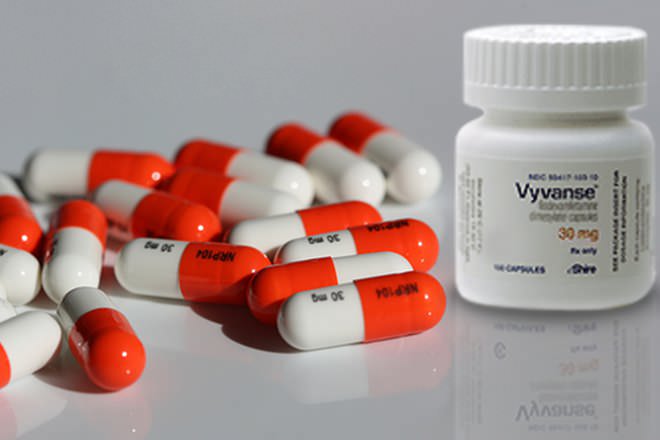
Fairly recently, Vyvanse – a drug known for treating ADHD – was approved to treat binge eating disorder (BED). I was first made aware of this drug via a message sent to my blog from a woman living in the US who was angry about the effects this could potentially have on people who were prescribed it. I did a bit of reading up about it, but soon forgot about it. The topic came up again when a friend linked me to an article about the drug being used for treating BED, which I read, and my interest was piqued. I started thinking about the problems that would arise from it’s approval to treat BED that are both numerous and highly concerning.

In May 2013, the DSM-V was published, with BED being newly recognised as a psychiatric disorder. On the surface, this sounds great: sufferers of BED were finally being recognised and validated, but a further look into this and the subsequent approval of Vyvanse to treat it raises some serious questions.

In a society where almost two in five (37%) women and one in six (18%) men in the UK are dieting “most of the time”, and 108 million people are on diets in the US, a huge amount of us are restricting on a daily basis, and when we “fail”, we feel shame, guilt, hopeless, and anger at ourselves. And failing is inevitable, because diets do not work. Dieters often end up in a restriction/binge cycle, and mistake their dieting for normal behaviour, and so only take note of their binging and see this as a weakness rather than a normal biological response to starving the body. If the body has an energy deficit due to restriction, it will seek to restore balance by compensating later on. So with that in mind, we can now look at the criteria for BED:

  • Recurrent episodes of binge eating. An episode of binge eating is characterized by both of the following:
    • eating, in a discrete period of time (for example, within any 2-hour period), an amount of food that is definitely larger than most people would eat in a similar period of time under similar circumstances
    • a sense of lack of control over eating during the episode (for example, a feeling that one cannot stop eating or control what or how much one is eating)
  • The binge-eating episodes are associated with three (or more) of the following:
    • eating much more rapidly than normal
    • eating until feeling uncomfortably full
    • eating large amounts of food when not feeling physically hungry
    • eating alone because of feeling embarrassed by how much one is eating
    • feeling disgusted with oneself, depressed, or very guilty afterwards
  • Marked distress regarding binge eating is present.
  • The binge eating occurs, on average, at least once a week for three months.
  • The binge eating is not associated with the recurrent use of inappropriate compensatory behavior (for example, purging) and does not occur exclusively during the course Anorexia Nervosa, Bulimia Nervosa, or Avoidant/Restrictive Food Intake Disorder.

For me, this criteria is extremely problematic. This criteria is pretty vague, and in conjunction with a society that vehemently fears over-eating and weight gain, becomes a fit for a large proportion of people. Let’s take a look at it in more detail:
– “an amount of food that is definitely larger than most people would eat in a similar period of time under similar circumstances” – this is particularly non-specific, and in our society, many people have a distorted view on what is larger than most people, especially when so many are restricting. It is also normal for someone who has been restricting to experience eating more than normal, because of the body trying to restore itself to being energy-balanced.
– “a sense of lack of control over eating during the episode” – many people feel out of control when it comes to food because we are made to feel that out of control if we are not eating in some strict and regimented way. That feeling is even more accentuated when the drive to survive overcomes the person’s desire to diet, and the body makes up for lost energy by “binging”.
– Eating rapidly is also part of the drive to get energy in as fast as possible when it needs it.
– Eating until uncomfortably full is easy to do when the body requires more energy than the stomach has room. The desire for food is just another way for the body to communicate hunger, and people often do not recognise this as a type of physical hunger (the brain is part of our physical being as well).
– Eating alone when eating what someone considers more than normal, or when someone is experiencing reactive eating in response to restriction, is – unfortunately – normal because of the way our society has surrounded food in a thick layer of shame.
– And if you are dieting, or misinterpreting your eating as a “binge” (because I would argue that many people have a distorted view of what a binge actually is), this is likely to happen “at least once a week for three months”.

“With these diagnostic criteria [for BED], there is huge potential for a false positive. Do a lot of people struggle with binge-eating? Absolutely. Are all of these people actually ill? That is the major question around this diagnosis and the Vyvanse treatment,” said Lisa Cosgrove, a professor and clinical Psychologist at the University of Massachusetts, Boston.

So what we have here is a list of things that those with BED suffer from, but written in a way that it could easily fit someone misinterpreting their eating habits because they have distorted ideas of what binging is, or are not aware of the effects that dieting has on the body. This means that these people could go to the doctors, tick all the boxes, and receive a diagnosis. Our fatphobic society steeped in diet culture would have no problem with that. A quote from Ray Moyniham in  Motherboard talks about this:

“You have to be extremely sensitive to the fact that there are people who are really suffering severe and debilitating symptoms from a condition,” said Ray Moynihan, a senior research fellow at Bond University in Australia and the author of Selling Sickness: How the World’s Biggest Pharmaceutical Companies Are Turning Us All Into Patients. “But when we put so much energy into medicalizing normality, it takes resources and attention and care away from people who are seriously ill.”

Now on to June 2014, where Shire wins the key patent ruling for the drug Vyvanse. The Telegraph writes:

Shire hopes to increase sales of the drug by broadening its uses into other patient groups, such as very young children and sufferers of the newly-recognised psychiatric problem binge-eating disorder (BED).
The drug maker told investors on Monday that it expected to make $300m from sales of Vyvanse to BED patients by 2020, following a successful clinical trial showing the drug helped control binge eating.

This raises a red flag for me: Shire will desperately want to make as much money as possible before its patent expires, and this means expanding its treatment to those with other illnesses other than ADHD. Shire had already thought of BED as an option, and already had that idea in the pipeline. Is the fact that BED was finally recognised and put into the DSM-V just when Shire needed a new illness to treat a convenient coincidence, or something more dubious?

In January 2015, Vyvanse was approved to treat BED. The fairly vague criteria for BED could mean that BED is over-diagnosed and over treated, with a drug that is an amphetamine. Hang on, what?

Amphetamines became extremely popular in the mid 1900s as a weightloss drug, before concerns about the dangerous side effects caused the FDA to ban amphetamines from diet ads.

The most serious risks include psychiatric problems and heart complications, including sudden death in people who have heart problems or heart defects, and stroke and heart attack in adults. Central nervous system stimulants, like Vyvanse, may cause psychotic or manic symptoms, such as hallucinations, delusional thinking, or mania, even in individuals without a prior history of psychotic illness. The most common side effects reported by people taking Vyvanse in the clinical trials included dry mouth, sleeplessness (insomnia), increased heart rate, jittery feelings, constipation, and anxiety. – take from here.

Vyvanse was approved for treating BED after only two 12-week studies.

“I tried (and failed) to persuade the DSM 5 group that BED was a premature and dangerous idea precisely because I feared it would be a backdoor excuse for drug companies to promote stimulant diet pills,” Dr. Frances Allen, a psychiatrist and frequent critic of the DSM-5, told Motherboard in an email. He has had particular concerns about the new criteria for diagnosing eating disorders. “The rushed approval of Vyvanse realizes my worst fears”

People actually suffering from BED are desperate to get rid of their mental illness, but therein lies the issue: BED is a mental illness. I have severe reservations about an appetite suppressant being used to combat an eating disorder that for a lot of people has roots in trauma, and other deep-seated emotional problems. The appetite of that person isn’t the issue: the drive to eat as a coping mechanism is. And not only are we going to be dealing with actual sufferers, but those misdiagnosed because of the ill-defined criteria, and those faking the illness to get a hold of Vyvanse, either because of its street value, or because of its use as a weightloss drug. Which brings me to the dangers of those with restrictive eating disorders reeling off the list of BED symptoms, and getting a prescription of Vyvanse to continue their downward spiral that only leads closer and closer to death. Because a binge eating disorder diagnosis relies on self-reported behaviour, it means that it is not difficult to fake, and consequently, it is not difficult to get a diagnosis. Pro-ana sites are already sharing their experiences with Vyvanse, and tips on how to get hold of the drug. The consequences of this could be catastrophic.

I received a message to my blog recently when the subject of Vyvanse came up:

I was recently diagnosed with BED and prescribed Vyvanse. My psychiatrist gave it to me because he said I was gaining too much weight. He gave it to me to use as a weightless pill. I don’t think that’s okay. In the past I have suffered from anorexia and bulimia. So of course, I accepted the pill. Hoping it would be easier to not eat at all. I think this may be a problem for a lot of people very soon.

This shows that already Vyvanse is being misused by doctors themselves, who are supposed to be people that we trust with our healthcare. But with the pharmaceutical industry being all about the money-making, it’s hardly surprising.

In my opinion, the inclusion of BED in the DSM-V, the vague diagnosis criteria, the subsequent research into using Vyvanse to treat BED, and the swift approval of that usage, are linked together. The pharmaceutical company have helped themselves to make more profit off both those with BED, and so many without it, with a drug that in my opinion will not successfully treat the disorder it has been approved for. And this drug is likely to have devastating consequences.

Celebrating Three Years Since Choosing Recovery

3 years 5

TRIGGER WARNING – this post shows images of my body during my eating disorder, as well as images of my recovered body*. Please do not look at this article if these are images that are likely to trigger you.

In the last three years (and a bit), I have come further than I ever thought I would. Just over three years ago I was a suicidal, starved, insane mess of a human being. I was throwing glasses across the room in anger because my partner at the time had turned around my horrible self-reminders not to eat that I had plastered around the house, and had instead written lovely messages on the backs on them. Just over three years ago I was screaming at him because he put a dash of milk in the scrambled eggs. I had intense urges to eat food off the ground because my body was so hungry. Each day was all about filling out the time until I was “allowed” my next measly portion of food. My life revolved around the number on the scales. Everything I did was for that number to decrease. I walked around with my brain feeling foggy, my body weak, and put it through intense and draining physical exercise anyway. I was a walking corpse. I wasn’t alive. I was merely existing.

It took me a couple of months of uhmming and aahing to really choose recovery. I was uncertain. I was scared. I was in denial about having to gain weight in order to be healthy and happy. But eventually I got there. Gradually I solidified my decision, and I although I had ups and downs (understatement of the year), I never really looked back. I had many, many, many moments where I said to myself “I’m done! I’m going to relapse!” but I would cry it out and keep on going anyway.

tumblr_mztsy5ii2G1qcy3b7o1_500

A year into my recovery, I made the photo above. If you know me and my blog, you’ve probably seen it before (and I posted it on another post on this website too). The hollow, unfocused, red-ringed eyes had been replaced by bright, shiny ones. My grey, matte skin now glowed. My smile didn’t seem stretched, and the happiness showed upon my whole face, rather than looking tired and empty. I love the comparisons. It always shocks me, and it always reminds me how terrible I looked then and how healthy I look now. It always reminds me of how far I have come.

3 years 3

My hair is shiny and soft now, not falling out, and not desert dry. After two or so years in recovery, it suddenly grew really fast and is now really long and I love it. I now engage in the world: my senses aren’t dulled due to starvation, and I take in what is around me. I am fully present when conversing with friends and thoughts of my body don’t cross my mind when I am with them, when before I was utterly distracted by how my body looked in that moment. I feel strong, rather than feeling like I am going to pass out at any moment. I feel like I am really in the world, rather than miserable and alone in my own harrowing personal nightmare.
dani and sarah
During recovery, my personality that had been smothered by my eating disorder emerged, stronger than before. During the first two years of my two and a half years in recovery, I grew more than I had ever done in my life. I established who I was and what was important to me. I developed hobbies and interests that I had never had before, whilst regaining my love of old ones. With help from feminism and the body positivity movement, I felt empowered and impassioned. I found my drive and my purpose, and I established my worth as a person inside my own head. In simple words, I now feel solid. I feel strong.

3 years 2

My eating disorder starved me. I lost myself, not just my weight. My relationship disintegrated. I couldn’t concentrate around my friends (although, unlike a lot of others with eating disorders, I managed to maintain my friendships). I didn’t do anything without thinking about losing weight. Recovery gave me back my sanity, and my ability to function within the world and within relationships. I regained weight, and I regained myself. Unfortunately, my relationship came to an end six months into recovery, but I now know I will be able to have a healthy, happy relationships without my eating disorder destroying me, and in turn, destroying my relationship.

3 years 4

For me, sleep was first an escape from the pain of the life I was living when my eating disorder was active, but after a while, as my body became more and more starved, it became impossible to sleep. I would be thinking over and over about my “meal plan” for the next day, and would find it really difficult to fall asleep. When I did, it was food that I dreamed of – that, or gaining weight – and I would wake up in fits of anxiety, or stroking my hipbones; a bizarre habit that occurred in the worst period of my eating disorder. One of my favourite things about being healthy is being able to sleep properly. Resting is so important to me now, and such a relief.

3 years 13

Giving up exercise was something that I really struggled with during recovery, and was something that I relapsed with two or three times. Once I’d started eating and my survival instincts took over, restriction wasn’t something I wanted to engage in again (even though my eating disorder kicked and screamed against that thought), but exercise was something I could do without having to feel hungry all of the time but could still burn calories and feel “healthy”. Even though my weight didn’t change whether I exercised or not, I still had the severe compulsion to work out because I felt so anxious and guilty if I did not. But even though I didn’t have to deal with being hungry all the time, exercise made me so utterly exhausted that I could not even sit up in bed with my laptop on some days. I had to lie down instead. Eventually, I was able to cease exercise until I was healthy enough both mentally and physically to be able to do what I now like to call “recreational activity”. I walk a fine line in choosing to be active in remission, but I have my “red”, “amber”, and “green” types of exercise so I know where I am with it, and I’m constantly evaluating how I feel and how much I’m doing. I see the activity I do as enjoyment rather than doing it for my body – the health benefits are secondary for me. Having fun comes first and foremost in the choice to do physical activity, and I think it should be that way for everyone.

bralet 3

The picture above is me today. I am now over 8 months into remission (full recovery). I feel strong and healthy and confident. I have bad and good days with my body, but I more or less accept it for what it is now. Today was a good day, and I feel powerful as a person. I’m about to have a delicious dinner with my family, on holiday, with a view of the sea. This evening I am going to a bar to have cocktails with my brother. And it won’t even matter to me how many calories any of what I have consumed today has.

I am enjoying being me.
3 years 6

*The reason I have included photographs of myself when I was ill is because for me, it’s an amazing transformation. Recovery should be equally about mental and physical recovery – you can’t have one without the other – and I wanted to show both, because for me, my experience with weight gain was a huge part of my recovery. I can only show my physical recovery through photographs, and my mental recovery through expressing it in writing. This article is not about the process but about the comparison as to how I was then to how I am now. I also wanted to show that it is possible to gain a significant amount of weight and look very different and be able to accept that. My body and the changes it made throughout recovery were hugely significant to me, so to be able to show that comparison and say that I made those changes to my body and I got through all the self-loathing, guilt, and anxiety, and found my way to accepting my body as how it looks now is incredibly important to my journey. Some people may not agree with my choice to include photographs, but that is why there is a trigger warning. That was my body, and this was my journey, and I want to express it in the way that is significant to me. 

Food is Not a Moral Issue

cake

“I’m being naughty today”, the woman in front of me paying for her coffee and brownie says to the cashier. I grit my teeth and bite my tongue. I want to tell her that the word “naughty” does not apply to food. I wanted to tell her that being naughty is doing something wrong, and food is not a matter of right and wrong. I wanted to tell her that food is not a moral issue.

“I’m treating myself today” is another one I hear often when in the queue at coffee shops; the women looking guiltily at the cashier, wanting to justify their hesitant decision to buy a slice of cake. The underlying message is always “I’m disciplined usually! I swear it’s just this one time! I don’t usually eat cake!” And underneath that, is the belief that cake is bad.

How can a food be bad? It doesn’t make sense when you really think about it. Food fits into the category of inanimate objects. They are not alive, and do not possess a personality or a concept of right and wrong. Food cannot be good, and it cannot be bad. Food is food. Food provides energy, and different types of nutrients dependent on the type. Eating one type of food doesn’t make you good, and eating another type of food doesn’t make you bad. It just means that you are eating a food type. Having cake does not have an impact on your morality, and therefore, neither the cake nor you are bad.

Bad, indulgent, naughty, sinful – these are all words to describe a personality or moral status, and yet we – and the advertisements that we watch – use them to describe some of the foods that we eat. Why only certain types of food? Who decided that cake, chocolate, or ice cream was indulgent or sinful? Who came up with the idea that eating a burger is bad? Who suddenly felt that consuming a bag of crisps was naughty?

But what about gluttony? you ask, gluttony is one of the sins. If you are of a certain religion, then you’re right: gluttony is, in some Christian denominations, viewed as a sin. I also want to point out that, according to the Bible, wearing two types of material together is a sin, as is divorce, eating shellfish, and your wife defending your life in a fight by grabbing your attacker’s genitals (no seriously: “If two men, a man and his countryman, are struggling together, and the wife of one comes near to deliver her husband from the hand of the one who is striking him, and puts out her hand and seizes his genitals, then you shall cut off her hand; you shall not show pity.“). We seem to over-exaggerate some “sins” and ignore others entirely to suit our society. Gluttony – derived from the Latin “gluttire” (to gulp down or swallow) – means to over-consume food, drink, or wealth items to the point of extravagance or waste. Note that it is not limited to food and is about the immoral actions of wasting food or wealth that could be given to the needy. Note again how it does not specify certain types of foods and is not related to weight or healthy but rather to greed – having so much that it goes to waste. That does not mean eating a piece of cake because you fancy one. It means buying two cakes, eating to the point of nausea, vomiting so that you can fit in more, eating again, and throwing away the rest. (In this example I want to make it very, very clear that I am not talking about vomiting as an eating disordered behaviour. Vomiting to fit more food in was something that historically was used by wealthy citizens so that they could continue to eat more when extremely full, and I would imagine is linked to how gluttony was historically viewed in its accurate portrayal rather than our ridiculous twisted version of “gluttony” in our diet culture orientated society).

Even when I’m aware of all of this and have a healthy and happy relationship with food, it is still sometimes near impossible to not become sucked into the feeling of shame for buying foods that are considered “bad” in our diet culture, even though I myself do not feel that way. Standing in the queue at a store, chocolate in hand, I have felt anxious that I might be being judged for my choice of purchase. This is heightened by the fact that I am not someone who is super slim, and people are far more likely to judge those who are not super slim for their food choices than those who are. This type of judgement becomes more prominent the bigger the body – which is utterly inappropriate and stems from the incorrect belief that food and weight are intrinsically linked and that those who are bigger should eat less or differently to those who are smaller (check out my section on set point theory under “links” for more information), so I dread to think of the way those without any kind of thin privilege might feel at the prospect of being harshly judged for buying chocolate and the like.

I was talking with a friend recently about how people feel they have to behave in a society like ours in regards to food and exercise. My friend, for your information, is the epitome of the “ideal” woman that our society says we should strive to be: a blonde beauty: very slim but with curves in all the “right” places, but she is not exempt from the multitude of insecurities that our society pushes upon us. You can be the “ideal”, and you are still not ideal enough, and that is how the diet and weight loss industry makes billions of dollars per year, because we are always striving to change our body and make it “better”. She says, “I can be dressing up to go out on a night out, and I will have the same amount of insecurities as someone else [with a completely different body type] – they are just different insecurities about different things.”  In our second year of university she was miserable, and on reflection, she now puts a lot of that negativity down to the fact that she was forcing herself to go to the gym and eat salads, just because she felt that was the “right” thing to do. She was restricting her body in the name of being “healthy” and being “good”, when in actuality she was starving her body and subsequently destroying her emotional state at the same time. She has no history with an eating disorder in any shape or form, and even so, our diet culture told her that what she was doing was “right” – something she continued to do for the majority of that year, in spite of  both mental and physical effects.

The message our society gives out about food is toxic and damaging. Start trying to repair your relationship with food. It’s okay to eat what you want, when you want. You do not have a moral obligation to eat in a certain way (the same applies to exercise). Don’t label foods as “healthy” and “unhealthy” (read: “good” and “bad”), as this perpetuates a negative and unhealthy relationship with food. Enjoy your food. See it as a wonderful thing that provides for your body, brings people together, and gives you pleasure.

Food is food. Food is not a moral issue.

Why You Need More Calories than the Government Approved Recommended Daily Allowance

happy

We all know the recommended daily allowance of calories that the government has handed us, but do you know where those amounts originate from? Do you know enough about it to trust that those are your energy needs? Because I’m telling you now, you shouldn’t.

I would recommend reading Gwyneth Olwyn’s ‘MinnieMaud Method and Temperament Based Treatment‘ and ‘I Need How Many Calories?!!‘ for an extensive and in-depth analysis of how the RDA guidelines came about, and why they are so inaccurate – complete with references. However, I understand that, although sound in science and reason, many people do show doubt in Your Eatopia and want more evidence: to which I would say, look up the references! Regardless, I am going to write this shorter article in less detail to illustrate why we all need more than that magic RDA.

The recommended daily allowance set by the government came about by using surveys that relied on self-reporting. This means, in short, that members of the population filled out the survey and the results were averaged out. The actual results were above what the RDA is now:

The FDA wanted consumers to be able to compare the amounts of saturated fat and sodium to the maximum amounts recommended for a day’s intake–the Daily Values. Because the allowable limits would vary according to the number of calories consumed, the FDA needed benchmarks for average calorie consumption, even though calorie requirements vary according to body size and other individual characteristics.

From USDA food consumption surveys of that era, the FDA knew that women typically reported consuming 1,600 to 2,200 calories a day, men 2,000 to 3,000, and children 1,800 to 2,500. But stating ranges on food labels would take up too much space and did not seem particularly helpful. The FDA proposed using a single standard of daily calorie intake–2,350 calories per day, based on USDA survey data. The agency requested public comments on this proposal and on alternative figures: 2,000, 2,300, and 2,400 calories per day.

Despite the observable fact that 2,350 calories per day is below the average requirements for either men or women obtained from doubly labeled water experiments, most of the people who responded to the comments judged the proposed benchmark too high. Nutrition educators worried that it would encourage overconsumption, be irrelevant to women who consume fewer calories, and permit overstatement of acceptable levels of “eat less” nutrients such as saturated fat and sodium. – Marion Nestle (from here)

In short, the results came up as an average of 2,350 calories, and even though that has been shown to not be enough for the average man or woman, they still went and lowered it to 2000. We also know that people under-report what they eat for numerous reasons: not knowing the accurate calorie count of food, missing out liquids and condiments, and reporting what they think they should be eating, rather than what they are eating. Even without mentioning that information on the subject of under-reporting, the NHS has written that the calorie guidelines have been underestimate by 16% due to revaluation of people’s average physical activity, including walking, breathing, and even sleeping.

To put it even more into perspective, the RDA for children aged 5-10 years old is 1800 calories. That’s for small children. When you look at that logically, growing teenagers and fully developed adults are clearly going to need significantly more than that.

Although it does not say what the calorie intake was for either groups, in one interesting study, where they studied the eating of healthy, everyday women, they found that those that were eating in an unrestrained way were eating 410 calories on average more than those who ate in a restrained way, and had a relatively lower weight, which feeds into the relatively well-researched theory that eating less actually can cause you to gain more weight due to a decreased metabolism.

When we talk about teenagers, researchers conducted a study involving more than 200 children between the ages of 8 and 17, and used a lunch buffet to give them access to unlimited food. They found that boys routinely eat more compared to girls of the same age, but the amounts that both parties ate do not fit with the RDA that they are supposed to follow. They found that boys in their mid-teens ate an average of 2,000 calories during the lunch hour, which they thought made most sense due to the age that puberty hits most boys. Their calorie requirements appear to shoot up drastically in late puberty (between the ages of 14 and 17). They found that with prepubescent children, the boys averaged nearly 1,300 lunchtime calories, compared to 900 among girls. Girls consumed the most calories during early- to mid-puberty (between the ages of 10 and 13), as they tend to have their most significant growth spurts during that time. Girls consumed an average of 1,300 lunchtime calories.

A study of teenage girls between 16 and 17, where 204 were dieters, and 226 were not, showed that “the mean reported energy intake of the dieters was 1604 kcals/day compared to 2460 kcals/day amongst non-dieters”, and that “more than twice as many dieters as non-dieters failed to achieve the reference nutrient intake (RNI) for retinol equivalents, thiamin, riboflavin, folates, vitamin B12, vitamin B6, zinc, copper and selenium,” which is obviously not healthy at all and suggests that consuming a low intake results in not being able to get enough of what the body needs, both in energy and in nutrients, because the body requires a much higher level of both. There was a similar study conducted on teenage boys.

Now you might say: yes but these studies show that on average unrestricted eating then leads women to need around 2500 calories on average and men to need 3000. Well, yes, those over 25, whose bodies have stopped growing and developing and so no longer need so much energy, do. But those below 25 still need 3000 and 3500 respectively, as their bodies need additional energy to grow and develop. Do remember here that the two studies above on teenage boys and girls are again, self-reported studies where the unrestricted eaters ate 2460 (females) and 3064 (males) – and as Gwyneth Olwyn points out, under-reporting can range from 2% to 58%, and that “if we average the studies reviewed by JR Hebert and his colleagues, then people eat on average 25% more than they think they do (or report that they do).” Also keep i mind that normal, healthy, energy-balanced people do not know the accurate calories in foods, which is why under-reporting can occur in healthy people, and the healthy intake can then be reported as lower than it is because they are going by what they perceive to be a healthy amount, which is constructed by our society in the form of the daily recommended allowance.

And there we have come full circle.

These intakes (2500 for women under 25, 3000 for women under 25 and men over 25, and 3500 for men under 25) are guidelines but best seen as absolutes during the recovery process due to the nature of the eating disorder and the way it will use grey areas to eat less than needed. If your own individual body requires, as a 30 year old woman, 2300 calories, then a extra few hundred calories will not mean that you gain a significant amount of weight more, if any at all, due to the fact that our bodies are able to get rid of energy by burning it off when it is not an excessive amount more than it needs (which would only be consumed by force feeding when you had reliable hunger cues – this does not include making yourself eat when you have unreliable hunger cues), and when you did eat intuitively when fully recovered, any excess weight would be lost again. Any small increase in weight past set point for a small period of time would be far more desirable than under-eating and remaining both physically and mentally ill.

As a p.s. I just want to put a study in about pregnant women and their energy requirements, as this is sometimes a question I receive on my blog. It reports that “in the normal-BMI group, energy requirements increased negligibly in the first trimester, by 350 kcal/d in the second trimester, and by 500 kcal/d in the third trimester.

I would also like to refer you to Wikipedia’s list of how many calories on average people consume in each country.

What Does Being Fully Recovered From An Eating Disorder Look Like?

freedom

It’s a big question, but often people in recovery ask it: what will it mean to be fully recovered?

Before you read my own experiences of being in remission from a restrictive eating disorder, you might want to read my post: Am I Still Disordered? which can help give you some idea as to if you still have things to work on in your recovery.

Being fully recovered will mean different things to different people, but this post is about what it means to me and how I think it should be for people when they are in remission from their eating disorders.

For me, remission means that I eat what I want, when I want, and I don’t worry about that making me gain weight – and it doesn’t. I maintain my weight by following my hunger cues and cravings. I trust my body and I eat what I want to eat. I never make excuses not to eat something that I want to eat, and I don’t ever choose food based on calories or macros.

For me, remission means that I accept my body as it is. I don’t love it, but I don’t loathe it any more or have the intense desire to change it. I have accepted it as it is, and always try to see it in a positive light. Some days I am unable to feel positively about my body, but I accept that I will have bad days and then put my mind and thoughts to better use.

For me, remission means that I can enjoy being active, but I know it won’t have any effect on my weight or shape, and my reasons for doing it are not linked to my body. I do not engage in exercise that I do not enjoy because that would be disordered. I engage with physical activity that I find genuinely enjoyable and any health benefits come secondary to me having fun. For me, exercise has got to be something I look forward to doing, enjoy participating in, and feel good about after. At no point must I feel like I am forcing myself to do it. This means that for me I tend to do physical activity when other people are involved. I don’t see exercise as exercise – I see the activities I do that are physical as just another of my hobbies.

For me, remission means that I do not resort to eating disorder habits when angry, stressed, or upset. It means treating myself, relaxing, talking to other people, and doing things that I enjoy to make myself feel better.

For me, remission means that I don’t second guess myself when it comes to food. I don’t think about becoming “healthier”. Food isn’t so important to me any more – except for the fact that I now really enjoy it instead of feeling anxious and guilty! I am now myself and not my eating disorder. I am a woman who is interested in feminism, psychology, writing, reading, social politics, blogging, watching movies ad TV series, seeing friends, art, baking, swimming, badminton, and helping others in their journey towards recovery. I have energy and I put that energy towards my passions. I am now focussed on the things I enjoy and the things that are important to me, and my eating disorder does not play a part in my life any more.

For me, remission means that I am now able to do whatever I want to do, without being limited by anxiety towards food. I eat lunch at the pub with my friends, and go for evening drinks with them. I can go out to restaurants and end up eating a bit too much (as in, can’t stand up for half an hour because you are so full because you just had to have a dessert because it looked too good not to get it) and not think anything of it. I can go out for coffee and cake and sandwiches and picnics and eat whatever my mum has cooked for dinner without worrying about what is in it. I can lie in bed all day and not feel lazy. I can go for a stroll and not worry that I’m walking too slowly, because my reason for walking is not burning calories any more – it’s because I am enjoying the countryside or getting from A to B, or taking a walk with my brother.

My body is now not particularly important to me, in so far as it doesn’t take up much of my head space. I am eternally grateful to my body for keeping me alive, and for healing me when I decided to work with it rather than against it. I am thankful that I am strong, and healthy, and I am thankful that I am able to be me again – the real me that I am supposed to be, rather than someone taken over by an eating disorder. I do not body check, and I am not distracted by how my body looks. I live life, and rarely think about how my body looks like doing it.

There are always traps that you can fall into when you are in remission. Remission does not mean that your eating disorder is gone entirely. Occasionally, you may come across something that triggers the little ED voice to pipe up. In remission, I have found that I don’t have that many triggers any more, but there are some that still remain. When the ED voice pipes up, I tell it in a very bored manner to shut up and go away, and I never act on it. When it gets ignored, it slinks back into hiding in a dusty corner somewhere in my mind. Usually, I do the exact opposite of what it is telling me to do, just to show it how much it is not going to affect me. It generally does a vanishing act then.

In remission, my eating disorder has no impact on what I do in my life, and how I do it. I am now a functioning, healthy, energy-balanced woman, living out her life in relative peace from the eating disorder’s voice. It has no place in the life that I have made for myself by fighting the eating disorder and winning. I now do things freely. I enjoy my hobbies, I work hard at my passions, and I have a full time job doing something that is extremely important to me. I have healthy relationships, eat well, and take care of myself. The life that I now have is full of me being me, and that’s what remission is all about.

Anxiety Management

anxiety 2

Anxiety can feel extremely overwhelming when in recovery for an eating disorder. As I talked about in the FAQ, it is pretty much impossible to avoid anxiety when it comes to the recovery process, and that is one of the reasons as to why recovery is so difficult.

Again, as I have said in the FAQ, I use this metaphor for eating disorders and recovery: There is a terrifying dragon in your garden, and every time you try to leave your house the dragon tries to eat you. You have a choice: you can resign yourself to being trapped in your house forever, or you can find a weapon and go out and fight it.
These are the choices you have regarding your eating disorder. You can either choose to remain trapped by it or you can face yours fears and fight it. You can only make the anxiety calm down and eventually stop altogether by facing your fears regarding food, weight, and other eating disorder habits. You can only make it stop by going against your eating disorder. For example, check out this path below:

path

This path has been created by people walking along it. Someone walked that way then another person did then another, and they all kept walking over this one track more and more, making the path deeper and more worn in until it was a very clear path that everyone would now automatically follow rather than walking along the grass beside it. This is what happens in your brain: the more you do something the more it becomes the norm to follow. So if you respond to your eating disorder over and over again, that becomes the habit to follow and not doing it creates anxiety. When you fight against your eating disorder, you start treading on the grass that isn’t the path. At first this is anxiety-provoking and scary, because it is not the norm, and it will continue to be scary for a while, but each time you are making more of a path in a different route. Eventually, that route will become a solid pathway, and the other one will start to disappear as grass starts to grow on it again. Eventually the old route will disappear and the new one will become the norm. What I am saying is that to do new things creates new neural pathways in the brain, making your new behaviours eventually become normalised (right now your old behaviours – those created by your eating disorder – are normalised because you have repeated them so often). This is when the anxiety will start to lessen. The more you do something the easier it will become, and eventually it will become easy, and the norm.

So anxiety is going to be something that you experience during your recovery. Maybe that anxiety occurs before you challenge yourself, maybe it occurs during, or maybe it occurs after, but either way, it’s there, and you don’t know what to do about it. You probably feel like responding to your eating disorder, which is probably telling you either not to challenge yourself, or to compensate for doing so. Ignore that voice. I know it is extremely hard but that voice is trying to make you sick. It is trying to get you to live in misery. Ultimately, it is trying to kill you. So how do you cope with that extreme anxiety when it is upon you?

anxiety

One thing that is important is distinguishing its voice from yours. Recognise what is you, and what is the eating disorder. Argue with it. Use your rationality. Use your logic. Use the facts against the negative feelings it is trying to evoke in you. Beat it with logic.

One of the best ways to deal with anxiety is to use distraction techniques. When you are feeling anxious, distract yourself by doing what you can get most absorbed in. Here is a list of suggestions:

  • Watch a movie
  • Read a book
  • Write
  • Paint or draw
  • Blog
  • Collage
  • Knit or sew
  • Research something you are interested in
  • Play XBOX
  • Play games on your phone
  • Do fun internet quizzes
  • Play computer games
  • Call a friend or family member
  • Meet up with someone
  • Watch a documentary
  • Play a musical instrument
  • Do homework
  • Tidy your room
  • Do some internet shopping
  • Take photographs
  • Do puzzles

Puzzles in particular are very good for distraction as they really engage your mind and so distract you from the negative emotions you are experiencing.

Other things that you can do include:

  • Doing things which evoke a different emotion in you from the one you are experiencing. This could mean reading emotional books or letters, or looking at photos that bring up happy memories. It could mean watching films that evoke a different emotion to anxiety, such as a comedy, romance, or even a horror! It’s also good to listen to happy music when feeling sad, or calm music when feeling anxious. We tend to listen to angry music when we are angry, or sad music when we are sad, but this only reinforced the emotion rather than helping it to settle down.
  • If you are really, really anxious, and feel like you can’t contain yourself and are reaching a very intense level of anxiety, you can use the ice diving technique. If you are on beta blockers, have a heart condition, or any other medical condition, consult a healthcare provider before doing this. The ice diving technique means filling a bowl with ice, and sticking your face in it. This lowers blood pressure, heart rate, and body temperature, which helps with distressing emotions and reactions and lowers the anxiety levels. It can take around 15-30 seconds for the effects to occur.
  • Changing your environment can be good when you are anxious. Whether that means going to an imaginary safe place in your head, going to a place in your house where you feel most safe, going for a brief calm walk, or going to a friends house, a change in scenery can help calm you down.
  • Keep your reasons to recover in mind and find purpose in those negative emotions. For example: “I’m doing this because I want to recover.” Knowing that these negative emotions are playing a part in moving forwards can help.
  • Relax your body. Tensing up, which is a natural reaction to anxiety and stress, signals to your body that you are in danger and therefore continues to make you feel anxious. Try to relax. Let your shoulders drop. Lean back into a sofa or lie down on the bed. Unclench your muscles. This signals to your body that you are not in danger, and so can decrease anxiety.

Anxiety relating to recovery from an eating disorder is unpleasant at best, and overwhelmingly awful at worst, but it is something that can be managed, and something that will improve when it as your recovery progresses. If you can, do get a therapist to help you to help yourself throughout this difficult time. Hang in there, you can do this!

Treatment and Support Options for Eating Disorder Recovery

support

Recovery will be the best choice you have ever made for yourself. You will be choosing life over death. You will be choosing health over sickness. You will be choosing happiness over misery. However, recovery can be daunting. It can be terrifying and extremely difficult and immensely challenging. It can bring with it feelings of anger, guilt, sadness, shame, anxiety, and pain. It can leave open wounds that you were trying to cover by using your eating disorder as a band aid. It can uncover truths and experiences and memories you were trying to suppress. Because of this, it is important that you use all opportunities given to you in the form of professional support. This can be harder in countries where you have to pay for all professional help and do not have the NHS, but it is still possible to find help and support even if you are strapped for cash.

In this post I am going to go over some of the treatment and support options that you might want to consider.

Inpatient/hospital 
Inpatient treatment would be provided in a hospital setting. The main aim of inpatient is to medically stabilise the patient and get them back to a healthier weight, before discharging them. In most cases they would be discharged to a residential setting for continued care.

Residential
People using these services reside at a live-in facility where they are provided with care at all times. This means that they are under constant medical supervision and monitoring of both physical and mental health. Treatment programs within residential facilities are usually very structured, and they provide an environment in which the client can focus solely on physical and psychological healing with a great deal of support from their treatment team.

Intensive Outpatient (IOP)
Intensive outpatient is suited to those who need more professional support than outpatient treatment but still need flexibility to continue their education or job. IOP Programs generally run at suitable times for the participant, ranging from 2-5 days a week. Treatment usually includes therapy, nutrition consultation, topic focused groups, and/or family support groups.

Outpatient
Outpatient is much less restrictive than inpatient, and is good for those who have a job or are attending school or any other form of education. It is also an option for those who do not have the insurance to cover higher levels of care, but still really need a moderate level of support to aid their recovery. Those in outpatient programs may see a therapist, nutritionist, and other recovery professionals around 2-3 times per week.

Therapy
For those who don’t want to consider inpatient, outpatient, or residential, or who cannot get a placement for any reason (and that will be the majority of those with eating disorders), there are many options where therapy are concerned: Cognitive Behavioral Therapy (CBT), Medical Nutrition Therapy, Dialectical Behavioral Therapy (DBT), Acceptance and Commitment Therapy (ACT),  Art Therapy, Dance Movement Therapy, Equine Therapy, Exposure and Response Prevention Therapy (ERP), Family Therapy, Interpersonal Psychotherapy (IPT), Cognitive Analytic Therapy (CAT), The Maudsley Method (also knows as Family-Based Treatment), and Mindfulness-Based Cognitive Therapy (you can find out more about these therapy methods here, here, here, and here).

For those who cannot afford therapy and are in education, see if your school, college, or university has counsellors on site that may be able to provide you with free support. You may also be able to find therapists at reduced costs who have been fully trained but have not clocked up sufficient hours yet.

Support Groups
If you cannot afford any therapy, cannot get any using the NHS, and are not in education or have none in your educational institution, check out if there are any support groups near you that you can utilise.

If you cannot find a therapist or support group, you could ask the NEDA Navigator service to help you find support in your area – wherever you are from – or just to vent to and get some support from. (Beat also have a HelpFinder).

Doctors
If you can, do make sure you are seeing your doctor regularly, or at least semi-regularly, to get updates on your health. Again, I know this can be a money issue for a lot of you, but it is really important that you know where you are where your health is concerned. Doctors can also help you find support groups, and give you referrals for therapy, inpatient, or outpatient programs.

Helplines
If you are struggling to find any support, do know that there are many helplines available. There is NEDA’s information and referral helpline (there is also a Click to Chat option so you can instant message if you would prefer to do it that way), there is BEAT’s 1-2-1 Chat Online service, BEAT’s online services, and BEAT’s helplines.

Forums
I would advise being careful with forums, as they can often lead to triggering discussions, but if you are going to visit forums (and they can provide invaluable help and support) I would advise BEAT’s forums, NEDA’s forums, or the forums on Your Eatopia (the latter has a tiny fee but I would say it is really worth it – personally it helped me more than anything during my time in recovery).

Self Help
There are self help options such as books on certain therapies (like CBT workbooks), anorexia and bulimia workbooks, other eating disorder workbooks, online resources etc that can help you work through your issues with the help of workbook exercises, challenges, and reflection.

I hope that if you struggling and don’t know which way to turn, this comprehensive list enables you to find help and support during your recovering from your eating disorder.

If I have missed any that are important, do let me know!

Men Get Eating Disorders Too

eating-disorder-mirror-drawing

Eating disorders are stereotypically seen as an illness that young, white, females develop. Whilst this is obviously an outdated myth and anyone of all ages, genders, and races can experiencing eating disorders, there are still a huge amount of people ignorant to the fact that many men suffer from eating disorders too and it is just as serious when men suffer from them as when women do.

Studies suggest that eating disorders are on the rise in men. However, it is also theorised that this may be because eating disorders in men are becoming less stigmatised and more men are coming forward and seeking help and treatment for their illness. Out of those with eating disorders, it is reported around 10% of sufferers are male, although again, these statistics are unreliable due to the fact that so many men do not come forward for treatment, and a recent study on a large university campus found that the female-to-male ratio of positive screens for eating disorder symptoms was 3-to-1 (Eisenburg, Nicklett, Roeder, & Kirz, 2011). As it says on the website MGEDT:

“Conflicting and poor quality data is one of the biggest problems in pinning down the full extent of eating disorders in the UK and indeed the world. According to Beat information from the Department of Health only shows how many individuals received inpatient treatment. This only captures only a very small percentage of cases, since as much as 50 per cent of treatment is provided by private clinics and only the most severely ill will receive inpatient care.”

Through large scale surveys it was found that in the past thirty years, male body image concerns have increased severely, with 15% to 43% of men being dissatisfied with their bodies; rates that are comparable to those found in women (Garner, 1997; Goldfield, Blouin, & Woodside, 2006; Schooler & Ward, 2006). In adolescent and college samples, between 28% and 68% of males of normal weights saw themselves as underweight and reported that they had a desire to increase their muscle mass through dieting and strength training (McCabe & Ricciardelli, 2004; McCreary & Sadava, 2001).  (Statistics and sources taken from the NEDA site)

So why do boys and men get eating disorders? Just like with girls and women, the reasons are vast and complex. Bullying, abuse, dieting, feeling pressured whilst engaging in sport, having a career that demands thinness (such as modelling or acting), and diet culture can all be a catalyst in the develop of an eating disorder in men (and these are just a tiny selection of the things that can trigger an eating disorder). It is also shown that the media is having an effect too, and that exposure to male body ideals are causing men to compare themselves to these ideals and this is positively correlated with the drive for muscularity in men. The fact that we are living in a society that still places importance on gender roles and traditional masculine ideals means that males have negative attitudes towards seeking psychological help. In addition to that, we are not identifying eating disorders in boys and men:

“Doctors are reportedly less likely to make a diagnosis of eating disorders in males than females. Other adults who work with young people and parents also may be less likely to suspect an eating disorder in boys, thereby delaying detection and treatment. A study of 135 males hospitalized with an eating disorder noted that the males with bulimia felt ashamed of having a stereotypically “female” disorder, which might explain their delay in seeking treatment. Binge eating disorder may go unrecognized in males because an overeating male is less likely to provoke attention than an overeating female.  This inferior image, among other things, contributes to the reality that 1 in 10 cases of eating disorders involve males. Particularly, for the disorder anorexia, up to one in four children referred to an eating disorders professional is a boy.” (ANAD)

Even though the stigma may be dissipating, it’s still there, as illustrated by the experiences I have been hearing about. One male wrote to my blog to tell me that his doctor told him he could not have anorexia because he could not experience amenorrhoea as he had no menstrual cycle to lose. Another man told me his doctor thrust a leaflet about eating disorders into his hands and offered no other information or support. It is extremely worrying to hear that even professionals are dealing with males with eating disorders in a way that is so dismissive and also shockingly ill-informed.

Men also find it extremely hard to talk to other people about it, because of the sense of shame they may experience in relation to having an eating disorder, and again, this is down to stigma in our society. They are afraid of being judged, and they are afraid of the negative reactions of friends who might laugh it off and dismiss it or make fun of them for suffering from an eating disorder, because it is still to some extent seen as a “girl’s illness”.

Eating disorders can also be harder to spot in some men because it is more likely for women to have dramatic weightloss, whereas in men their eating disorders can expressed through “bulking up” and hitting the gym, which is not seen as particularly suspect in a society so keen on advocating exercise and showing male body “ideals”. as lean and muscular.  It is important to note that if an individual is taking performance-enhancing supplements in their attempt to become more muscular and then engages in weight lifting, they are at increased risk of suffering a heart attack or stroke.

It is of paramount importance that we recognise eating disorders in boys and men as much as we recognise them in girls and women. It is of paramount importance that we start treating them just as seriously and it is of paramount importance that we continue to reduce the stigma surrounding males and eating disorders so that those suffering will come forward for help and support, from their doctors, from their friends, and from their families.