Tag Archives: EDNOS

Distinguishing Your Voice From that of Your Eating Disorder

tumblr_mveg0duIgw1qjyasqo9_400

Recovery can be really hard when you are unable to distinguish the eating disorders “voice” from your own. Making decisions becomes an uncertain task that can end up taking up far too much of your time because you are anxiously torn between what you want and what your eating disorder wants, and not being able to tell which is which. Because the voice actually sounds like your own thoughts, this can make it really difficult for someone to tell what thoughts are really theirs, and what are those of the eating disorder.

When it comes to telling your voice and the eating disorder’s “voice” apart, the first thing to think is “do I really want this?” Some people are able to quite easily separate the two with just that first question, and others are still unable to do so.

When it comes to food, and choosing to eat a certain food or comparing between two choices, the easiest way to tell what it is you want is to ask yourself; if it had no calories, would you really want to eat it? Or would you prefer something else? If the two you are comparing to had no calories, which one would you actually want to eat more? Another thing to do is think, if I walked away with this one and bought it, would it give me more anxiety than the other option? The one that you have more anxiety over is the one your eating disorder wants you not to choose, and is therefore the one you should choose to confront and overcome that anxiety. I would bet that the other one is something your ED picked to get you to choose that “safer” option rather than the one you really want to eat.

When it comes to negative thoughts about yourself – that’s not you. Hands down anything negative that comes into your head will be your eating disorder. I say this because now, in remission, I rarely have negative thoughts about myself or my body. When I do, they are quite mild and I can tell that they come more from a “normal” brain and have developed because of the society we live in. Negative thoughts caused by an eating disorder are usually very forceful, very malicious, and very hateful. They are cruel comments, not just “hmmm I’m not sure I’m loving those back rolls but meh okay what was I doing let’s carry on with that.” They are hurtful, vindictive, venomous comments like “you are disgusting” or “you are worthless” or “you are a worthless fat bitch”. When you experience thoughts like that, they are the lying, bullying voice of the eating disorder and you need to recognise that that voice does not carry truth. It just wants to hurt you. I would place my bets on saying that 99.999% of negative thoughts going on in the head of someone with an eating disorder are eating disorder thoughts.

When you are eating, or buying things for yourself, or doing something you enjoy, etc etc, and a thought comes into your head about not deserving to eat it, or buy it, or do it, then that is not your own thought. That again, is a bully inside your head that should not be there. Kick it out. Tell it that it is wrong. You deserve all the things that you want and you should be able to have all of the things that are within your reach.

When it comes to negative thoughts or thoughts that you don’t deserve something, ask yourself “is that something I would say to someone else?” If it isn’t, chances are it’s your eating disorder speaking. The things that eating disorder says to us, we would not find it acceptable to say to others, or let others say it to us, but we let that internal voice say it to us and submit to it. Start changing that and fight back. Recognise that the “voice” is just playing on your insecurities and is making unacceptable and vile comments towards you. Tell it to f*** off.

When it comes to other habits or behaviours, for example using certain items of cutlery, using certain plates or using only bowls to eat out of, challenge that. If you feel like using a bowl, use a plate. If that invokes anxiety in you, then using the bowl is a disordered habit. Use  a different fork/knife or spoon. If that invokes anxiety in you, then using certain items of cutlery is a disordered habit. The same goes for every habit or behaviour. Test out if they are disordered by switching things up. If you find it hard to sit still or sit down, but are pretty sure you’re just an active person, have a duvet day. If you eat at certain times because, you know, that’s just how it is, make it earlier or later. If you avoid white carbs because you just never really have the urge to eat them, make up a nice crusty roll or a bowl of pasta or some egg fried rice using white products. If you are eating low fat yoghurt but are pretty sure you just love it, buy some full fat yoghurt. Stop making excuses and just do it. It won’t be a problem if it is not a disordered habit. If the change freaks you out, the habit or behaviour is disordered.

These are some ways for you to tell apart yourself from your eating disorder when it comes to decision making and making the choices for you instead of your eating disorder. These tactics, of course, are not exclusive. I would welcome any comments to this post suggesting other ways for people to distinguish between their eating disorder “voice” and themselves. The more the better.

Why You Need More Calories than the Government Approved Recommended Daily Allowance

happy

We all know the recommended daily allowance of calories that the government has handed us, but do you know where those amounts originate from? Do you know enough about it to trust that those are your energy needs? Because I’m telling you now, you shouldn’t.

I would recommend reading Gwyneth Olwyn’s ‘MinnieMaud Method and Temperament Based Treatment‘ and ‘I Need How Many Calories?!!‘ for an extensive and in-depth analysis of how the RDA guidelines came about, and why they are so inaccurate – complete with references. However, I understand that, although sound in science and reason, many people do show doubt in Your Eatopia and want more evidence: to which I would say, look up the references! Regardless, I am going to write this shorter article in less detail to illustrate why we all need more than that magic RDA.

The recommended daily allowance set by the government came about by using surveys that relied on self-reporting. This means, in short, that members of the population filled out the survey and the results were averaged out. The actual results were above what the RDA is now:

The FDA wanted consumers to be able to compare the amounts of saturated fat and sodium to the maximum amounts recommended for a day’s intake–the Daily Values. Because the allowable limits would vary according to the number of calories consumed, the FDA needed benchmarks for average calorie consumption, even though calorie requirements vary according to body size and other individual characteristics.

From USDA food consumption surveys of that era, the FDA knew that women typically reported consuming 1,600 to 2,200 calories a day, men 2,000 to 3,000, and children 1,800 to 2,500. But stating ranges on food labels would take up too much space and did not seem particularly helpful. The FDA proposed using a single standard of daily calorie intake–2,350 calories per day, based on USDA survey data. The agency requested public comments on this proposal and on alternative figures: 2,000, 2,300, and 2,400 calories per day.

Despite the observable fact that 2,350 calories per day is below the average requirements for either men or women obtained from doubly labeled water experiments, most of the people who responded to the comments judged the proposed benchmark too high. Nutrition educators worried that it would encourage overconsumption, be irrelevant to women who consume fewer calories, and permit overstatement of acceptable levels of “eat less” nutrients such as saturated fat and sodium. – Marion Nestle (from here)

In short, the results came up as an average of 2,350 calories, and even though that has been shown to not be enough for the average man or woman, they still went and lowered it to 2000. We also know that people under-report what they eat for numerous reasons: not knowing the accurate calorie count of food, missing out liquids and condiments, and reporting what they think they should be eating, rather than what they are eating. Even without mentioning that information on the subject of under-reporting, the NHS has written that the calorie guidelines have been underestimate by 16% due to revaluation of people’s average physical activity, including walking, breathing, and even sleeping.

To put it even more into perspective, the RDA for children aged 5-10 years old is 1800 calories. That’s for small children. When you look at that logically, growing teenagers and fully developed adults are clearly going to need significantly more than that.

Although it does not say what the calorie intake was for either groups, in one interesting study, where they studied the eating of healthy, everyday women, they found that those that were eating in an unrestrained way were eating 410 calories on average more than those who ate in a restrained way, and had a relatively lower weight, which feeds into the relatively well-researched theory that eating less actually can cause you to gain more weight due to a decreased metabolism.

When we talk about teenagers, researchers conducted a study involving more than 200 children between the ages of 8 and 17, and used a lunch buffet to give them access to unlimited food. They found that boys routinely eat more compared to girls of the same age, but the amounts that both parties ate do not fit with the RDA that they are supposed to follow. They found that boys in their mid-teens ate an average of 2,000 calories during the lunch hour, which they thought made most sense due to the age that puberty hits most boys. Their calorie requirements appear to shoot up drastically in late puberty (between the ages of 14 and 17). They found that with prepubescent children, the boys averaged nearly 1,300 lunchtime calories, compared to 900 among girls. Girls consumed the most calories during early- to mid-puberty (between the ages of 10 and 13), as they tend to have their most significant growth spurts during that time. Girls consumed an average of 1,300 lunchtime calories.

A study of teenage girls between 16 and 17, where 204 were dieters, and 226 were not, showed that “the mean reported energy intake of the dieters was 1604 kcals/day compared to 2460 kcals/day amongst non-dieters”, and that “more than twice as many dieters as non-dieters failed to achieve the reference nutrient intake (RNI) for retinol equivalents, thiamin, riboflavin, folates, vitamin B12, vitamin B6, zinc, copper and selenium,” which is obviously not healthy at all and suggests that consuming a low intake results in not being able to get enough of what the body needs, both in energy and in nutrients, because the body requires a much higher level of both. There was a similar study conducted on teenage boys.

Now you might say: yes but these studies show that on average unrestricted eating then leads women to need around 2500 calories on average and men to need 3000. Well, yes, those over 25, whose bodies have stopped growing and developing and so no longer need so much energy, do. But those below 25 still need 3000 and 3500 respectively, as their bodies need additional energy to grow and develop. Do remember here that the two studies above on teenage boys and girls are again, self-reported studies where the unrestricted eaters ate 2460 (females) and 3064 (males) – and as Gwyneth Olwyn points out, under-reporting can range from 2% to 58%, and that “if we average the studies reviewed by JR Hebert and his colleagues, then people eat on average 25% more than they think they do (or report that they do).” Also keep i mind that normal, healthy, energy-balanced people do not know the accurate calories in foods, which is why under-reporting can occur in healthy people, and the healthy intake can then be reported as lower than it is because they are going by what they perceive to be a healthy amount, which is constructed by our society in the form of the daily recommended allowance.

And there we have come full circle.

These intakes (2500 for women under 25, 3000 for women under 25 and men over 25, and 3500 for men under 25) are guidelines but best seen as absolutes during the recovery process due to the nature of the eating disorder and the way it will use grey areas to eat less than needed. If your own individual body requires, as a 30 year old woman, 2300 calories, then a extra few hundred calories will not mean that you gain a significant amount of weight more, if any at all, due to the fact that our bodies are able to get rid of energy by burning it off when it is not an excessive amount more than it needs (which would only be consumed by force feeding when you had reliable hunger cues – this does not include making yourself eat when you have unreliable hunger cues), and when you did eat intuitively when fully recovered, any excess weight would be lost again. Any small increase in weight past set point for a small period of time would be far more desirable than under-eating and remaining both physically and mentally ill.

As a p.s. I just want to put a study in about pregnant women and their energy requirements, as this is sometimes a question I receive on my blog. It reports that “in the normal-BMI group, energy requirements increased negligibly in the first trimester, by 350 kcal/d in the second trimester, and by 500 kcal/d in the third trimester.

I would also like to refer you to Wikipedia’s list of how many calories on average people consume in each country.

Refeeding Syndrome in Restrictive Eating Disorder Recovery

important

This is an extremely important post for those recovering from a restrictive eating disorder, so please take notice of this, as many of those recovering from REDs are unaware of RFS.

A lot of the text below is taken from the MARSIPAN: Management of Really
Sick Patients with Anorexia Nervosa (October 2010)
. It is very wordy so I took the most relevant parts to bring to your attention, but you can click the link above for the entirety of the MARSIPAN Guidelines. The text from MARSIPAN is referenced as so.

Firstly, I am going to share with you a simplified version of what refeeding syndrome is and how to recognise it.

Refeeding syndrome symptoms may occur when a person receives a large intake of carbohydrates following a period of starvation.

A severe shift in electrolytes takes place when an individual consumes a quantity of complex carbohydrates after a prolonged period of food deprivation. This in turn, causes fluid imbalances in the body, leading to the potentially fatal conditions of hypophosphatemia and heart failure.

Hypophosphatemia refers to an abnormally low concentration of phosphates in the blood stream. This is linked to the transport and cellular uptake of phosphorus and potassium due to excess insulin secretion. Refeeding syndrome symptoms arise when the malnourished person no longer needs to utilize stored fat and protein, and instead metabolizes carbohydrates. The resulting rapid discharge of insulin causes the drop in serum phosphate, producing the clinical symptoms of refeeding syndrome.

Unfortunately, certain early signs of refeeding syndrome may go undetected as they are somewhat unspecific. However, symptoms such as generalized weakness, seizures, muscle fibre breakdown, white blood cell dysfunction, low blood pressure, respiratory failure, arrhythmias, cardiac arrest, and sudden death have all been documented as part of this serious and even fatal syndrome.

Refeeding syndrome symptoms can be of concern to those recovering from eating disorders such as anorexia, as they are at risk of developing hypophosphatemia when starting to eat again. Medical supervision and monitoring by nutritionists and other health professionals familiar with this condition can help improve the outcome for those individuals struggling to re-gain normal eating behavior. (from here)

Below I share information that goes into far more detail in regards to refeeding syndrome, taken from the MARSIPAN guidelines, and the online Nursing Centre – this is quite complex and detailed information regarding refeeding syndrome in a hospital setting.

Re-feeding syndrome is a potentially fatal condition (World Health Organization, 1999; Winston et al, 2000; Crook, 2001; Casiero & Frishman, 2006; Mehanna et al, 2008) that occurs when patients who have had their food severely restricted are given large amounts of food via oral or nasogastric re-feeding as well as during TPN. It has been noted in outpatients with anorexia nervosa who have suddenly increased their food intake after several weeks of starvation. (MARSIPAN)

For example, someone who has been almost nothing could decide to recover and start eating a regular amount of food straight away. Their serum phosphate level could then fall dangerously and require oral phosphate supplements to correct this abnormality.

Electrolyte disturbances (primarily decreased levels of phosphorus, magnesium, or potassium) occur immediately upon the rapid initiation of refeeding-commonly within 12 or 72 hours-and can continue for the next 2 to 7 days. Cardiac complications can develop within the first week, often within the first 24 to 48 hours, with neurologic signs and symptoms developing somewhat later. (from here)

Re-feeding syndrome is characterised by rapid reductions in certain electrolytes, such as phosphate and potassium, caused by rapid transport into cells, and the resulting cardiac effects can be fatal. Avoidance of the syndrome can be achieved by gradually increasing nutritional intake. There is substantial variation in opinion about the level at which to start re-feeding a patient with anorexia nervosa. Some units follow NICE (2006) guidelines for adult nutrition support, which recommend starting at 5kcal/ kg/day for a patient weighing 32kg. Although the guidance excludes eating disorders, it is considered by some to be relevant to patients with severe anorexia nervosa. However, there is wide variation in its application, some physicians and dieticians applying it strictly and others regarding it as not applicable to this patient group. One of the very few published guidelines in this area from the USA, referring to the treatment of children with anorexia nervosa (Sylvester & Forman, 2008, p. 393), advises:  Patients start on 1250–1750 calories, depending on the patient’s intake prior to hospitalization and severity of malnutrition, and advance by 250 calories daily. For patients with very low weight (<70% average body weight), the protocol is altered and caloric intake requirements may be decreased to avoid re-feeding syndrome, and advancement takes place over a longer period. (MARSIPAN)

Sometimes physicians are torn between the risk of re-feeding syndrome, and the risk of further weight loss due to not eating enough which then could mean death. In addition;

One physician in the group suggested that it was perhaps less harmful to risk re-feeding syndrome, which can be monitored and corrected, than brain damage and death caused by low glucose in a patient with hypoglycaemia. It was also commented that if higher calorie levels were thought to be essential (e.g. to correct low glucose), a critical care approach with constant monitoring and correction of abnormalities should be considered. (MARSIPAN)

When it comes to dangerously sick patients with anorexia nervosa, the risks have to be weighed up and a decision reached as to what is more dangerous for the patient who is in a life-threatening condition. On the subject of avoidance of re-feeding syndrome:

Avoidance of re-feeding syndrome can also be encouraged by restricting carbohydrate calories and increasing dietary phosphate. When patients are prescribed oral or enteral nutritional supplements, consideration should be given to the use of high-calorie supplements (e.g. 2kcal/ml) as they have lower levels of carbohydrate and may therefore be less likely to produce re-feeding syndrome. Moreover, the diet should be rich in phosphate (e.g. milk) to help avoid the syndrome. The total fluid intake can easily exceed safe levels, and the recommendation is 30–35ml/kg/24h of fluid from all sources. (MARSIPAN)

Remember that the MARSIPAN Guidelines described above are based in a hospital setting. 

As for more understanding on what refeeding syndrome is:

To understand what happens during refeeding syndrome, first review the pathophysiology of malnutrition. Normally, glucose is the body’s preferred fuel, coming from the intake of carbohydrates. As the malnourished body loses access to carbohydrates, it shifts to catabolism of fat and protein. With this shift, the body’s production of insulin drops in response to a reduced availability of glucose. This adaptive change to protein breakdown during prolonged malnutrition also leads to a gradual loss of cellular and muscle mass, often resulting in atrophy of vital organs and other internal structures, including the heart, lungs, liver, and intestines.
Serious complications may occur as respiratory and cardiac function declines due to muscular wasting and fluid and electrolyte imbalances. Metabolic rate, cardiac output, hemoglobin levels, and renal concentration capacity also decrease.
The body is now surviving by very slowly consuming itself…
When a malnourished patient is given aggressive nutritional support, such as PN, a number of events ensue. These are primarily driven by the change in insulin secretion as a result of the shift from protein metabolism to carbohydrate metabolism. The increase in glucose levels, which results from the composition of the nutritional support formula, increases insulin release by the pancreas. This in turn promotes cellular uptake of glucose along with electrolytes, primarily phosphorus, magnesium, and potassium. The result can be a life-threatening depletion of these vital electrolytes. (from here).

Also,

[RFS] is extremely rare but is more likely to occur in a young person with rapid weight loss and a BMI – from here.

As said above, refeeding syndrome is rare. People at risk are generally people are underweight, and have severely restricted for a week or more. However, if you have been eating less than 1000 calories for a week or more, are excessively exercising, or have been purging frequently, you may be at risk of re-feeding syndrome, regardless of BMI. If this is the case please see a doctor to determine the risk of RFS. Depending on your risk you may be hospitalised to be monitored there, you may be monitored by your doctor, or you may be okay to go home and just get your parents or flatmates to keep an eye on you.

You are most at risk in the first 24-72 hours, so don’t panic if you have upped your intake quickly and were not aware of RFS and have been eating a normal amount for a couple of weeks. You will be out of the danger zone by now.

Milky products are also really good for those with lowered phosphate levels, and are easier for the body to absorb.

As said above, there is also a problem with people being over-cautious and not increasing by enough or fast enough. If you are being monitored in a hospital setting, the staff there will decide what your calorie increase rate is. If you are home and have been deemed to be at very low risk, I advise increasing your calorie intake by 250 calories every 2-3 days until you reach 2000 calories. From there it is safe to jump to your 2500-3000+ calories.

As for a more in-depth look at warning signs and symptoms:

First, let’s look at some normal functions of phosphate. It’s needed to produce adenosine triphosphate (ATP), which provides energy for almost all cellular functions. Phosphate is an essential part of RNA and DNA, and it’s needed in red blood cells for 2,3-diphosphoglycerate production for easier release of oxygen to the tissues. Patients with signs and symptoms of hypophosphatemia or phosphate levels below 2 mg/dL require oral or I.V. phosphate replacement.

Refeeding-induced severe hypophosphatemia (serum concentration less than 1 mg/dL) can result in respiratory failure from a decrease in available ATP, which is needed to maintain the diaphragm’s normal contractility. In addition, hypophosphatemia can cause red and white blood cell dysfunction, muscle weakness, and seizures. Other factors that can contribute to hypophosphatemia include vitamin D deficiency and excessive intake of antacids, which block phosphate absorption.

Hypokalemia (serum levels below 3.5 mEq/L) and hypomagnesemia (serum levels below 1.8 mg/dL) are also frequently associated with refeeding syndrome. Mild decreases of potassium and magnesium may cause nausea, vomiting, constipation, diarrhea, muscle twitching, or weakness. A more severe depletion of the serum concentrations of potassium and magnesium can cause dysrhythmias, cardiac dysfunction, skeletal muscle weakness, seizures, and metabolic acidosis.

Your patient with refeeding syndrome may develop muscle weakness, tremors, paresthesias, and seizures… In addition, she may have cognitive changes, including irritability and confusion. (from here)

Please take note of this post. Although rather dry, it is very important.

Feminism and Recovery from a Restrictive Eating Disorder

feminism

In recovery from my eating disorder, feminism has been one of my best friends, along with the body positivity movement, which I shall focus more specifically on in my next post. Feminism is a movement that believes in equality between men and women. I am aware that there are various different subsections of feminism, but to me, feminism only has one definition: equality between men and women, which includes all races, genders, and sexualities. Equality, between everyone, everywhere.

My partner between the ages of 19 and 21 was a feminist. He was passionate about politics, and although that didn’t interest me much at the time, my curiosity grew as I entered recovery. I’ve always believed in equality and so at heart have always been a feminist, but my real understanding of it and the way inequality had effected me personally dawned on me throughout recovery as I studied it more closely and became involved with it as a movement. I found that it had an impact in all areas of my life, not least in my recovery from my eating disorder.

feminism 2

Feminism empowered me as a woman, and as a person. It told me I could be who I wanted to be. It told me I did not have to be limited in the activities that I do, or the things that I am interested in. It told me I could wear whatever I wanted to wear. It told me that I did not have to conform. It told me that my body could be any shape, size, or weight, and still be not only acceptable, but beautiful. It told me that I am allowed to feel proud and strong and that no one has the right to try and bring me down. It told me that I hold as much worth as everyone else around me. This applies not only to women, but to men too. Feminism also taught me a whole lot about the sexism that exists around us all of the time in our every day lives – things you may not have even noticed, like casual jokes, or comments that put down women without us even realising it (“you scream/hit/run/etc like a girl” – as if being a girl is a bad or lesser thing, or “grow a pair” – like being a man is a stronger or better thing).

stop body shaming

Feminism is also extremely body-positive. It tells you that you can wear what you like, regardless of your weight, shape or size. It tells you to be proud of your body. It tells you that you can shave, or not shave, and that doing either is fine. It tells you that you can have short hair or long hair, that you can wear make up or go make up free, that you can wear a bra or not. It tells you that you can choose to do whatever you want with your own body, and that you can display it how you like. It tells you that you can be short, tall, fat, thin, black, white, man, woman, redhead, brunette, flat-chested, big-breasted, and so on and so forth, and be a beautiful, proud, confident person. You can have any type of body and accept it how it is and recognise that others should also.

feminism 7

Feminism taught me to embrace my body. My body is strong. It has kept me alive and has enabled me to be well again. It carries me and everything inside me. It enables me to go on countryside walks and play badminton with my friends. It is the strength to move furniture around and carry anything at all! It lets me see and touch and smell and hear and taste. It works every day to keep me as healthy as it can, and I work with it to do the same.

It also taught me that I am not just my body. I am a daughter, sister, friend, writer, reader, artist, photographer, poet, determinist, feminist, liberal, listener, warrior, traveller, baker, film buff, dreamer, and so much more. My body is fabulous, but it doesn’t define who I am. Feminism helped me to realise what is important and it helped me to realise what I am passionate about too.

Feminism planted a seed of power and confidence inside me, and it has been growing every since. It helped me to feel strong when I was feeling weak. It helped me to feel more positively about my appearance when I was struggling to look in the mirror. It helped me to appreciate my body when I was berating it. It helped me to fight when I wanted to give up. It helped me to develop pride in myself as a person when I was feeling worthless.

Feminism was invaluable to my recovery. I’m so thankful that I became aware of the movement when I did. Maybe it can help you too.

feminism 6 feminism 5 feminism 4 feminism 3

Anxiety Management

anxiety 2

Anxiety can feel extremely overwhelming when in recovery for an eating disorder. As I talked about in the FAQ, it is pretty much impossible to avoid anxiety when it comes to the recovery process, and that is one of the reasons as to why recovery is so difficult.

Again, as I have said in the FAQ, I use this metaphor for eating disorders and recovery: There is a terrifying dragon in your garden, and every time you try to leave your house the dragon tries to eat you. You have a choice: you can resign yourself to being trapped in your house forever, or you can find a weapon and go out and fight it.
These are the choices you have regarding your eating disorder. You can either choose to remain trapped by it or you can face yours fears and fight it. You can only make the anxiety calm down and eventually stop altogether by facing your fears regarding food, weight, and other eating disorder habits. You can only make it stop by going against your eating disorder. For example, check out this path below:

path

This path has been created by people walking along it. Someone walked that way then another person did then another, and they all kept walking over this one track more and more, making the path deeper and more worn in until it was a very clear path that everyone would now automatically follow rather than walking along the grass beside it. This is what happens in your brain: the more you do something the more it becomes the norm to follow. So if you respond to your eating disorder over and over again, that becomes the habit to follow and not doing it creates anxiety. When you fight against your eating disorder, you start treading on the grass that isn’t the path. At first this is anxiety-provoking and scary, because it is not the norm, and it will continue to be scary for a while, but each time you are making more of a path in a different route. Eventually, that route will become a solid pathway, and the other one will start to disappear as grass starts to grow on it again. Eventually the old route will disappear and the new one will become the norm. What I am saying is that to do new things creates new neural pathways in the brain, making your new behaviours eventually become normalised (right now your old behaviours – those created by your eating disorder – are normalised because you have repeated them so often). This is when the anxiety will start to lessen. The more you do something the easier it will become, and eventually it will become easy, and the norm.

So anxiety is going to be something that you experience during your recovery. Maybe that anxiety occurs before you challenge yourself, maybe it occurs during, or maybe it occurs after, but either way, it’s there, and you don’t know what to do about it. You probably feel like responding to your eating disorder, which is probably telling you either not to challenge yourself, or to compensate for doing so. Ignore that voice. I know it is extremely hard but that voice is trying to make you sick. It is trying to get you to live in misery. Ultimately, it is trying to kill you. So how do you cope with that extreme anxiety when it is upon you?

anxiety

One thing that is important is distinguishing its voice from yours. Recognise what is you, and what is the eating disorder. Argue with it. Use your rationality. Use your logic. Use the facts against the negative feelings it is trying to evoke in you. Beat it with logic.

One of the best ways to deal with anxiety is to use distraction techniques. When you are feeling anxious, distract yourself by doing what you can get most absorbed in. Here is a list of suggestions:

  • Watch a movie
  • Read a book
  • Write
  • Paint or draw
  • Blog
  • Collage
  • Knit or sew
  • Research something you are interested in
  • Play XBOX
  • Play games on your phone
  • Do fun internet quizzes
  • Play computer games
  • Call a friend or family member
  • Meet up with someone
  • Watch a documentary
  • Play a musical instrument
  • Do homework
  • Tidy your room
  • Do some internet shopping
  • Take photographs
  • Do puzzles

Puzzles in particular are very good for distraction as they really engage your mind and so distract you from the negative emotions you are experiencing.

Other things that you can do include:

  • Doing things which evoke a different emotion in you from the one you are experiencing. This could mean reading emotional books or letters, or looking at photos that bring up happy memories. It could mean watching films that evoke a different emotion to anxiety, such as a comedy, romance, or even a horror! It’s also good to listen to happy music when feeling sad, or calm music when feeling anxious. We tend to listen to angry music when we are angry, or sad music when we are sad, but this only reinforced the emotion rather than helping it to settle down.
  • If you are really, really anxious, and feel like you can’t contain yourself and are reaching a very intense level of anxiety, you can use the ice diving technique. If you are on beta blockers, have a heart condition, or any other medical condition, consult a healthcare provider before doing this. The ice diving technique means filling a bowl with ice, and sticking your face in it. This lowers blood pressure, heart rate, and body temperature, which helps with distressing emotions and reactions and lowers the anxiety levels. It can take around 15-30 seconds for the effects to occur.
  • Changing your environment can be good when you are anxious. Whether that means going to an imaginary safe place in your head, going to a place in your house where you feel most safe, going for a brief calm walk, or going to a friends house, a change in scenery can help calm you down.
  • Keep your reasons to recover in mind and find purpose in those negative emotions. For example: “I’m doing this because I want to recover.” Knowing that these negative emotions are playing a part in moving forwards can help.
  • Relax your body. Tensing up, which is a natural reaction to anxiety and stress, signals to your body that you are in danger and therefore continues to make you feel anxious. Try to relax. Let your shoulders drop. Lean back into a sofa or lie down on the bed. Unclench your muscles. This signals to your body that you are not in danger, and so can decrease anxiety.

Anxiety relating to recovery from an eating disorder is unpleasant at best, and overwhelmingly awful at worst, but it is something that can be managed, and something that will improve when it as your recovery progresses. If you can, do get a therapist to help you to help yourself throughout this difficult time. Hang in there, you can do this!

Treatment and Support Options for Eating Disorder Recovery

support

Recovery will be the best choice you have ever made for yourself. You will be choosing life over death. You will be choosing health over sickness. You will be choosing happiness over misery. However, recovery can be daunting. It can be terrifying and extremely difficult and immensely challenging. It can bring with it feelings of anger, guilt, sadness, shame, anxiety, and pain. It can leave open wounds that you were trying to cover by using your eating disorder as a band aid. It can uncover truths and experiences and memories you were trying to suppress. Because of this, it is important that you use all opportunities given to you in the form of professional support. This can be harder in countries where you have to pay for all professional help and do not have the NHS, but it is still possible to find help and support even if you are strapped for cash.

In this post I am going to go over some of the treatment and support options that you might want to consider.

Inpatient/hospital 
Inpatient treatment would be provided in a hospital setting. The main aim of inpatient is to medically stabilise the patient and get them back to a healthier weight, before discharging them. In most cases they would be discharged to a residential setting for continued care.

Residential
People using these services reside at a live-in facility where they are provided with care at all times. This means that they are under constant medical supervision and monitoring of both physical and mental health. Treatment programs within residential facilities are usually very structured, and they provide an environment in which the client can focus solely on physical and psychological healing with a great deal of support from their treatment team.

Intensive Outpatient (IOP)
Intensive outpatient is suited to those who need more professional support than outpatient treatment but still need flexibility to continue their education or job. IOP Programs generally run at suitable times for the participant, ranging from 2-5 days a week. Treatment usually includes therapy, nutrition consultation, topic focused groups, and/or family support groups.

Outpatient
Outpatient is much less restrictive than inpatient, and is good for those who have a job or are attending school or any other form of education. It is also an option for those who do not have the insurance to cover higher levels of care, but still really need a moderate level of support to aid their recovery. Those in outpatient programs may see a therapist, nutritionist, and other recovery professionals around 2-3 times per week.

Therapy
For those who don’t want to consider inpatient, outpatient, or residential, or who cannot get a placement for any reason (and that will be the majority of those with eating disorders), there are many options where therapy are concerned: Cognitive Behavioral Therapy (CBT), Medical Nutrition Therapy, Dialectical Behavioral Therapy (DBT), Acceptance and Commitment Therapy (ACT),  Art Therapy, Dance Movement Therapy, Equine Therapy, Exposure and Response Prevention Therapy (ERP), Family Therapy, Interpersonal Psychotherapy (IPT), Cognitive Analytic Therapy (CAT), The Maudsley Method (also knows as Family-Based Treatment), and Mindfulness-Based Cognitive Therapy (you can find out more about these therapy methods here, here, here, and here).

For those who cannot afford therapy and are in education, see if your school, college, or university has counsellors on site that may be able to provide you with free support. You may also be able to find therapists at reduced costs who have been fully trained but have not clocked up sufficient hours yet.

Support Groups
If you cannot afford any therapy, cannot get any using the NHS, and are not in education or have none in your educational institution, check out if there are any support groups near you that you can utilise.

If you cannot find a therapist or support group, you could ask the NEDA Navigator service to help you find support in your area – wherever you are from – or just to vent to and get some support from. (Beat also have a HelpFinder).

Doctors
If you can, do make sure you are seeing your doctor regularly, or at least semi-regularly, to get updates on your health. Again, I know this can be a money issue for a lot of you, but it is really important that you know where you are where your health is concerned. Doctors can also help you find support groups, and give you referrals for therapy, inpatient, or outpatient programs.

Helplines
If you are struggling to find any support, do know that there are many helplines available. There is NEDA’s information and referral helpline (there is also a Click to Chat option so you can instant message if you would prefer to do it that way), there is BEAT’s 1-2-1 Chat Online service, BEAT’s online services, and BEAT’s helplines.

Forums
I would advise being careful with forums, as they can often lead to triggering discussions, but if you are going to visit forums (and they can provide invaluable help and support) I would advise BEAT’s forums, NEDA’s forums, or the forums on Your Eatopia (the latter has a tiny fee but I would say it is really worth it – personally it helped me more than anything during my time in recovery).

Self Help
There are self help options such as books on certain therapies (like CBT workbooks), anorexia and bulimia workbooks, other eating disorder workbooks, online resources etc that can help you work through your issues with the help of workbook exercises, challenges, and reflection.

I hope that if you struggling and don’t know which way to turn, this comprehensive list enables you to find help and support during your recovering from your eating disorder.

If I have missed any that are important, do let me know!

Men Get Eating Disorders Too

eating-disorder-mirror-drawing

Eating disorders are stereotypically seen as an illness that young, white, females develop. Whilst this is obviously an outdated myth and anyone of all ages, genders, and races can experiencing eating disorders, there are still a huge amount of people ignorant to the fact that many men suffer from eating disorders too and it is just as serious when men suffer from them as when women do.

Studies suggest that eating disorders are on the rise in men. However, it is also theorised that this may be because eating disorders in men are becoming less stigmatised and more men are coming forward and seeking help and treatment for their illness. Out of those with eating disorders, it is reported around 10% of sufferers are male, although again, these statistics are unreliable due to the fact that so many men do not come forward for treatment, and a recent study on a large university campus found that the female-to-male ratio of positive screens for eating disorder symptoms was 3-to-1 (Eisenburg, Nicklett, Roeder, & Kirz, 2011). As it says on the website MGEDT:

“Conflicting and poor quality data is one of the biggest problems in pinning down the full extent of eating disorders in the UK and indeed the world. According to Beat information from the Department of Health only shows how many individuals received inpatient treatment. This only captures only a very small percentage of cases, since as much as 50 per cent of treatment is provided by private clinics and only the most severely ill will receive inpatient care.”

Through large scale surveys it was found that in the past thirty years, male body image concerns have increased severely, with 15% to 43% of men being dissatisfied with their bodies; rates that are comparable to those found in women (Garner, 1997; Goldfield, Blouin, & Woodside, 2006; Schooler & Ward, 2006). In adolescent and college samples, between 28% and 68% of males of normal weights saw themselves as underweight and reported that they had a desire to increase their muscle mass through dieting and strength training (McCabe & Ricciardelli, 2004; McCreary & Sadava, 2001).  (Statistics and sources taken from the NEDA site)

So why do boys and men get eating disorders? Just like with girls and women, the reasons are vast and complex. Bullying, abuse, dieting, feeling pressured whilst engaging in sport, having a career that demands thinness (such as modelling or acting), and diet culture can all be a catalyst in the develop of an eating disorder in men (and these are just a tiny selection of the things that can trigger an eating disorder). It is also shown that the media is having an effect too, and that exposure to male body ideals are causing men to compare themselves to these ideals and this is positively correlated with the drive for muscularity in men. The fact that we are living in a society that still places importance on gender roles and traditional masculine ideals means that males have negative attitudes towards seeking psychological help. In addition to that, we are not identifying eating disorders in boys and men:

“Doctors are reportedly less likely to make a diagnosis of eating disorders in males than females. Other adults who work with young people and parents also may be less likely to suspect an eating disorder in boys, thereby delaying detection and treatment. A study of 135 males hospitalized with an eating disorder noted that the males with bulimia felt ashamed of having a stereotypically “female” disorder, which might explain their delay in seeking treatment. Binge eating disorder may go unrecognized in males because an overeating male is less likely to provoke attention than an overeating female.  This inferior image, among other things, contributes to the reality that 1 in 10 cases of eating disorders involve males. Particularly, for the disorder anorexia, up to one in four children referred to an eating disorders professional is a boy.” (ANAD)

Even though the stigma may be dissipating, it’s still there, as illustrated by the experiences I have been hearing about. One male wrote to my blog to tell me that his doctor told him he could not have anorexia because he could not experience amenorrhoea as he had no menstrual cycle to lose. Another man told me his doctor thrust a leaflet about eating disorders into his hands and offered no other information or support. It is extremely worrying to hear that even professionals are dealing with males with eating disorders in a way that is so dismissive and also shockingly ill-informed.

Men also find it extremely hard to talk to other people about it, because of the sense of shame they may experience in relation to having an eating disorder, and again, this is down to stigma in our society. They are afraid of being judged, and they are afraid of the negative reactions of friends who might laugh it off and dismiss it or make fun of them for suffering from an eating disorder, because it is still to some extent seen as a “girl’s illness”.

Eating disorders can also be harder to spot in some men because it is more likely for women to have dramatic weightloss, whereas in men their eating disorders can expressed through “bulking up” and hitting the gym, which is not seen as particularly suspect in a society so keen on advocating exercise and showing male body “ideals”. as lean and muscular.  It is important to note that if an individual is taking performance-enhancing supplements in their attempt to become more muscular and then engages in weight lifting, they are at increased risk of suffering a heart attack or stroke.

It is of paramount importance that we recognise eating disorders in boys and men as much as we recognise them in girls and women. It is of paramount importance that we start treating them just as seriously and it is of paramount importance that we continue to reduce the stigma surrounding males and eating disorders so that those suffering will come forward for help and support, from their doctors, from their friends, and from their families.

Shouldn’t I Be Recovered By Now?!

Frustrated-Woman-Featured

In recovery, it is easy to become impatient with oneself about the time it is taking. We can often find ourselves wondering if it is not time that we are fully recovered already. Human beings seem to be particularly easy to agitate when quick results are not apparent.

However, recovery takes time. And by time, I mean it could take years. It could mean moving forwards bit by bit over a long period of time, overcoming obstacles at a slow but steady rate. It could mean overcoming many obstacles within the first six months but then finding that certain habits and thought patterns are lingering, and taking the next couple of years working on those leftover aspects of your eating disorder. It could mean mentally recovering within a year but physically recovering within three. It could mean physically recovering within a year but mentally recovering within five.

You have to be patient: patient with your body, and patient with your mind. You have to put all of your determination, dedication and perseverance into your recovery and realise that it is going to be exhausting and time-consuming for quite a long time, but the outcome is going to be worth it.

You may think that you are recovering too slowly and that you should be done with it by now, but you have to let the body and mind heal at its own pace. You can’t force yourself into remission. There is so much to work on, and undo, and repair from. Recovery is a delicate process, and it is a journey. Like with all journeys, it’s not just the destination that is important: it’s also what you learn and discover along the way that makes for a robust and stable remission.

After 18 months in recovery, I was pretty stable, but I still had lingering eating disorder thoughts and habits: counting calories, weighing food, a fear of white carbohydrates, unhealthy exercise habits, and an intense dislike of my body. It felt like these things were never going to go away because they were habits that were persisting even though I kept trying over and over again to challenge and overcome them. I felt like I was bashing my head against a brick wall. Then I tried knocking down the brick wall. I tried climbing over it. I tried driving a vehicle into it. I tried to find a way around it. Nothing seemed to be working, and I was giving up with it. I felt like my recovery had come to a dead end, and that I was going to progress no further.

Sometimes in that time period I felt like going back, because I wasn’t going forwards, and I wanted to be moving somewhere. However, I kept at it, and continued developing and growing in front of that brick wall. Then one day, I realised the wall wasn’t there any more. It sounds too good to be true, but that’s honestly what happened. I had been avoiding white pasta and rice, and continuously choosing wholemeal or wholegrain bread over white bread for a really long time, and had also been spending countless occasions forcing myself to eat white carbs when I suddenly realised that I was now eating them without any anxiety whatsoever. I can’t pinpoint when it changed for me. I just one day recognised that I had been eating white carbs without anxiety for a while, and wasn’t trying to avoid them any more.

The same thing happened with the other habits. One by one, they stopped becoming an issue. What once seemed like an impossible task became something that I had faced and overcome. I stopped weighing my food, I learned to use exercise in a healthy way, I accepted my body as it is naturally, and I stopped counting calories. I had tried so hard to force the wall down, but in the end, it came down in its own time, and the effort was in staying facing that wall rather than turning my back on it and walking back the way I had come.

Be gentle and kind and patient with yourself. You are recovering from something that is very complex, and very severe, and it is going to take time. Don’t pressure yourself or set a time limit as to when you think you should be recovered. Allow yourself all the time in the world. That time will help you.

MinnieMaud: Is It the Only Way to Recover from a Restrictive Eating Disorder?

your eatopia

I have had quite a few people ask me if I believe that MinnieMaud is the only method of recovery that will result in remission. The answer to that question is not simple, so I have gone ahead and written over three thousand words on the topic.

MinnieMaud (MM) is the name of a recovery method with guidelines constructed by Gwyneth Olwyn, on her site Your Eatopia. Whilst MM has received much criticism, and is seen by some as controversial, many inpatient and outpatient facilities do enforce methods alike to MM, such as similar calorie requirements, and remaining sedentary. Other people find that they end up recovering in a way much like MM without having ever heard of that particular recovery method (for example Caroline, from The Fuck It Diet), and I would argue that that is because this type of recovery is normal and natural for the body.

As I see it, the main goals are:

– To eat minimums, and respond to any additional hunger and cravings
– To not engage in exercise
– To eat whatever you want, whenever you want
– To not weigh yourself (be blind-weighed if needed)
– To accept your body, and anyone else’s body, at whatever size it is naturally, and not try to control your weight, as your body does that for you (weight set point theory)

To the present me, these aren’t particularly controversial ideas, but with diet culture being so prominent in our society, I can see why some find it hard to accept, and in the past, I myself was one of those people doing furious amounts of further research and questioning what I read when I first came across Your Eatopia. I looked all over the internet. I asked other people about it. I relentlessly emailed Gwyneth about my doubts (and she always took the time to reply). I didn’t agree with all of it (and arguably I still don’t agree with some of the content of her blog posts), but I knew deep down that so much of the information was making sense to me. A lot of the posts were talking about things I had experienced during recovery and up until that point had had no idea what it was that was happening to my body. Reading the articles gave me a great deal of relief in finally having a logical explanation for the processes that my body was going through. So much of it clicked into place for me, and in hindsight seemed obvious.

I believe that during recovery it is crucial to eat “minimums”. When it comes to these “minimums”, I find it so important that people should follow them because if you let there be a grey area during recovery, it will be easier for the eating disorder to wedge its way into those cracks and convince you that you require less calories than other people (and less, and less, until you realise you have relapsed). It is necessary for everyone to stick to the “minimums” for at least most of their recovery journey, until they are stable and responsible enough to listen intuitively to their hunger. When this happens, things are slightly different, as appetites naturally vary from person to person. For example, my hunger generally leads me to on average 2800 calories, whereas someone else’s hunger may lead them to on average 3200 calories, and someone else may find themselves eating on average 2900. For older people, calorie requirements are often a bit lower (this is also taken into account with the “minimums”). Gwyn says that minimums are for life, and I interpret that to mean around minimums are for life, leaving room for natural variation. Eating minimums during the recovery process and then eating a slightly lower amount intuitively will not result in more than needed weight gain, as your body will burn off excess calories, or use them for the essential repair of the body. In fact, you are almost certain to experience extreme hunger at some point during recovery, and it is pivotal that you respond to it.

As for exercise, in recovery it is just as crucial not to engage in it as it is to eat minimums. To me this seems extremely obvious now (hindsight is 20/20 after all), but apparently not so to some professionals, and more understandably, those in recovery. If you have a broken leg, you would rest it until it was healed. To walk on it would not only prevent the healing of it, but it would make it much worse. This also applies to a damaged body. Not only that, but physical activity is a massively used and abused technique of the eating disorder’s to burn calories and exercise control (excuse the pun). The eating disorder is also an expert at convincing you during recovery (a vulnerable time) that exercise is healthy and needed, and that you can use it in a responsible way. It is very easy to fall into the trap of denial when it comes to this topic, and this was my biggest issue when it came to my own recovery journey. Just like calorie requirements, in remission it is different. In remission you are in a place where you can make an informed choice to engage in exercise or not, but you should always be extremely aware that you are walking a fine line, and it does make relapse more likely. If you feel you are stable and responsible enough to handle exercise without any problems, then it is your decision to go ahead, but also your job to always remain vigilant and to address and resolve any thoughts or behaviours that could pop up as soon as they do (if they do).

In recovery, I believe that no food should be the enemy, and if it is, this just accentuates an unhealthy relationship with food. I do not believe that there should be any forbidden foods, and I do not believe a distinction should be made between “good” and “bad” foods. I believe that all food is good food, and I also do not subscribe to labelling foods as “healthy” or “unhealthy”. I believe that if we stop associating foods with emotions and morality, we will be able to listen to our bodies and remain healthy by responding to it. From a personal point of view, that is working extremely well. During the beginning of recovery I was very hungry, and I also craved a lot of “unhealthy” food. Looking back, that seems perfectly rational: my body was starved and in need of a high amount of energy, and it also needed foods that it had been restricted from. “Unhealthy” foods not only provide lots of energy, but are rich in fats, carbs, and sugar, which were what my body had been restricted from for a very long time. As my body healed, my cravings and hunger settled down. As someone who is now fully recovered and does not see food as being a matter of morality or emotion, I listen and respond to my body and find that it leads me to a balanced diet. Sometimes I crave cheese. Sometimes I crave bread. Sometimes I crave cereal. Sometimes I crave ice cream. Sometimes I crave apples. Sometimes I crave broccoli. Sometimes I crave chocolate. Sometimes I crave bacon. Ectetera etcetera. I crave a variety of foods, at a variety of times. I trust my body fully to lead me to what I need to eat, and it seems to be working very well in leading me to eat a varied and balanced diet.

Not weighing yourself in recovery seems to me to be the most obvious one of all. So many people with eating disorders attach such great significance to the number that the association is not reversible, and so to weigh oneself opens oneself up to a massive trigger every single time one hops on the scales. The scale is something that does not need to exist in your life. It is an object infused with so many negative emotions that I would highly advise you to take a hammer to it in your garden (it seems to be quite therapeutic for some). However, you may need to be weighed for health reasons. I suggest being blind-weighed by your doctor, or by a partner/friend/family member. They could give you a thumbs up for progress, a neutral thumb for no change, and a thumbs down for weight loss. This gives you an idea of where you are and what you need to change or continue doing without giving you the specific number which is not going to help you in any shape or form.

Lastly, we come to accepting your body, and other people’s bodies, at whatever weight they are at naturally. People come in all different shapes and sizes, and that is the way of the world. Each body has its own weight range – its set point – at which it is at its healthiest and happiest, and each individual is different. To be healthy, and to be happy, you have to let your body gain to whatever that weight is. To try and control it and maintain a weight that is not your set point would be to restrict and to focus on intake all day every day (and that is not being recovered). Our weight is not as in our control as we think it is, or would like it to be. It is our bodies that decide what weight we should be, and we can either accept that or spend our entire lives fighting it (which many people tragically do). Some people are naturally slim. Some people are naturally voluptuous. Some people are naturally chubby. Some people are naturally muscular. Some people are pear-shaped, some are an hourglass, some are an apple shape, and some are other various fruit/veg/inanimate object shapes (still finding these nicknames for body shapes slightly odd). You should never judge or ridicule someone for their body’s weight, shape, or size, and neither should you do that to your own body. Body acceptance, for both ourselves and others, is an extremely important step that needs to be made by everyone in our society. I don’t think people can recover without finding it within themselves to make peace with their body. I don’t expect people to love their bodies (I certainly don’t love mine) but to accept it and move on from hating it and berating it and focusing on it is a crucial part of recovery.

There you have my in-depth opinions and reasoning for why I believe that the key points of MM are needed for recovery.

Do I believe that you can fully recover without those things? No. I do think that you can make a great deal of progress using other methods of recovery. For the first six months of my recovery I adopted the “eating healthy and exercising” method. It helped me a great deal: I was eating enough and eating a far more varied diet, which brought me back from being very, very sick, to being sick. What I noticed from those six months was a vast improvement in the functioning of my brain. Before, my cognitive abilities were impaired, I had severe brain fog, my moods were horrendous, and the only word I can really describe my state at the time is “insane”. I was not behaving in a rational way, and I was not able to think straight. I was not able to make logical decisions, and my brain was just not working correctly at all. Eating an adequate amount really helped with that, and I was able to regain my cognitive abilities, and some of my former self. However, I was far from recovered and I knew that, but I didn’t know how to move forward until I came across FYourED, which then led me to Your Eatopia. I read the information and advice given out there, which gave me a way to continue moving forwards on my journey to living an ED-free life. I don’t think continuing to focus on intake (whether calories or macros, or even just food types without being so specific) and exercising during the recovery process will ever lead to a full recovery, because there are still so many rules and restrictions, which the ED both creates and thrives on. Whilst people without the genetic predisposition to develop an eating disorder are able to try diets, go through phases of exercise frequently to try and lose weight, and engage in acts and thoughts pressed upon us by our diet culture, those with restrictive eating disorders do not have the luxury of doing so, as it will most likely cause a relapse at some point. I believe that to attain a full recovery, diet culture must be tossed out in the trash as well as your ED.

Without the help and encouragement from the wonderful community on the forums on Your Eatopia, and without my own determination to fully recover from my eating disorder, and without the extremely extensive and valuable support network that I have in my life, I don’t think I would have been able to recover, especially not using MM. Most of it was down to being so resolute in my decision not to go back to where I had been, but I had the privilege of having a family that tried as hard as possible to provide me with support when I needed it, but also left me to recover how I saw best without question (and this was the most important part for me). I also had the privilege of my many fantastic friends who all were rooting for me, who stuck by me throughout the entire journey, and who also let me rant and vent whenever I needed to. I also have friends with eating disorders and met other friends through recovery who were also recovering, who were invaluable to me, as we walked the journey to freedom together, and propped each other up when it was needed. I also had a partner throughout the first six months of recovery, who was essential in providing motivation, and in some ways built the foundation of my journey. Our relationship, in both its triumphs and failures, became one of my main inspirations and was always a reminder to keep on moving forwards, so that I may never repeat the mistakes I made again.

This meant that I had something that so many people lack in recovery: a strong support network. and a normal life to go back to once I reached remission. Some people do not have that to look forward to. Some people do not have the support of others. This can mean that recovery is a hell of a lot harder, and sometimes that can mean that the guidelines of MM are unattainable at this point in their lives. It can mean that they are not ready to embark on that journey, which is incredibly difficult and requires a sometimes overwhelming amount of dedication that some people are not able to give right now. It can mean that the anxiety and guilt that comes with recovery is too overbearing without having people close by to help with those negative emotions and experiences. Some people do not feel strong enough to oppose diet culture and the people who subscribe to it. All of these are valid reasons for not wanting to follow MM or a similar method, or not wanting to choose recovery at all (although I would still encourage you to try, because you have no idea how strong and courageous you actually are when the ED constantly tries to overpower you).

I am also aware that some people use the guidelines as just that: guidelines, and I think that is okay too if you feel confident in doing so (although I will always condone following them pretty rigidly as that is the stance I have chosen to take as I am so aware of that “grey area” that I talked about earlier).

In conclusion, I agree with the MM guidelines, and I agree with the general ideas and opinions that Gwyneth is trying to get across. However, I do not agree with everything Gwyneth writes about, and there are lots of things that she says on Your Eatopia that I am unsure of because I have not done further research on them. I prefer not to identify with MM as a singular recovery method (although it seems I have become one of the key spokespersons for MM, on Tumblr at least). This is because I would like to move away a little from just the specific recovery method and would prefer to take on an approach more like Caroline (The Fuck It Diet), where I am not just talking about the recovery method, but also a way of life. However, the two need to still be separated as recovery is more black and white whereas remission has room for experimentation. I also think that those general ideas are for anyone, anywhere, not just those with eating disorders, and as I said, a way of life. It means that I am stuck between being black and white (MM-style) for those who are in recovery from restricting eating disorders, and my own opinions about being less rigid but still vigilant in remission, and also being an advocate for the general guidelines as a way of life for those without eating disorders as well.

I believe that the guidelines at the beginning of this post are needed to reach a full recovery. The label of “MinnieMaud” does not have to be slapped on it, but I personally found my way through Your Eatopia, and through “MinnieMaud”. It provided me with a way to regain my life, and I know it has saved countless others. So whether you recovered by finding those guidelines through Your Eatopia, or whether those guidelines just happened to you throughout your recovery process because you recognised they were part of recovery, I believe they are of paramount importance to reaching remission.

The Portrayal of Anorexia Nervosa in the Media (and the General Lack of Representation of Any Other Eating Disorder)

Magazines

There was a time, a couple of years ago, when I expressed interest in a photoshoot that was going to show people of various shapes and sizes in bikinis or “tasteful white underwear”, to accompany an article on the recovery of eating disorders. As a B-eat media contact, I receive emails about research projects, articles, and surveys to do with eating disorders that I could possibly help out with, which is when I stumbled across this article and the request for those who had recovered or were in recovery to contact the journalist who was to be writing the article.

I expressed my interest, and the journalist and freelance writer who was to write the article responded. She explained that the aim of the article was to have a positive and influential impact on the way eating disorders are viewed in the UK. She wanted to eradicate the myth that a full recovery isn’t possible, and also to present a healthy image of women’s bodies. She expressed that she was aware that the media usually sensationalises eating disorders, and portrays the subject is a very negative light, without ever looking at the recovery journey and people who have achieved remission. She wanted the article to inspire those in the grips of an eating disorder. To me this sounded like an excellent idea until I read with unease that my present weight and clothes size was expected to be included in the article, as was a “before” and “after” photograph.  It stated within the email that she was not looking for a shocking image, but if that was the case, why on earth was there any need for a “before” photograph at all, showing me when I was sick?

If the intent was to raise awareness for non-disordered people, and inspiration for those who have an eating disorder, then a photograph of someone when they are sick would not be beneficial in any way. Disordered people would only be triggered by such images and most likely put off by the weight gain that they see between the before and after photographs (a comparison between the two would be inevitable), and raising awareness means showing a variety of eating disorders: bulimia, EDNOS (Eating Disorder Not Otherwise Specified), and BED (Binge Eating Disorder), as well as anorexia. People who suffer from eating disorders that are not anorexia tend to be of a normal or above normal weight, and therefore a “before” photograph would not illustrate their sickness. Eating disorders are mental illnesses, and therefore the problem lies predominantly within the mind, not exclusively within the body. A photoshoot portraying people who are recovered in bikinis or underwear would be positive because it would show those in remission being proud of their bodies instead of feeling ashamed and hiding them, the focus should not be on what clothes size or weight they are now. Giving that number significance just defies the point of recovery and draws attention to what these people have been fighting so hard to get rid of: the destructive obsession with attaching such an importance to a number. Why would that number even be given a mention in an article about recovery?

I replied to the journalist, stating my thoughts on the matter, but she never sent me an email back to answer my questions about it all.

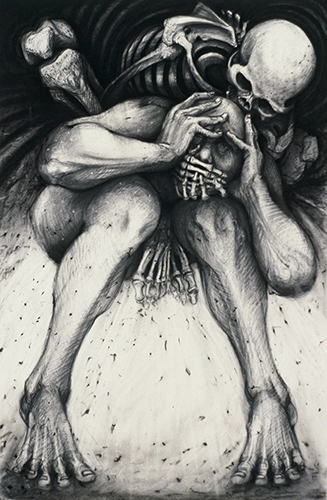
The media need to stop printing photographs of these extremely underweight girls day in and day out. Not only does the frequent publishing of photographs of anorexic individuals numb the viewer, but there is a high risk that it will trigger people with eating disorders to push themselves further into the disease, and hinder those who are trying to recover by possibly sparking a relapse. This could also cause the same for those who are recovered, because being recovered does not mean being cured. One of the eating disorder’s most powerful weapons is its little mantra: you’re not sick enough, and so when faced with images of the worst cases of anorexia, those with eating disorders more than likely have that voice whispering persuasively into their ear. Photographs of anorexics at their lowest weight benefit nobody. Ever.  At the end of the day the use of these images of very underweight people are there to satisfy the curiosity of the viewer, and not for any beneficial reason for those afflicted with the disease.

Notice that I said “girls” in the paragraph above. The prevalence of eating disorders in men is becoming more and more significant, but articles about men with eating disorders are extremely rare, which furthers the stigma surrounding it and invalidates the many men suffering from the illness. We need to start representing the male population who suffer with eating disorders. It is so important that they get recognition and acceptance, so that more men feel able to ask for help and support which they desperately need.

Another negative to these images is that because anorexia nervosa is the eating disorder most visible to the eye, the media focuses almost entirely on that eating disorder only so that they can publish disturbing images alongside the articles to shock the viewer and satisfy their morbid curiosity. This results in the media neglecting to give equal coverage to bulimia nervosa, BED, and EDNOS, not to mention ortherexia nervosa* and ARFID, which most people have not even heard of, and anorexia athletica. Our society seems eager to gawp at people who are physically different in some way to most others; whether they are exceedingly thin, extremely overweight, showing severe symptoms of illness, deformed, or disabled. Some examples of this are the programs Supersize Vs Superskinny, The Undateables, and Embarrassing Bodies. We are overly intrigued to see those deemed physically unattractive try (and often fail) to lead a normal life, but that has got to stop when it effects those in similar situations in a harmful way, which is exactly what the publication of these types of images does. We are so obsessed with staring at those different to us that it becomes the main focus of articles on eating disorders, and so all the other eating disorders get barely any coverage, which is extremely invalidating and perpetuates the myth that anorexia is the only “serious” eating disorder. All eating disorders are life-threatening and soul-destroying, and it is so important that people receive that message loud and clear.

Because the media focuses chiefly on those with severe anorexia nervosa and ignores the existence of other eating disorders, this only enhances the misconception that eating disorders are about weight, and that people who are not severely underweight cannot suffer from an eating disorder. Eating disorders are judged far too frequently by appearance, and people that are of a normal weight or above normal weight are not taken seriously enough by friends, family, and even doctors. The media only panders to that incorrect judgement.

People need to realise that eating disorders are exceptionally harrowing, extremely serious, and utterly destructive mental illnesses, and not some kind of sick pastime in the form of some “light reading” in a glossy magazine.

We are people, and we are suffering: stop parading us around for the entertainment of others.

*Ortherexia nervosa is not mentioned in the Diagnostic and Statistical Manual of Mental Disorders (DSM) but was first used by Steven Bratman to characterize people who develop an obsession with avoiding foods perceived to be unhealthy. This is something a vast majority of people in recovery from an eating disorder experience a phase of, but it is also very much experienced as a stand-alone mental disorder and should be taken very seriously, as it can result in malnutrition and even death.