Tag Archives: ARFID

Christmas and New Year: Anxiety Aftermath

anxiety

So Christmas and New Year are finally over. Most people with eating disorders approached the Christmas period with intense fear and have probably left it with intense guilt. And that’s okay and that’s not okay. By that I mean that it is okay to experience those feelings. You are not alone and those feelings are not your fault. What’s not okay is that your eating disorder has control over your life, so keep fighting the war against it, and don’t respond to those negative feelings. You are going to be okay and you can get through this.

If you ate more than you usually would this Christmas, went outside your meal plan, or ate what a normal person would eat over the Christmas period, I can imagine that right now you are feeling extremely stressed, and terrified that you have put on weight or that your body composition will change. And if you have put on weight or your body composition has changed, that’s okay. If you have stayed the same, that’s okay too, but remember that part of recovery is about gaining weight, and along with that does come a changing body.

The guilt of going against those eating disorder rules can be overwhelming, but it is important to remember that this is part of recovery. Going against your eating disorder and doing what you deserve is part of fighting the battle inside your head. Eating whatever you want, whenever you want, is the goal, and so if you were able to do that for a day, or two, or more, or even if you were able to eat a little more than normal, you are making small steps towards achieving that outcome. That is a wonderful thing, however terrible it might feel right now.

Unfortunately, feeling negative feelings and thinking negative thoughts are part of recovery. If it wasn’t, recovery would be pretty easy-going. It’s important to push past that and sit with the feeling of anxiety (and other negative feelings) rather than respond to them. The feeling will pass if you give it time to. You can read my post on anxiety management that may help you sit with anxiety and other negative emotions and thoughts.

You may also be feeling triggered by the people around you, complaining that they have put on weight or have eaten “too much” this Christmas, or need to go on a diet because of that. Please ignore them. They are battling their own insecurities and are looking for reassurance that this is okay and that other people feel the same and that they are not alone. This is really, really sad, and something that no one should have to feel. Enjoying the Christmas food is part of the festivity, and no one should have to feel guilty for it. Know that other people’s worries are not a reflection on you, and you should keep in mind that it is not something positive that they are experiencing, but guilt and anxiety and insecurity. So instead of letting their negativity impact on you, empathise with them, as guilt, anxiety, and insecurity are emotions that you are likely experiencing also (albeit on a much grander scale to those who do not have eating disorders). Keep moving forwards towards your goals. Keep moving forward on your journey towards health and happiness. Keep in mind your motivations, and remember that the way you respond to others only affects you primarily. You can do this. Keep moving forwards.


Oh Yes, Eating Disorders Are SO Glamorous

cloud

(TRIGGER WARNING – Eating disorder behaviours written about)

You’ve probably seen it: the glorified photographs of underweight celebrities and models; the tiny, fragile, delicate girls in movies with eating disorders (think Cassie from Skins), maybe you’ve read the overly simplified and massively invalidating Winter Girls. Anorexia is the “diet” everyone wants to be on. Well, maybe not everyone, but I’ve heard the offhand comments: “I wish I had just a touch of anorexia”or “I’d do anything to have a bit of anorexia for a couple of weeks!” Even bulimia, the less glamorised eating disorder gets a look in: “I tried bulimia but I just hate throwing up!”

Why yes, of course, you’re totally right! Eating disorders are SO glamorous.

When my eating disorder forced me to walk forty-five minutes home with a week’s worth of food shopping every week, I totally felt glamorous. When I had to pause every ten minutes because I felt like I was going to pass out, and when I damaged the nerves in my fingers from the tightness of the shopping bag handles, I totally felt glamorous. When I wet myself a little bit now and again because my body was eating away at my bladder to try and get energy, I felt more glamorous than anyone. When I vomited into the toilet and got splashback on my face, it was so glamorous: even more so when I popped the blood vessels around my eyes. When I drunkenly locked myself in my boyfriend’s bathroom and cut my all over my arms, legs, and stomach, it was as glamorous as anyone would want to be. It was also super glamorous when my eating disorder punished me by making me work out vigorously for two hours straight on a malnourished, weak, failing body, until I was at the point of collapse, and when I made myself throw up at a party and a friend heard the whole thing, and when I cried on the train because the man on the other side of the aisle was eating a sandwich and I so desperately wanted to feel “allowed” to have that; have anything. And when I had to run home from a restaurant after eating something with fats in because I immediately got diarrhoea. And also when I screamed at my partner for putting a dash of milk in our scrambled eggs, and smashing a glass and kicking him out of the house when he turned over my “notices” to myself reading “fat bitch” and “starve yourself” and wrote “you are beautiful” and “you are perfect” on the back of them instead. And even more so when all I genuinely, truly wanted was to be chained to a bed so that I could not access the kitchen and eat anything. When I couldn’t think straight and my relationship was ruined and my body was cannibalising itself and my personality had diminished to nothing so that I had no hobbies or interests bar losing weight – what could anyone wish for than a touch of what I had; a touch of what millions of people suffer with every day? Anorexia, bulimia, OSFED, ARFID, anorexia athletica, orthorexia…what more could anyone want but those restrictive eating disorders that destroy your life, take away your health, eliminate your personality, interfere with your ability to work, and wreck your relationships?

And just so you know, eating disorders don’t necessarily make you skinny. They make you sick, and they make you so miserable that you wish you would just die, and they make you more and more dead every minute, but sometimes you don’t even get to be skinny. And even when you are skinny, you’ll never know it. The skinnier you get the fatter you’ll feel. With every pound you lose, you’ll hate it with more and more passion that you’ve ever felt towards anything else, and that will only drive you to continue to lose more, in the hopes that it will make you feel better. But it never will.

So sure, go about wishing you had just a “touch” of what we have. You know that saying ‘be careful what you wish for’? It could not be more true than when it comes to this.

In addition to the idiotic notion that having an eating disorder would be worth it because you’d get skinny, having these incredibly ignorant opinions invalidates and undermines the severity of an eating disorder, thus eradicating the experiences of those suffering from them. Having those sorts of opinions makes our pain invisible, because you don’t understand that it exists.

So learn more about eating disorders, because you know someone with one. You might not think you do, but you do, trust me. Someone in your life is struggling. Don’t let their experiences be invisible to you.

End rant.

Recovered Does Not Mean Cured

recovery

I like to write positive posts about recovery and what it means to be recovered and all the fantastic things about it. I like to illustrate how amazing it is to go from being very mentally and physically sick to being a functioning human being with passions and interests. I like to talk about going from empty to fulfilled; suicidal to content. But I also want to talk about the realities of recovery, and talk about where the eating disorder goes once you reach remission.

In an ideal world, reaching full recovery would mean that the eating disorder was banished from our brains for good. It would mean that the war, once won, was never to be fought again. In a way, that can be the case. You don’t have to fight that war ever again if you remain stable and strong in your remission, but there will be a few riots to deal with, and the odd battle here and there. The war will be won, but the eating disorder will always try and rebel where it can.

The eating disorder will always be there, in each and every one of us who have been a victim of this deadly disease. It is part of our genetic make up, and worse than that, it’s a part that has been triggered. It cannot be un-triggered, and it cannot be un-learnt. But that’s okay: people who have suffered from an eating disorder and fought it are some of the bravest and strongest people. If you’ve never had an eating disorder you will never know how exhausting and gruelling it is to fight it, but take my word on it: it’s one of the toughest (if not the toughest) that we will ever have to do. With all that strength we have, after beating the eating disorder, keeping it in check is a hell of a lot easier than what we have already been through.But it is important to know that it will be there, and you have to make sure that you are the one that stays in control at all times.

It is a mistake that those who haven’t had an eating disorder can easily make: that once it has been defeated, then it is gone. Sometimes people don’t understand that once a day, or once a week, or once a month, there will be a little battle that we have to fight. And it is fairly easy to win it, but if we give in due to not being vigilant, or feeling too tired to resist it that day, it is something that can quickly spiral out of control.

Take my last 24 hours, for instance. I had to go home from work with a severely upset stomach. My mum told me not to eat for 24 hours (a sensible thing to do in this situation), so I geared up for that challenge. After eight hours, I was starving, so I ate a cracker and smoked a cigarette, and my hunger pretty much vanished. That reared the head of the beast, and a little voice said see how easy it is to make your appetite disappear. I also kept stroking my stomach to see if it felt flatter, because when I was sick and would have an upset stomach, my stomach always felt super flat and I liked that. After 20 hours with only 3 crackers, I tentatively made some toast to test out my stomach. The little voice told me that I could just go longer without eating, and that I’m too sick to eat at all, and I felt resistance to wanting to start eating again. I will fight that small battle every time I get a stomach bug and can’t eat for a while, because for me, once I stop eating, I find it a small challenge to start again. I know that I can fight that, but there is always the possibility that I could give in to it and that the eating disorder would take the wheel and I would fall into the back seat. It is so important to recognise when the eating disorder is trying to worm its way into your thoughts and influence your actions, so that you can roar at it to get back in its place (metaphorically, of course – I’m not sure how those around you would react to that kind of outburst).

Another example is exercise. I enjoy some types of physical activity like badminton, swimming, and walking. I love doing it, but so does my eating disorder. That means that I have to constantly assess how I am feeling towards it. It means that when I can’t do exercise (like now, being ill), I feel anxiety. It means that I have to consistently challenge myself to make sure that I am in control, not my eating disorder. This means that I take rest days where I don’t exercise whatsoever. If ever I told myself to take a rest day or two, and couldn’t do it, there would be a problem. It would not be me taking charge in that situation, and I’d then have to work through that and fight a bigger fight. I think anyone who chooses to be active in their remission and has had exercise addiction will always walk a line with it. If I ever exercise when I am ill or injured, or when I have challenged myself not to, or because I feel I have to even though I am not enjoying it, that is when there will be an issue. I have to watch out for that, and so does everyone else in my position.

There are also bad body image days. In our society this is – tragically – normal, but for those with an eating disorder it can be accentuated, or a trigger and therefore more dangerous. It means accepting the bad day, or week, or month, and not responding to it, which can be incredibly hard as someone without an eating disorder, let alone someone with one.

There are many different things that will trigger different people, and although a lot of triggers become null and void, most people have one or two (or more) that remain with them. Having those triggers, and having the eating disorder itself, means that we are always at risk of relapse. It means that we do still have to fight battles that other people do not have to fight. It means that we have to be vigilant and careful and assess our thoughts and behaviours towards things like food, exercise, and our bodies on a regular basis.

Recovered does not mean cured. Recovered means in remission. It means that it can come back, and it means that we will always be fighting, even if the fight is a million times easier to win.

Counting Calories and Recovery

numbers

It seems like something that would be counter-productive to suggest, but counting calories is a really important part of recovery – especially during the initial stages. Counting calories is very likely a large part of you or your child’s (or partner’s/sibling’s/friend’s et) eating disorder, so it can seem like madness to say ‘continue doing this’, but hear me out.

Whilst counting calories was used as a way to restrict, it now needs to be used as a way to heal. So we are turning around a negative habit and using it to make sure that the person recovering gets enough energy into their body. Getting enough energy is essential for recovery, and it is likely to be something that proves impossible to do unless someone is counting the calories of the person recovering.

For most people it will be you; the recoverer, that counts. Sometimes it will be parents or partners. Either way, those calories need to be counted because after an eating disorder, people have unreliable hunger cues. The body has gone so long without food that it has repressed the signals, and so it can take a long time for reliable hunger cues to return again and for the body to learn to expect food and give signs as to when it needs it. This can mean that eating can feel like a chore to some. It could mean that you will have no appetite and feel too full, but it is important to ensure that you continue eating adequately regardless. It could mean that you feel really hungry sometimes, but other times have no appetite. Respond to any hunger or cravings that you have, and continue eating enough even when you don’t have an appetite. You may have reliable hunger cues straight away, which would be great and would lead you to eat what you need to eat in order to recover. Responding to mental hunger is also really important. Mental hunger is just another signal from the brain to tell you that you are hungry. All signals come from the brain, and it is crucial to listen. So if you don’t feel the physical signs of hunger but are wanting or craving food, then it is necessary to listen to that signal and respond to it – always.

So how are you going to count calories? I would advise staying away from apps such as MyFitnessPal, as they can be incredibly triggering due to the fact that they try to suggest restrictive amounts to eat, and they are an app focused on weight loss. You could just use a ‘notes’ app and count it up yourself and keep the number on record for the day there, or you could write ‘500’ as many times as adds up to how much you need to eat on a sheet of paper or on a notes app on your phone, and just cross it off every time you reach 500 calories. This can mean that you know you are getting closer to your goal but don’t need to count the number if not thinking of the number helps. If your parents or partner are very involved in your recovery, they could do the counting for you if this is possible and more beneficial for your recovery.

Calorie counting can be triggering for many people, but the alternative of under-eating is much more harmful. Under-eating – which many people in recovery will do due to unreliable hunger cues if they do not count calories or have them counted for them – will mean that the body cannot heal. Mental and physical recovery are interconnected, so if the body is not getting enough energy, this will also impact on mental recovery also. Under-eating means that neither mental nor physical recovery will be able to take place, so counting calories until your hunger is reliable is a necessity. This is one habit that will have to be saved until a bit later to break – which is okay, because there are many habits and thought processes to manage, change, and break, and there has to be something that is saved until last (or later on)!

So you’ve been counting calories for a while and making sure you that you get the energy that your body needs. How do you know when you can stop counting and start going by hunger? When you start feeling like your hunger is happening in a reliable way which is consistent with when you should be eating and how much you should be eating, you can start thinking about testing out that hunger to make sure that it is naturally bringing you to the amount you need. A good way to test how reliable your hunger is, is to write out everything you eat for a week (or two weeks), and then count it up for each day, add it all up to get the total amount, and divide it by seven (or fourteen). The average figure should come to around the amount that is suggested as the minimum for you to eat during your recovery (this is around the amount that you should need forever). If it is three hundred to four hundred calories below that total, then I would really suggest that you continue to count calories as your hunger signals are likely to be unreliable. Most people will naturally and intuitively eat the amount recommended for them, or close to it, as this is the amount that an energy-balanced body needs each and every day. Some people do have hunger that is below or above the average (for example, someone who is expected to need 3000 calories for their age, gender, height, and activity levels could find that they naturally eat 2400, or 3600), and that is absolutely okay. However, if you are eating more than three hundred to four hundred less than what is recommended as adequate, it is more than likely that it is your hunger cues that are unreliable and you still have a little way to go before they are back to normal. If, say, 2400 calories is your normal hunger, eating 3000 for while longer will not have a negative effect on your recovery process, and will not have an impact on your weight. Your body will adapt to deal with the excess energy by putting it to good use (e.g. to continue repairing your body) or the metabolism will speed up to burn it off. (As a side note, when you are adding up your calories for those tester seven days, if one day has a really low amount, and another a higher amount, for example, 1000 calories one day and 4500 the next, this is a sign of unreliable hunger cues, even if the average does come to around the amount suggested for you. As a second side note, if you are consistently eating well above and beyond the minimum you require for recovery, your hunger cues are working and you are experiencing extreme hunger or higher energy needs still, which is totally normal for recovery).

So let’s say your hunger cues seemed reliable, and testing this out has shown that they are, now what? You can start trying to eat intuitively, but you will need to keep reassessing yourself to make sure your eating disorder is not sneaking in and manipulating the situation. It is important that you eat what you want, when you want, and don’t let the anxiety of stopping calorie counting come out in other ways, such as restricting certain foods types or resisting eating something you want because you are worried you are eating more now you have stopped counting. It is going to make you feel more out of control, but it is important to continue onwards, and not use any other behaviours.

But how do you go about stopping counting calories? Calorie counting is a hard habit to break. It can become so ingrained in you that it can happen even without consciously thinking. There will be different things that work for different people, but here is a list I put together with some suggestions about how to stop counting:

  1. Get yourself and your family to put labels over the calorie amounts on packets etc. This can deter you from looking and also remind you when out of habit you try to check that your goal is to not look and not to count.
  2. Get your family to serve you at dinner time, to challenge skewed perceptions of portion sizes, and to learn to relinquish control over amounts.
  3. Stop measuring foods or liquids.
  4. Eat intuitively for one day (or even one meal). In a week or so, try doing it for two days (or meals). Work your way up until you can ditch the habit altogether.
  5. Visit cafes, restaurants, cinemas, and other places that are uncaloried to get you used to eating meals where you don’t know the calories to face that anxiety and start to overcome it. You can then start trying to do this at home and challenging yourself there.
  6. Listen to your body and its signals (this is also something you should start doing as soon as you get into recovery, even when you are counting calories). Follow your body and tune in to what it is telling you, rather than going by calories you’ve already eaten today or any other calorie “rules” you are sticking by. Start learning to listen to mental and physical hunger, and also learn that you can also eat when you are not hungry if you fancy it.

There are only six suggestions here, and there will be countless other things that can help. If you have any tips that helped you or someone you know, write them in the comments below so that others can benefit from it too!

Counting calories and not counting calories are both big parts of the recovery process, and both relevant at different stages in your journey. Again, make sure that you are not using compensatory behaviours when you start trying to eat intuitively and stop counting calories, such as eating smaller portions, cutting out calorie dense foods, or not drinking liquid calories, out of anxiety. Learning to eat intuitively without compensating due to anxiety is a big part of recovery. You need to learn to eat what you want, when you want, without letting your ED get on the stage with you. Make sure it is not running the show, or even making compromises with you. It doesn’t have a place in the life that you are creating for yourself. This life is yours, and yours only.

Eating Disorders and Willpower: An Absurd Association

will power

Willpower. It’s something that we associate with strength. It is something that we admire in others, and it’s something we want for ourselves. And in this day and age, it is problematically associated with dieting and weight loss. The association even extends to restrictive eating disorders. I want to tell you how wrong it is to think that the two are synonymous.

I want to firstly consult the dictionary. Let’s take a look at the definition of “will”:

Will
noun

1. the faculty by which a person decides on and initiates action.
“she has an iron will”
synonyms: determination, firmness of purpose, fixity of purpose, will power, strength of character, resolution, resolve, resoluteness, purposefulness, single-mindedness, drive, commitment, dedication, doggedness, tenacity, tenaciousness, staying power, backbone, spine; More
2. control deliberately exerted to do something or to restrain one’s own impulses.
noun: willpower
“a stupendous effort of will”

A person with an eating disorder does not decide to have one. They do not have any power or control when developing or having an active eating disorder. They do not initiate action: the eating disorder does. They have no say in the matter whatsoever. So using “will” in the context of eating disorders is absurd.
Let’s also have a look at the definition of willpower itself:

noun
1. control of one’s impulses and actions; self-control.

Again, there is no control when it comes to an eating disorder. There is certainly no self-control. In actuality, it is the opposite that is true: someone with an eating disorder is completely out of control. They are not deciding to abstain from food or drink. They are not deciding to compulsively exercise. They are not deciding to vomit their meals into toilets and trash cans. They have no control over their ever dwindling intake, the inability to eat ice cream, or the ten miles they feel they must run. The severe mental illness that they are suffering from is running the show, not the person with the illness. Eating disorders are not a choice, and to insinuate that someone with an eating disorder has willpower is to insinuate that they have a choice.

You might be someone who has previously considered an eating disorder to be a choice, and are looking for an explanation of how it is not. Let me first stress: eating disorders have a genetic link. This means that if you do not have the genes to develop an eating disorder, then you will not develop one. If you have the eating disorder gene (which is being researched: the specific gene has not been identified as of yet, and it is most likely a combination of genes, not just one) then it is possible to go through life without triggering it into action. However, if environmental factors trigger the gene (and the triggers are plentiful: dieting, bullying, death of a loved one, abuse, parents divorcing, illness, fasting – you see how these can be both emotional or physical triggers), then you will develop an eating disorder. Genetics load the gun, environment pulls the trigger, the saying goes. So genetics have an important part to play in the development of an eating disorder, and you don’t get to choose your genes.

Here are some examples of how it works inside the mind: if you had to choose between eating a highly restrictive amount of calories and living with aching hunger, or feeling like tearing your own skin off, would you comply with your eating disorder or your hunger? If you had to choose between exercising until you felt like you might vomit and pass out or feeling so disgusting in your body that you would consider killing yourself, what choice would you make? If you had to choose between not eating a slice of pizza that you desperately crave or feeling like such a failure that you punished yourself by cutting you body multiple times in multiple places, what would you choose? And when you see those options, does it really look like much of a choice any more? Each option is torturous and punishing, but one always gets you closer to the goal of losing more weight, or at least attempting to. You’ll feel better when your body is perfect, the eating disorder says. You’ll feel better if you barely eat. You will be more in control, it lies, and there are so many lies it will tell to keep you from fighting against it. 

The more the illness pervades the mind and the sufferer responds to the eating disorder, the more things like food and weight become a source of anxiety. Each time you respond to the voice telling you not to eat or you will feel something unbearable, the more the message in reinforced in the brain. You see, when you avoid something that makes you anxious, the more the brain is told that it is something to be anxious of because it is being avoided, and the more anxious you become of it. Another sneaky way the eating disorder survives is to completely distort the perception of the sufferer, so that their body looks to them to be completely different to what anyone else sees, and in a lot of cases, the thinner they become, the fatter they feel. This way the eating disorder continues to dictate the actions and thoughts of its host (and yes, that is what you feel like: just a host to a demon that is making you diminish in size inside and outside day by day).

I could go on, but let’s get back to willpower.

Meghan Trainor caused uproar with her incomprehensible comment about her apparent lack of willpower to “go anorexic”.

I wasn’t strong enough to have an eating disorder. I tried to go anorexic for a good three hours. I ate ice and celery, but that’s not even anorexic. And I quit. I was like, ‘Ma, can you make me a sandwich? Like, immediately.’

Her comment is one of such extreme ignorance that it makes my blood boil. For one, strength doesn’t come into eating disorders. Strength is something of value. It is a brilliantly positive trait to have; something you use in the face of hardship; to get through something or to defeat it. It is something that you use to fight and beat an eating disorder, not something you use to continue its existence. It does not take strength to have an eating disorder: it takes sickness and misery and intense self-hatred. It takes strength to recover. Secondly, you cannot “try to go anorexic for a good three hours”. Anorexia is first and foremost a mental illness (like all other eating disorders), not something that you can just “try” and then stop because you get a bit too hungry. “Trying” is not part of an eating disorder. You would never in a million years “try” to have an eating disorder if you understood what it entailed. It’s not about having the willpower to “go anorexic”. Any eating disorder is a disease that creeps up on you and slowly invades your mind bit by bit until it has wormed its way into every part of it, and then suddenly you realise that you are drowning in it and there is no conceivable way out. You don’t just “go anorexic” for three hours and then choose to stop. Need I say it again: there is no choice. And no, funnily enough eating ice and celery for three hours only does not mean you have a serious and deadly disease.

Willpower is inextricably linked to choice, and we know that eating disorders are not a choice, so the two cannot be thought of in conjunction with each other. Ever. To talk about eating disorders requiring willpower undermines the helplessness and hopelessness that someone feels whilst being under the control of such a powerful and deadly disease. To talk about eating disorders requiring willpower – a positive trait we all want – undermines the sheer anguish and torment someone suffering from one has to experience every second of every day. To say eating disorders require willpower is to inadvertently say that there is something that tortured person has that you admire. You are looking into eyes full of pain and saying, “I want what you have.

Willpower is a positive thing. Having an eating disorder is a living hell. Willpower is strength and control. Living with an eating disorder is being crushed under a dictator that ultimately wants you dead and feeling unable to do anything but obey and walk knowingly into the jaws of death. Willpower is willpower and eating disorders are eating disorders. Let’s not mix up the two.

Distinguishing Your Voice From that of Your Eating Disorder

tumblr_mveg0duIgw1qjyasqo9_400

Recovery can be really hard when you are unable to distinguish the eating disorders “voice” from your own. Making decisions becomes an uncertain task that can end up taking up far too much of your time because you are anxiously torn between what you want and what your eating disorder wants, and not being able to tell which is which. Because the voice actually sounds like your own thoughts, this can make it really difficult for someone to tell what thoughts are really theirs, and what are those of the eating disorder.

When it comes to telling your voice and the eating disorder’s “voice” apart, the first thing to think is “do I really want this?” Some people are able to quite easily separate the two with just that first question, and others are still unable to do so.

When it comes to food, and choosing to eat a certain food or comparing between two choices, the easiest way to tell what it is you want is to ask yourself; if it had no calories, would you really want to eat it? Or would you prefer something else? If the two you are comparing to had no calories, which one would you actually want to eat more? Another thing to do is think, if I walked away with this one and bought it, would it give me more anxiety than the other option? The one that you have more anxiety over is the one your eating disorder wants you not to choose, and is therefore the one you should choose to confront and overcome that anxiety. I would bet that the other one is something your ED picked to get you to choose that “safer” option rather than the one you really want to eat.

When it comes to negative thoughts about yourself – that’s not you. Hands down anything negative that comes into your head will be your eating disorder. I say this because now, in remission, I rarely have negative thoughts about myself or my body. When I do, they are quite mild and I can tell that they come more from a “normal” brain and have developed because of the society we live in. Negative thoughts caused by an eating disorder are usually very forceful, very malicious, and very hateful. They are cruel comments, not just “hmmm I’m not sure I’m loving those back rolls but meh okay what was I doing let’s carry on with that.” They are hurtful, vindictive, venomous comments like “you are disgusting” or “you are worthless” or “you are a worthless fat bitch”. When you experience thoughts like that, they are the lying, bullying voice of the eating disorder and you need to recognise that that voice does not carry truth. It just wants to hurt you. I would place my bets on saying that 99.999% of negative thoughts going on in the head of someone with an eating disorder are eating disorder thoughts.

When you are eating, or buying things for yourself, or doing something you enjoy, etc etc, and a thought comes into your head about not deserving to eat it, or buy it, or do it, then that is not your own thought. That again, is a bully inside your head that should not be there. Kick it out. Tell it that it is wrong. You deserve all the things that you want and you should be able to have all of the things that are within your reach.

When it comes to negative thoughts or thoughts that you don’t deserve something, ask yourself “is that something I would say to someone else?” If it isn’t, chances are it’s your eating disorder speaking. The things that eating disorder says to us, we would not find it acceptable to say to others, or let others say it to us, but we let that internal voice say it to us and submit to it. Start changing that and fight back. Recognise that the “voice” is just playing on your insecurities and is making unacceptable and vile comments towards you. Tell it to f*** off.

When it comes to other habits or behaviours, for example using certain items of cutlery, using certain plates or using only bowls to eat out of, challenge that. If you feel like using a bowl, use a plate. If that invokes anxiety in you, then using the bowl is a disordered habit. Use  a different fork/knife or spoon. If that invokes anxiety in you, then using certain items of cutlery is a disordered habit. The same goes for every habit or behaviour. Test out if they are disordered by switching things up. If you find it hard to sit still or sit down, but are pretty sure you’re just an active person, have a duvet day. If you eat at certain times because, you know, that’s just how it is, make it earlier or later. If you avoid white carbs because you just never really have the urge to eat them, make up a nice crusty roll or a bowl of pasta or some egg fried rice using white products. If you are eating low fat yoghurt but are pretty sure you just love it, buy some full fat yoghurt. Stop making excuses and just do it. It won’t be a problem if it is not a disordered habit. If the change freaks you out, the habit or behaviour is disordered.

These are some ways for you to tell apart yourself from your eating disorder when it comes to decision making and making the choices for you instead of your eating disorder. These tactics, of course, are not exclusive. I would welcome any comments to this post suggesting other ways for people to distinguish between their eating disorder “voice” and themselves. The more the better.

Why You Need More Calories than the Government Approved Recommended Daily Allowance

happy

We all know the recommended daily allowance of calories that the government has handed us, but do you know where those amounts originate from? Do you know enough about it to trust that those are your energy needs? Because I’m telling you now, you shouldn’t.

I would recommend reading Gwyneth Olwyn’s ‘MinnieMaud Method and Temperament Based Treatment‘ and ‘I Need How Many Calories?!!‘ for an extensive and in-depth analysis of how the RDA guidelines came about, and why they are so inaccurate – complete with references. However, I understand that, although sound in science and reason, many people do show doubt in Your Eatopia and want more evidence: to which I would say, look up the references! Regardless, I am going to write this shorter article in less detail to illustrate why we all need more than that magic RDA.

The recommended daily allowance set by the government came about by using surveys that relied on self-reporting. This means, in short, that members of the population filled out the survey and the results were averaged out. The actual results were above what the RDA is now:

The FDA wanted consumers to be able to compare the amounts of saturated fat and sodium to the maximum amounts recommended for a day’s intake–the Daily Values. Because the allowable limits would vary according to the number of calories consumed, the FDA needed benchmarks for average calorie consumption, even though calorie requirements vary according to body size and other individual characteristics.

From USDA food consumption surveys of that era, the FDA knew that women typically reported consuming 1,600 to 2,200 calories a day, men 2,000 to 3,000, and children 1,800 to 2,500. But stating ranges on food labels would take up too much space and did not seem particularly helpful. The FDA proposed using a single standard of daily calorie intake–2,350 calories per day, based on USDA survey data. The agency requested public comments on this proposal and on alternative figures: 2,000, 2,300, and 2,400 calories per day.

Despite the observable fact that 2,350 calories per day is below the average requirements for either men or women obtained from doubly labeled water experiments, most of the people who responded to the comments judged the proposed benchmark too high. Nutrition educators worried that it would encourage overconsumption, be irrelevant to women who consume fewer calories, and permit overstatement of acceptable levels of “eat less” nutrients such as saturated fat and sodium. – Marion Nestle (from here)

In short, the results came up as an average of 2,350 calories, and even though that has been shown to not be enough for the average man or woman, they still went and lowered it to 2000. We also know that people under-report what they eat for numerous reasons: not knowing the accurate calorie count of food, missing out liquids and condiments, and reporting what they think they should be eating, rather than what they are eating. Even without mentioning that information on the subject of under-reporting, the NHS has written that the calorie guidelines have been underestimate by 16% due to revaluation of people’s average physical activity, including walking, breathing, and even sleeping.

To put it even more into perspective, the RDA for children aged 5-10 years old is 1800 calories. That’s for small children. When you look at that logically, growing teenagers and fully developed adults are clearly going to need significantly more than that.

Although it does not say what the calorie intake was for either groups, in one interesting study, where they studied the eating of healthy, everyday women, they found that those that were eating in an unrestrained way were eating 410 calories on average more than those who ate in a restrained way, and had a relatively lower weight, which feeds into the relatively well-researched theory that eating less actually can cause you to gain more weight due to a decreased metabolism.

When we talk about teenagers, researchers conducted a study involving more than 200 children between the ages of 8 and 17, and used a lunch buffet to give them access to unlimited food. They found that boys routinely eat more compared to girls of the same age, but the amounts that both parties ate do not fit with the RDA that they are supposed to follow. They found that boys in their mid-teens ate an average of 2,000 calories during the lunch hour, which they thought made most sense due to the age that puberty hits most boys. Their calorie requirements appear to shoot up drastically in late puberty (between the ages of 14 and 17). They found that with prepubescent children, the boys averaged nearly 1,300 lunchtime calories, compared to 900 among girls. Girls consumed the most calories during early- to mid-puberty (between the ages of 10 and 13), as they tend to have their most significant growth spurts during that time. Girls consumed an average of 1,300 lunchtime calories.

A study of teenage girls between 16 and 17, where 204 were dieters, and 226 were not, showed that “the mean reported energy intake of the dieters was 1604 kcals/day compared to 2460 kcals/day amongst non-dieters”, and that “more than twice as many dieters as non-dieters failed to achieve the reference nutrient intake (RNI) for retinol equivalents, thiamin, riboflavin, folates, vitamin B12, vitamin B6, zinc, copper and selenium,” which is obviously not healthy at all and suggests that consuming a low intake results in not being able to get enough of what the body needs, both in energy and in nutrients, because the body requires a much higher level of both. There was a similar study conducted on teenage boys.

Now you might say: yes but these studies show that on average unrestricted eating then leads women to need around 2500 calories on average and men to need 3000. Well, yes, those over 25, whose bodies have stopped growing and developing and so no longer need so much energy, do. But those below 25 still need 3000 and 3500 respectively, as their bodies need additional energy to grow and develop. Do remember here that the two studies above on teenage boys and girls are again, self-reported studies where the unrestricted eaters ate 2460 (females) and 3064 (males) – and as Gwyneth Olwyn points out, under-reporting can range from 2% to 58%, and that “if we average the studies reviewed by JR Hebert and his colleagues, then people eat on average 25% more than they think they do (or report that they do).” Also keep i mind that normal, healthy, energy-balanced people do not know the accurate calories in foods, which is why under-reporting can occur in healthy people, and the healthy intake can then be reported as lower than it is because they are going by what they perceive to be a healthy amount, which is constructed by our society in the form of the daily recommended allowance.

And there we have come full circle.

These intakes (2500 for women under 25, 3000 for women under 25 and men over 25, and 3500 for men under 25) are guidelines but best seen as absolutes during the recovery process due to the nature of the eating disorder and the way it will use grey areas to eat less than needed. If your own individual body requires, as a 30 year old woman, 2300 calories, then a extra few hundred calories will not mean that you gain a significant amount of weight more, if any at all, due to the fact that our bodies are able to get rid of energy by burning it off when it is not an excessive amount more than it needs (which would only be consumed by force feeding when you had reliable hunger cues – this does not include making yourself eat when you have unreliable hunger cues), and when you did eat intuitively when fully recovered, any excess weight would be lost again. Any small increase in weight past set point for a small period of time would be far more desirable than under-eating and remaining both physically and mentally ill.

As a p.s. I just want to put a study in about pregnant women and their energy requirements, as this is sometimes a question I receive on my blog. It reports that “in the normal-BMI group, energy requirements increased negligibly in the first trimester, by 350 kcal/d in the second trimester, and by 500 kcal/d in the third trimester.

I would also like to refer you to Wikipedia’s list of how many calories on average people consume in each country.

Refeeding Syndrome in Restrictive Eating Disorder Recovery

important

This is an extremely important post for those recovering from a restrictive eating disorder, so please take notice of this, as many of those recovering from REDs are unaware of RFS.

A lot of the text below is taken from the MARSIPAN: Management of Really
Sick Patients with Anorexia Nervosa (October 2010)
. It is very wordy so I took the most relevant parts to bring to your attention, but you can click the link above for the entirety of the MARSIPAN Guidelines. The text from MARSIPAN is referenced as so.

Firstly, I am going to share with you a simplified version of what refeeding syndrome is and how to recognise it.

Refeeding syndrome symptoms may occur when a person receives a large intake of carbohydrates following a period of starvation.

A severe shift in electrolytes takes place when an individual consumes a quantity of complex carbohydrates after a prolonged period of food deprivation. This in turn, causes fluid imbalances in the body, leading to the potentially fatal conditions of hypophosphatemia and heart failure.

Hypophosphatemia refers to an abnormally low concentration of phosphates in the blood stream. This is linked to the transport and cellular uptake of phosphorus and potassium due to excess insulin secretion. Refeeding syndrome symptoms arise when the malnourished person no longer needs to utilize stored fat and protein, and instead metabolizes carbohydrates. The resulting rapid discharge of insulin causes the drop in serum phosphate, producing the clinical symptoms of refeeding syndrome.

Unfortunately, certain early signs of refeeding syndrome may go undetected as they are somewhat unspecific. However, symptoms such as generalized weakness, seizures, muscle fibre breakdown, white blood cell dysfunction, low blood pressure, respiratory failure, arrhythmias, cardiac arrest, and sudden death have all been documented as part of this serious and even fatal syndrome.

Refeeding syndrome symptoms can be of concern to those recovering from eating disorders such as anorexia, as they are at risk of developing hypophosphatemia when starting to eat again. Medical supervision and monitoring by nutritionists and other health professionals familiar with this condition can help improve the outcome for those individuals struggling to re-gain normal eating behavior. (from here)

Below I share information that goes into far more detail in regards to refeeding syndrome, taken from the MARSIPAN guidelines, and the online Nursing Centre – this is quite complex and detailed information regarding refeeding syndrome in a hospital setting.

Re-feeding syndrome is a potentially fatal condition (World Health Organization, 1999; Winston et al, 2000; Crook, 2001; Casiero & Frishman, 2006; Mehanna et al, 2008) that occurs when patients who have had their food severely restricted are given large amounts of food via oral or nasogastric re-feeding as well as during TPN. It has been noted in outpatients with anorexia nervosa who have suddenly increased their food intake after several weeks of starvation. (MARSIPAN)

For example, someone who has been almost nothing could decide to recover and start eating a regular amount of food straight away. Their serum phosphate level could then fall dangerously and require oral phosphate supplements to correct this abnormality.

Electrolyte disturbances (primarily decreased levels of phosphorus, magnesium, or potassium) occur immediately upon the rapid initiation of refeeding-commonly within 12 or 72 hours-and can continue for the next 2 to 7 days. Cardiac complications can develop within the first week, often within the first 24 to 48 hours, with neurologic signs and symptoms developing somewhat later. (from here)

Re-feeding syndrome is characterised by rapid reductions in certain electrolytes, such as phosphate and potassium, caused by rapid transport into cells, and the resulting cardiac effects can be fatal. Avoidance of the syndrome can be achieved by gradually increasing nutritional intake. There is substantial variation in opinion about the level at which to start re-feeding a patient with anorexia nervosa. Some units follow NICE (2006) guidelines for adult nutrition support, which recommend starting at 5kcal/ kg/day for a patient weighing 32kg. Although the guidance excludes eating disorders, it is considered by some to be relevant to patients with severe anorexia nervosa. However, there is wide variation in its application, some physicians and dieticians applying it strictly and others regarding it as not applicable to this patient group. One of the very few published guidelines in this area from the USA, referring to the treatment of children with anorexia nervosa (Sylvester & Forman, 2008, p. 393), advises:  Patients start on 1250–1750 calories, depending on the patient’s intake prior to hospitalization and severity of malnutrition, and advance by 250 calories daily. For patients with very low weight (<70% average body weight), the protocol is altered and caloric intake requirements may be decreased to avoid re-feeding syndrome, and advancement takes place over a longer period. (MARSIPAN)

Sometimes physicians are torn between the risk of re-feeding syndrome, and the risk of further weight loss due to not eating enough which then could mean death. In addition;

One physician in the group suggested that it was perhaps less harmful to risk re-feeding syndrome, which can be monitored and corrected, than brain damage and death caused by low glucose in a patient with hypoglycaemia. It was also commented that if higher calorie levels were thought to be essential (e.g. to correct low glucose), a critical care approach with constant monitoring and correction of abnormalities should be considered. (MARSIPAN)

When it comes to dangerously sick patients with anorexia nervosa, the risks have to be weighed up and a decision reached as to what is more dangerous for the patient who is in a life-threatening condition. On the subject of avoidance of re-feeding syndrome:

Avoidance of re-feeding syndrome can also be encouraged by restricting carbohydrate calories and increasing dietary phosphate. When patients are prescribed oral or enteral nutritional supplements, consideration should be given to the use of high-calorie supplements (e.g. 2kcal/ml) as they have lower levels of carbohydrate and may therefore be less likely to produce re-feeding syndrome. Moreover, the diet should be rich in phosphate (e.g. milk) to help avoid the syndrome. The total fluid intake can easily exceed safe levels, and the recommendation is 30–35ml/kg/24h of fluid from all sources. (MARSIPAN)

Remember that the MARSIPAN Guidelines described above are based in a hospital setting. 

As for more understanding on what refeeding syndrome is:

To understand what happens during refeeding syndrome, first review the pathophysiology of malnutrition. Normally, glucose is the body’s preferred fuel, coming from the intake of carbohydrates. As the malnourished body loses access to carbohydrates, it shifts to catabolism of fat and protein. With this shift, the body’s production of insulin drops in response to a reduced availability of glucose. This adaptive change to protein breakdown during prolonged malnutrition also leads to a gradual loss of cellular and muscle mass, often resulting in atrophy of vital organs and other internal structures, including the heart, lungs, liver, and intestines.
Serious complications may occur as respiratory and cardiac function declines due to muscular wasting and fluid and electrolyte imbalances. Metabolic rate, cardiac output, hemoglobin levels, and renal concentration capacity also decrease.
The body is now surviving by very slowly consuming itself…
When a malnourished patient is given aggressive nutritional support, such as PN, a number of events ensue. These are primarily driven by the change in insulin secretion as a result of the shift from protein metabolism to carbohydrate metabolism. The increase in glucose levels, which results from the composition of the nutritional support formula, increases insulin release by the pancreas. This in turn promotes cellular uptake of glucose along with electrolytes, primarily phosphorus, magnesium, and potassium. The result can be a life-threatening depletion of these vital electrolytes. (from here).

Also,

[RFS] is extremely rare but is more likely to occur in a young person with rapid weight loss and a BMI – from here.

As said above, refeeding syndrome is rare. People at risk are generally people are underweight, and have severely restricted for a week or more. However, if you have been eating less than 1000 calories for a week or more, are excessively exercising, or have been purging frequently, you may be at risk of re-feeding syndrome, regardless of BMI. If this is the case please see a doctor to determine the risk of RFS. Depending on your risk you may be hospitalised to be monitored there, you may be monitored by your doctor, or you may be okay to go home and just get your parents or flatmates to keep an eye on you.

You are most at risk in the first 24-72 hours, so don’t panic if you have upped your intake quickly and were not aware of RFS and have been eating a normal amount for a couple of weeks. You will be out of the danger zone by now.

Milky products are also really good for those with lowered phosphate levels, and are easier for the body to absorb.

As said above, there is also a problem with people being over-cautious and not increasing by enough or fast enough. If you are being monitored in a hospital setting, the staff there will decide what your calorie increase rate is. If you are home and have been deemed to be at very low risk, I advise increasing your calorie intake by 250 calories every 2-3 days until you reach 2000 calories. From there it is safe to jump to your 2500-3000+ calories.

As for a more in-depth look at warning signs and symptoms:

First, let’s look at some normal functions of phosphate. It’s needed to produce adenosine triphosphate (ATP), which provides energy for almost all cellular functions. Phosphate is an essential part of RNA and DNA, and it’s needed in red blood cells for 2,3-diphosphoglycerate production for easier release of oxygen to the tissues. Patients with signs and symptoms of hypophosphatemia or phosphate levels below 2 mg/dL require oral or I.V. phosphate replacement.

Refeeding-induced severe hypophosphatemia (serum concentration less than 1 mg/dL) can result in respiratory failure from a decrease in available ATP, which is needed to maintain the diaphragm’s normal contractility. In addition, hypophosphatemia can cause red and white blood cell dysfunction, muscle weakness, and seizures. Other factors that can contribute to hypophosphatemia include vitamin D deficiency and excessive intake of antacids, which block phosphate absorption.

Hypokalemia (serum levels below 3.5 mEq/L) and hypomagnesemia (serum levels below 1.8 mg/dL) are also frequently associated with refeeding syndrome. Mild decreases of potassium and magnesium may cause nausea, vomiting, constipation, diarrhea, muscle twitching, or weakness. A more severe depletion of the serum concentrations of potassium and magnesium can cause dysrhythmias, cardiac dysfunction, skeletal muscle weakness, seizures, and metabolic acidosis.

Your patient with refeeding syndrome may develop muscle weakness, tremors, paresthesias, and seizures… In addition, she may have cognitive changes, including irritability and confusion. (from here)

Please take note of this post. Although rather dry, it is very important.

Feminism and Recovery from a Restrictive Eating Disorder

feminism

In recovery from my eating disorder, feminism has been one of my best friends, along with the body positivity movement, which I shall focus more specifically on in my next post. Feminism is a movement that believes in equality between men and women. I am aware that there are various different subsections of feminism, but to me, feminism only has one definition: equality between men and women, which includes all races, genders, and sexualities. Equality, between everyone, everywhere.

My partner between the ages of 19 and 21 was a feminist. He was passionate about politics, and although that didn’t interest me much at the time, my curiosity grew as I entered recovery. I’ve always believed in equality and so at heart have always been a feminist, but my real understanding of it and the way inequality had effected me personally dawned on me throughout recovery as I studied it more closely and became involved with it as a movement. I found that it had an impact in all areas of my life, not least in my recovery from my eating disorder.

feminism 2

Feminism empowered me as a woman, and as a person. It told me I could be who I wanted to be. It told me I did not have to be limited in the activities that I do, or the things that I am interested in. It told me I could wear whatever I wanted to wear. It told me that I did not have to conform. It told me that my body could be any shape, size, or weight, and still be not only acceptable, but beautiful. It told me that I am allowed to feel proud and strong and that no one has the right to try and bring me down. It told me that I hold as much worth as everyone else around me. This applies not only to women, but to men too. Feminism also taught me a whole lot about the sexism that exists around us all of the time in our every day lives – things you may not have even noticed, like casual jokes, or comments that put down women without us even realising it (“you scream/hit/run/etc like a girl” – as if being a girl is a bad or lesser thing, or “grow a pair” – like being a man is a stronger or better thing).

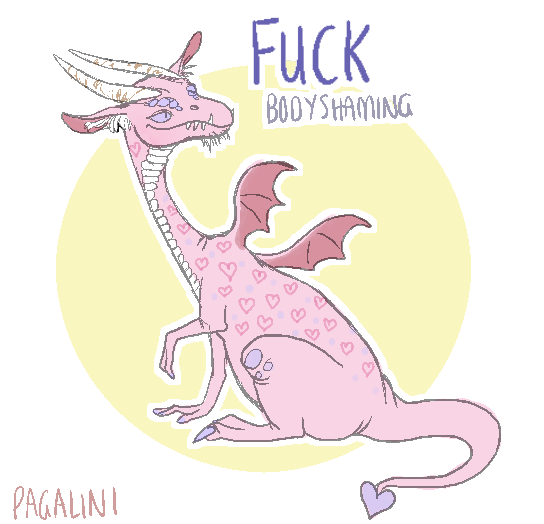
stop body shaming

Feminism is also extremely body-positive. It tells you that you can wear what you like, regardless of your weight, shape or size. It tells you to be proud of your body. It tells you that you can shave, or not shave, and that doing either is fine. It tells you that you can have short hair or long hair, that you can wear make up or go make up free, that you can wear a bra or not. It tells you that you can choose to do whatever you want with your own body, and that you can display it how you like. It tells you that you can be short, tall, fat, thin, black, white, man, woman, redhead, brunette, flat-chested, big-breasted, and so on and so forth, and be a beautiful, proud, confident person. You can have any type of body and accept it how it is and recognise that others should also.

feminism 7

Feminism taught me to embrace my body. My body is strong. It has kept me alive and has enabled me to be well again. It carries me and everything inside me. It enables me to go on countryside walks and play badminton with my friends. It is the strength to move furniture around and carry anything at all! It lets me see and touch and smell and hear and taste. It works every day to keep me as healthy as it can, and I work with it to do the same.

It also taught me that I am not just my body. I am a daughter, sister, friend, writer, reader, artist, photographer, poet, determinist, feminist, liberal, listener, warrior, traveller, baker, film buff, dreamer, and so much more. My body is fabulous, but it doesn’t define who I am. Feminism helped me to realise what is important and it helped me to realise what I am passionate about too.

Feminism planted a seed of power and confidence inside me, and it has been growing every since. It helped me to feel strong when I was feeling weak. It helped me to feel more positively about my appearance when I was struggling to look in the mirror. It helped me to appreciate my body when I was berating it. It helped me to fight when I wanted to give up. It helped me to develop pride in myself as a person when I was feeling worthless.

Feminism was invaluable to my recovery. I’m so thankful that I became aware of the movement when I did. Maybe it can help you too.

feminism 6 feminism 5 feminism 4 feminism 3

Am I Still Disordered?

confused

So you have been recovering for a fairly long time and have come a very long way. Your life has improved dramatically, you feel like you are eating well (what you want, when you want), and you’ve let your body rest up and repair, and haven’t engaged in formal exercise for a significant amount of time. You feel healthy, you feel pretty happy, and you’re wondering to yourself: how will I know when I am fully recovered? How do I know if my eating habits and thought patterns are still disordered?

This is definitely something that I thought about when I was recovering, and I am pretty sure it is something that you have thought about too. When exactly do you know when you are in remission as opposed to still recovering? When is that point where you go from one to the other? What signifies it?

The things that are disordered vary from person to person. One person may never has used coffee as an appetite suppressant or for energy during their eating disorder, and may now just enjoy a cup or two a day, whereas another may have used it and are still using it under the pretence of enjoying a cup or two a day, but are in fact not being honest with themselves that it is in fact driven by their eating disorder. One person may avoid some foods because they genuinely don’t like them, whilst others may avoid the same foods because their eating disorder has persuaded them that they don’t like them. It all varies from person to person, and it is about being 110% honest with yourself as to whether you are going to keep progressing forwards and reach remission or not. Because of these individual differences, it is hard to put together a whole list, but here are a few things that are signs that your eating habits and thought patterns are still disordered.

1. You are still worrying that food is going to make you fat, and you still worry about when to stop eating. This is something that when you are fully recovered you will not think about. You will eat what you want, when you want. You will eat when you desire to eat, and when you don’t have any desire to eat, you won’t. You will not worry about it “making you fat” because you know your body will maintain its natural healthy weight whilst you eat what you want, when you want.

2. You are finding reasons to not eat something. You should always eat what you want, when you want. If you are trying to find reasons not to eat something, then you are still having disordered thoughts. You eat when you want to eat, and you don’t eat when you don’t want to eat. By not wanting to eat, I mean that food is unappealing because you are not in any way hungry or needing any energy.

3. You are linking food and exercise together. Food and exercise should come separately. Burning off calories from your meals = disordered. Only allowing yourself to eat what you want because you have exercised = disordered. One should not effect the other.

4. You are still trying to control your weight. Being in remission includes accepting your body at whatever weight it is healthiest at naturally. That means trusting it to take you to that weight without you restricting any types of foods, exercising to try and keep your weight from going up, or trying to keep to a certain amount of calories without going over. It means eating what you want, when you want, and not exercising (or later on, only exercising for fun), and allowing your body to do what it needs to do.

5. You are trying to convince yourself that you enjoy exercise that you don’t really enjoy doing. Exercise should not be a part of your recovery. It should only be done in remission. If you are trying to convincing yourself that you love going to the gym when you don’t, start being honest with yourself. If your eating disorder has persuaded you that you love aerobics when actually you don’t, be honest with yourself. This includes “I’m doing it to be fit/toned/healthy”. That’s still disordered. Exercise should not be linked in your mind to changing your weight, shape, or size. Exercise that you don’t genuinely enjoy should not be done to get fit or healthy. It is the enjoyment that should come first and foremost, and the health benefits are secondary benefits that should have had nothing to do with the decision to do something physical. “I feel great after though!” is not a valid excuse. If you are going to do any form of recreational physical activity, you should feel good before doing it, whilst doing it, and after doing it, not just the latter. I would suggest checking out my videos on exercise here, here, and here).

6. You are avoiding certain foods or food groups. You might convince yourself that this is for “health” reasons, or you may even convince yourself that you don’t like them when actually you do. Again, this is about being really honest with yourself. Are you just trying to avoid them because they make you anxious?

7. You hate your body. Those in remission are able to accept their body as it is naturally. This doesn’t have to mean loving it. It just means being at least okay with it.

8. You lapse when you are stressed, angry, or upset. Those who are fully recovered have healthy coping mechanisms and do not respond to stressors by engaging in eating disorder habits.

9. You are still weighing yourself frequently. You do not need to weigh yourself any more. You don’t need to weigh yourself at all, ever. The number on the scales is irrelevant and for those with eating disorders, is a massive trigger. Those in full recovery don’t bother stepping on the scales because it’s meaningless and they don’t need to know their weight.

10. You keep planning ways to be “more healthy”. Those in remission eat what they want, when they want, and don’t need to think about “being healthy”, because what they are doing is what is truly healthy – listening to their body and not trying to control food or their weight, and eat what they desire, when they have the desire to do so.

Those are the ten things that sprang to mind when I thought about things that aren’t always entirely obvious to the person engaging in those habits or thought patterns. I hope this makes you think about where you are in recovery and if you still have some things to work on. Remember that these things take time, and you don’t have to rush to the finish line. If you try to do that, that finish line will get further away. Be patient and gentle with yourself, always.