Category Archives: Mental health

Celebrating the Day that I Chose to Live

2

TRIGGER WARNING.

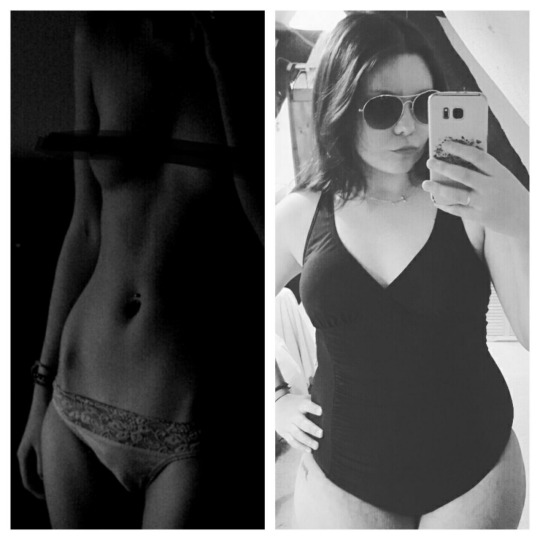
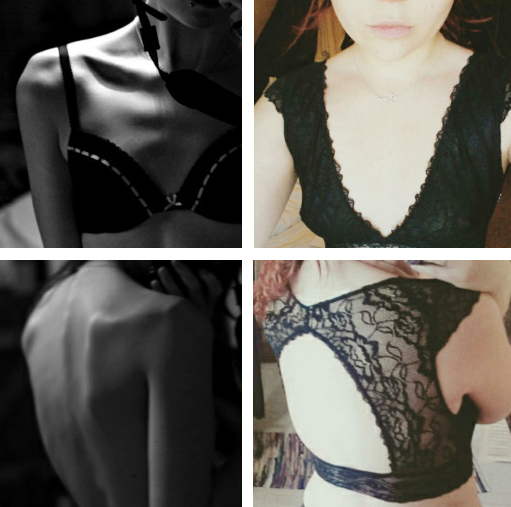
This article contains before and after photographs of someone who has previously suffered with an active eating disorder, and also names eating disordered behaviours that they previously engaged in. This article could be triggering for vulnerable people, those with eating disorders, and those recovering from eating disorders.

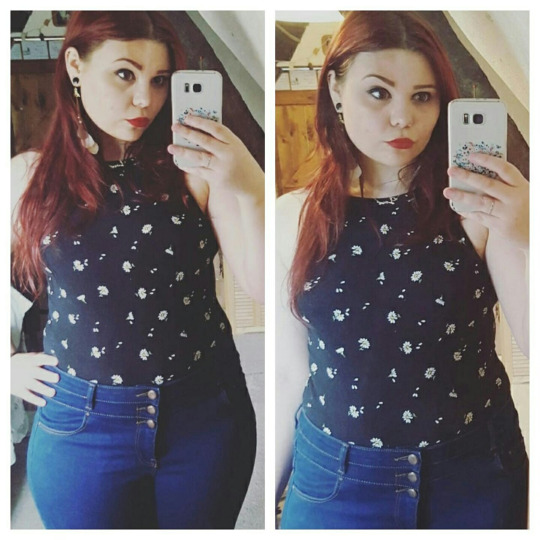
Today holds an extortionate amount of significance for me: four years ago today I made the decision to make the first steps towards recovery from my mentally and physically destructive and severe mental illness: atypical anorexia. It didn’t feel like much would come from the vague, half-hearted decision, but it was a monumental moment that put me on the road to recovery. That moment has gotten me to where I am now: a healthy, happy woman who has been in remission from an eating disorder for over one and a half years, after an intense two and a half year battle in which I emerged victorious.

I’m well aware that I wrote a post last year which will probably be very similar to this one, but the topic isn’t an insignificant one: this day four years ago saved my life in many ways, and celebrating it is, in reality, celebrating the day I decided not to die slowly, and to fight tooth and nail for my health, my happiness, and ultimately, my life.

1

Four years ago today I was entirely, unequivocally, weary of being sick and miserable. I was weary of being in a living hell. I was weary with the despair and the darkness and the anger and the devastation. I was weary of watching my hair fall out in clumps in the shower; of watching it become thin and dry and brittle; of being dizzy; of living in a grey world where my senses were dulled as if my brain was smothered in cotton wool. I was fed up of the insomnia; of the nightmares; of the calories circling around my head all day and all night, leaving little space in my mind for much else. I was tired of counting down the minutes until I was “allowed” to eat; of the starving and compulsive exercising, and eventually, the purging; of the intense fear I felt at going anywhere near food; of the absolute and utter desolation of my mind and body that meant that I lived in a starving shell that could not function, and a mind controlled by  a single focus: lose weight lose weight lose weight. A focus that meant I could not think about anything else; could not deal with anything else. A focus that meant that I did not have to confront the emotions and experiences that had caused my eating disorder in the first place. A severe mental illness caused by a combination of genetics and my environment was my way of handling the world and myself, but finally, after 8 years, I had decided that this could not go on. At first, I viewed death as the only escape from the torment my eating disorder wreaked upon me, but moments of clarity started to push their way to the forefront of my mind, until the possibility of recovery developed from rejected thoughts to cautious actions. And over time my strength grew, and grew, and grew.

8

I know: you’ve heard it all before. You’ve read my posts or the posts of others, you’ve watched a loved one battle an eating disorder, or you’ve experienced it first hand. But today I also want to talk about where my recovery took me and how it might differ from that of others.

I have come across a lot of people who live under the title of “recovered”. It may be a title they have given themselves or a title a professional has given them. It doesn’t matter. What I see are a lot of very slim people who use the word “recovered”. Some of those people will be naturally slim – people whose natural, healthy weights are down the lower end of that “healthy” BMI category. And that’s great! All weights, shapes, and sizes are fab, as long as the person is at their natural, healthy weight and is healthy and happy. However, I tentatively would suggest that there are those that maintain a certain weight by closely monitoring and restricting their intake and controlling their exercise. And if that is where you end up at in recovery because you are unable at that point in time to go any further or feel that that is all you can manage, then I applaud your progress and your strength and bravery in getting to that point – you are amazing and strong and wonderful. Some people will manage their eating disorders and live with it in a state halfway between being free of their eating disorder, and being utterly consumed by it. That is absolutely okay, and if you want to call that full recovery, who am I to decide that it is not by your own personal definition? But I also want to stress that that is not where you have to be if you want to choose differently. You can push further. Whether that is now, or in the future, there is the option to press on forwards to a life where you live pretty much entirely free of your eating disorders influence. I know, because I decided to take the path to that place.

I decided to reject the idea of an “ideal” body. This took me a very long time. It took years of research into health at every size and weight set point theory. It took getting involved with feminism and the body positivity movement. It took learning about the impact of diet culture and how the diet and weight loss industry intentionally make us hate ourselves for profit. It took deciding to be as healthy and happy as I could possibly be in both body and mind. It took deciding to let go of the importance that I had placed on being a certain weight.

I turned out to be one of those people who naturally have a higher body weight than others. It can mean dealing with increased stigma around weight and size, and comes with knowing that I am at a weight where some people will look at me and decide that I am unhealthy/lazy/greedy, whilst knowing nothing about my lifestyle, or indeed myself as a person. Some people will look at me and see me as a weight/shape/size. I am also aware of my own weight privileges in that there are people at far higher weights than me that suffer a hell of a lot more stigma and discrimination. I am aware that although I am far from society’s “ideal” body weight, shape, or size, I still wear “acceptable” clothes sizes (as in, the clothes stores that I shop in cater for my size, even if it is a size some feel shameful about). It is also a size that I maintain effortlessly eating a balanced diet (and by that I mean I eat what I want, when I want, which leads me to eat a wide variety of foods from all food groups), and with physical activity that I do for enjoyment rather than to alter my weight, shape, or size, or any other disordered reasons. It is the size that I can live my life as a healthy and happy person. If I wanted to be smaller, I would have to focus on calorie restriction and possibly an excessive amount of exercise, and we all know where that would lead. Don’t misunderstand me: I’m not going to lie and say that if I had to option to do all this at a smaller size, then I would choose not to. Because of the importance society places on our bodies, being at a smaller size would mean not having to think about or deal with the discrimination of being at a higher weight, and I would rather choose not to deal with that. But my body and its weight/shape/size is not at fault for those stigmas, and nor am I. I accept my body. It is everyone else accepting my body as happy and healthy and beautiful that is the problem, because not everyone does. But that’s okay, because I choose my health and happiness over the approval of others. I choose me.

9

To get to where I am now, I chose to reject the ideas and ideals that are so entrenched in our culture and our society. I chose my actual health over the idea that you have to be a certain weight, shape, or size to be healthy. I chose my happiness over the absolute lie that you have to be a certain weight, shape, or size to be happy. Those lies are fed to us all day, every day, everywhere we look, but I just don’t buy it any more. I’ve seen enough evidence of all kinds to call bullshit. And I have decided to live my life in a way that means working with my body and letting it be whatever weight, shape, or size it needs to be to enable me to be healthy and happy. I will not change that for anyone. I choose me.

Teenage Domestic Abuse: An Epidemic of Violence

isolation

Domestic abuse is an important topic in general, and it’s an important topic for me. So although this website is primarily for eating disorders, I wanted to talk today about that topic, in particular domestic abuse experienced by teenagers and young adults. I know that the demographic for this site is primarily young women, and so this subject is pertinent for many of those who visit it, especially as girls and young women between the ages of 16 and 24 experience the highest rate of intimate partner violence — almost triple the national average, and the severity of intimate partner violence is often greater in cases where the pattern of abuse was established in adolescence. Terrifyingly, a 2005 NSPCC and Sugar magazine survey showed that 40% of teenage girls would consider giving their boyfriend another chance if he hit them, and one third said that cheating justified the use of violence. In light of these horrifying statistics, I wanted to write this for both young people experiencing intimate partner abuse, and for the parents of abusers and of victims.

Anyone who hasn’t experienced abuse may be unfamiliar with the warning signs. Young people especially have often not been exposed to much, if any, discussion of abuse – in particular emotional and verbal abuse. Sexual and physical abuse is a topic most young people will have at least some knowledge of, but emotional and verbal abuse is on the whole more subtle and therefore there isn’t so much awareness or education about it. Emotional and verbal abuse are just as important to be educated about, as they can be just as mentally damaging, and are also a red flag for the development of physical abuse in the future. If someone had taught me about domestic abuse and the dangers and damage of it, maybe I could have avoided years of emotional, verbal, and physical abuse when I was a teenager. Maybe I could have been convinced to take a step back and assess the situation with educated eyes, and maybe I would have been able to walk away from day 1. Although I am aware that all events in our lives shape our future and I wouldn’t change my life now for a second, I wish I hadn’t had those experiences. I wish I hadn’t had that relationship. I wish I didn’t have those memories. There is no way to benefit from an abusive relationship; no positive outcome; no happy ending. Any good experiences with that person will always be overshadowed by the the reality of the nature of the relationship. My abuser was abusive from the very beginning, but I didn’t recognise his behaviour as such (I wrote a bit about my experience with domestic abuse here).

The types of domestic abuse someone can experience are as follows:

  • Physical abuse
  • Emotional abuse
  • Psychological abuse
  • Sexual abuse
  • Financial abuse

I will be focusing mainly on emotional abuse (which includes verbal abuse) and will also be talking some about physical and sexual abuse. You can view examples of all types of domestic abuse here.

Statistics have shown that nearly 1.5 million high school students nationwide experience physical abuse from a dating partner in a single year. One in three adolescents in the U.S. is a victim of physical, sexual, emotional or verbal abuse from a dating partner, and 27% of teenage girls in the UK aged 13-17 had experienced sexual violence in their relationships. One in nine female respondents had experienced severe physical violence; and almost three quarters of girls had experienced emotional abuse.

Where young adults are concerned, nearly half (43%) of dating college women report experiencing violent and abusive dating behaviours. It is also apparent that college students are not equipped to deal with dating abuse – 57% say it is difficult to identify. One in three (36%) dating college students has given a dating partner their computer, email or social network passwords and these students are more likely to experience digital dating abuse. One in six (16%) college women has been sexually abused in a dating relationship. (statistics from here).

So what does domestic abuse look like, especially in a situation with teenagers and young adults?

  • Is your boyfriend very jealous and possessive of you?
  • Does he get angry when you want to spend time with your friends or demand that you spend all your time with him?
  • Does he check your phone, email, Facebook and twitter accounts?
  • Does he try and get you to defriend people on Facebook, take down your photos, or stop you messaging your friends?
  • Is he always calling, texting or BBMing you to check where you are and who you’re with?
  • Does he tell you what to wear or how to do your hair?
  • Does he laugh at you or put you down in front of other people?
  • Does he get aggressive? Does he hit, shove, slap or kick you?
  • Does he threaten to harm you – or himself?
  • Does he call you names?
  • Does he pressure you to have sex when you don’t want to, telling you that “everyone is doing it” or that you would do it “if you really loved him”?
  • If you are frightened of your partner, or feel that you have to change your behaviour because you are scared of his reaction, you are being abused.

What can I do?

If you are being abused, it may help to remember the following:

  • If you are in immediate danger, call 999 (or whatever your emergency services number is). The police have a duty to investigate and help you stay safe
  • You are not alone. Refuge helps many young women and teenage girls who are experiencing abuse. We can help you too
  • The abuse is not your fault. Your partner may blame you for his behaviour – perhaps saying that you “made him hit you” – but he alone is responsible for his actions
  • Abuse is never ok. You deserve to be with someone who respects you and makes you feel safe
  • You don’t have to deal with this on your own. Try and talk to someone you trust – perhaps a friend, teacher or parent. Or call the Freephone 24 Hour National Domestic Violence Helpline, run in partnership between Refuge and Women’s Aid. We’re here for you 24 hours a day, 365 days a year. All calls are confidential
    Computers and mobile phones can be used by abusers to monitor and stalk partners.

The above was from here.

More information of what abuse looks like:

Abusive partners are often jealous. An abuser may equate jealousy with love. They may ask you who you talk to, who you see, accuse you of flirting or others of flirting with you, or become jealous of time spent with others. They may even forbid you to see certain people (or everyone). They may text or call frequently during the day to “check up” on where you are or who you are with. They may drop by unexpectedly, refuse to let you go to college or work, check the car mileage, or ask friends to watch you.

In the beginning an abuser will attribute controlling behaviour to concern for you (for example, for your safety or lack of decision-making skills). As this behaviour progresses the situation may worsen, and the abuser may assume all control of finances (so telling you what to spend your money on or spending it for you) or prevent you from coming and going freely. They may control who you see, what you do, how you spend your time, and what you wear.

Quick involvement is also a sign of abuse. You may have only known or dated your abuser for a brief period of time before getting engaged or even living together. Your abuser will often pressure the victim to commit to the relationship. You may be made to feel guilty for wanting to slow the pace or end the relationship. Pressure for quick (or any, if you are a teenager) sexual involvement is also a red flag.

An abuser may have unrealistic expectations. An abuser may expect you to meet all of their needs. They may expect you to be able to do everything for them and be responsible for making them feel better whenever they feel bad.

An abuser may attempt to isolate you by severing your ties to outside support and resources. They may accuse your friends and family of being “trouble makers.” The abuser may block your access to use of a vehicle, work, or telephone service when you are with them, so you are unable to contact anyone else whilst with them. As a young person it is likely that you live at home and so much of this may not be part of your abusers tactics as this is fairly impossible to accomplish, but they may try to separate you from your friends, and they may try to turn you against the people close to you.

An abuser will often blame others for all problems or for their own shortcomings and are often unable to take responsibility for wrongdoing. An abuser may claim to be being victimised by someone, and it could be you that is blamed for almost anything. However, it is also common for abusers to initially take responsibility for their actions against you, and promise not to do it again, and continue to say this every time it happens (because it always happens again).

An abuser will use feelings to manipulate you. They will blame you for how they feel, and use it to get you to do what they want. They will often say that you are the centre of their world, or their everything, and so attempt to make you feel responsible for how they are and how they feel all of the time. An abusive person is also often easily insulted, and hypersensitive.

“Playful” use of force in sex is also a behaviour that also includes restraining partners against their will during sex, acting out fantasies in which the partner is helpless, initiating sex when the partner is asleep, or demanding sex when the partner is ill or tired. The abuser may show little concern for your wishes and will use sulking and anger to manipulate compliance. It is important to note here that the second example given can be consensual and dominant and submissive roles in the bedroom can be perfectly normal as long as you have given express permission and feel 100% comfortable and interested in acting this out. If you feel at all uncomfortable, this is not okay. Rigid sex roles may be a behaviour. You will be expected to serve. A male abuser may see women as inferior to men, responsible for menial tasks, stupid, and unable to be a whole person without a relationship. Again, rigid sex roles may be a consensual decision, but if you feel at all uncomfortable with it, this is not okay. If a partner has sex with you without your consent, this is rape. If a partner engages in sexual activity with you without your consent, this is sexual assault. Consent means that you have said yes to engaging in sexual activity or sex with your partner. Consent is not consent if it’s under coercion or threat, and you are also unable to give consent when under the influence of alcohol. Consent means saying yes and feeling comfortable with that decision.

Verbal abuse is a big one for abusers. This behaviour involves saying things that are intended to be cruel and hurtful, cursing or degrading you, or putting down your accomplishments. This also includes name-calling.

Having a dual personality; seeming like they can be two people – the nice one and the nasty one. Explosive behaviour, moodiness, being aggressive etc, which can shift quickly to being nice, are typical of people who are abusive.

Threats of violence are a sign of an abuser. This consists of any threat of physical force meant to control the partner. Most people do not threaten their mates but an abuser could excuse this behaviour by claiming “everyone talks like that.”

Breaking or striking objects is used as punishment (breaking sentimental possessions) or to terrorise the victim into submission.

Any force during an argument, which may involve an abuser holding you down, physically restraining you from leaving, or pushing or shoving. Holding someone back in order to make demands, such as “You will listen to me!” is also a show of force. Physical violence also includes strangling, throwing objects at you, throwing you, or pushing you over.

It is important to remember that an abuser will abuse any partner if the individual is involved with the abuser long enough for the cycle of abuse to begin. Circumstances do not make a person an abusive personality. You or your abuser’s environment are not at fault for any abusive behaviour. The responsibility lies with the abuser.

These warning signs came from information from here. What strikes me is that even with how educated/experienced I now am with domestic abuse, I only learned when writing this article that quick involvement is a warning sign for abuse – yet another sign that I missed and only learned about just now, typing this.

It is important to note that not everyone who displays jealousy, or mildly controlling behaviour, or blames others for their mistakes is an abuser, but these are still signs of an unhealthy relationship. Persistent signs of the former attributes combined with any of the other signs are big red flags of an abuser. If you feel that these apply to your partner, please talk to a trusted adult about this and/or call the national domestic violence helpline (website linked) on 0808 2000 247. It is crucial to state that emotional and verbal abuse often leads to physical violence.

As a teenager I felt unable to leave the relationship that I was in, so if you feel that your partner is being abusive but feel unable to leave, I understand. However, I want to tell you that to stay with that partner only prolongs your pain. I know how ridiculously hard it is to leave someone that you are emotionally involved with, but you need and deserve to be in a healthy and happy relationship – and you will find this. It can be even harder when you don’t know what a healthy relationship looks or feels like – you may even be convinced that this is the norm, but it’s not. There are wonderful men/women out there who will treat you in a way that you deserve; in a way that any decent human being would treat another: with respect and care. It may feel like the end of the world at the time to leave someone that you love who is abusive, but time heals, and you can and will move on to bigger and better things. It may feel like it will tear you apart to leave, but I promise you that an abusive relationship will leave far greater scars. The fewer experiences and memories that you have of any abuse, the better. You do not deserve to be put through any instances of abuse, and with time, you will realise how your relationship was only harming you.

Violent relationships in adolescence can have serious ramifications by putting the victims at higher risk for substance abuse, eating disorders, risky sexual behaviour and further domestic violence. Being physically or sexually abused makes teen girls six times more likely to become pregnant and twice as likely to get a STI. Half of youth who have been victims of both dating violence and rape attempt suicide, compared to 12.5% of non-abused girls and 5.4% of non-abused boys. Only 33% of teens who were in a violent relationship ever told anyone about the abuse. These facts and statistics are terrifying. It is also worth noting that abusers are hard to get rid rid of, so the faster you get rid of them, the better. Abusers like to feel in control, and for them it can mean controlling others around them, especially (and often exclusively) their partners. Even when you have ended the relationship, they can harass and attempt to emotionally abuse you from afar. I can tell you this from experience, because my abuser has continuously tried to contact me since we ended for good 6 years ago. People who have any respect for you will move on with their lives and leave you to yours. If you have broken up with an abusive partner and are still experiencing harassment and abuse from them, block them on all social media, block their numbers, tell a trusted adult, and seek advice from the police or citizens advice bureau, especially if they are threatening to harm you or anyone else, or destroy your property.

If you feel that you are experiencing any forms of abuse, please know that it is not your fault. It is not your fault. It is not your fault. You do not deserve it. Even if you do not feel like a victim, you are. Your abuser will not change, however much they try to convince you of that fact, and however much you hope they will. Please tell a trusted adult. Please phone a helpline. Please get help and support. You do not have to be alone with this, and you do not have to be in this relationship. You need and deserve to leave it and you deserve to lead a happy life with healthy relationships.

If you are a parent

81% of parents believe teen dating violence is not an issue or admit they don’t know if it’s an issue. Though 82% of parents feel confident that they could recognize the signs if their child was experiencing dating abuse, a majority of parents (58%) could not correctly identify all the warning signs of abuse (statistics from here). It is so important that you are aware of the relationships that your children are engaging in if they are under the age of 18. Although I was a wilful and determined child and would have probably have continued with my relationship anyway, did I make informed decisions? No, I did not. I wish my parents had played more of a part in educating me about the warning signs of abuse and I wish my school had taught me more about this too. Although my mother did have a short word with my abuser about his behaviour, it of course continued. I wish that my parents had not “respected my wishes”and kept my father from saying anything to my abuser. I wish that they had called his parents and told them what he was doing. I thought that I knew what I was doing at the time, but I was a child, and I transitioned into a young adult finding it almost impossible to separate myself from my abuser. I was an extremely strong and resilient child/young adult, and I could see quite logically that what I was experiencing was absolutely unacceptable, and yet I could not untangle myself from the situation I had become so embroiled in.

So as a parent, what can you do to help?

The following information is taken from here.

There are many reasons why teens don’t tell parents about the abuse. They may be embarrassed or ashamed, and may blame themselves. They may be afraid their parents will make them break up, convinced that it is their fault or that their parents will blame them or be disappointed in them, and afraid of losing privileges. They are often afraid of retaliation from their partner for telling. They may have little or no experience with healthy dating relationships and confuse jealousy with love. They may not recognize that they are being abused. If you suspect your teenager is being abused…

  • DO give your child a chance to talk. Stay calm. Listen without judging them. Believe them!
  • Use clear language to describe what you see is happening.
  • Acknowledge that they are in a very difficult and scary situation. Tell them that you are concerned for their safety and well-being and that you are there for them.
  • Ask them what they would like to have happen…how can you help them be safe.
  • Keep the lines of communication open!
  • Educate yourself—access online resources, read, call Caring Unlimited for information and/or support for yourself!
  • DON’T try to rescue them. Resist this natural impulse. It will likely shut them down.
  • Blame them for the abuse or make them feel judged.
  • Punish them because of an abusive partner.
  • Criticize their partner—you don’t want them taking energy to defend the person

If you suspect your teenager is being abusive

What you may see:

  • Jealous or possessive behaviour toward the dating partner
  • Controlling or bossy behaviour
  • Guilt Tripping—”If you loved me you would…”
  • Blaming the victim for everything that goes wrong
  • Obsessing over the partner’s behaviour or actions
  • Unreasonable or gender-based expectations of their dating partner

What You Can Do

  • Ask, “Why do you think it’s okay to treat ______ that way?”
  • Confront disrespectful behaviour/language. Explain that it’s not OK with you.
  • Let your child know that controlling behaviours are abusive and will prevent them from having a healthy, happy relationship.
  • Hold your child accountable. Don’t accept excuses or allow them to blame the other.
  • Model respectful behaviour towards your partner
  • Educate yourself and your teenager about controlling behaviours by accessing online and other resources.

The following information is taken from here.

Knowing or even suspecting that your child is in an unhealthy relationship can be both frustrating and frightening. But as a parent, you’re critical in helping your child develop healthy relationships and can provide life-saving support if they are in an abusive relationship. Remember, dating violence occurs in both same-sex and opposite-sex couples and any gender can be abusive.

What Do I Need to Know?

You can look for some early warning signs of abuse that can help you identify if your child is in an abusive relationship before it’s too late. Some of these signs include:

  • Your child’s partner is extremely jealous or possessive.
  • You notice unexplained marks or bruises.
  • Your child’s partner emails or texts excessively.
  • You notice that your child is depressed or anxious.
  • Your child stops participating in extracurricular activities or other interests.
  • Your child stops spending time with other friends and family.
  • Your child’s partner abuses other people or animals.
  • Your child begins to dress differently.

What Can I Do?
As a parent, your instinct is to help your child in whatever way you can. This need to help can drive you to quickly react, but sometimes what feels like the right plan of action could stop the conversation before it begins. Here are some tips to keep in mind when trying to help a child who is experiencing dating abuse:

Listen and give support
When talking to your teen, be supportive and non-accusatory. Let your child know that it’s not their fault and no one “deserves” to be abused. If they do open up, it’s important to be a good listener. Your child may feel ashamed of what’s happening in their relationship. Many teens fear that their parents may overreact, blame them or be disappointed. Others worry that parents won’t believe them or understand. If they do come to you to talk, let it be on their terms, and meet them with understanding, not judgement.

Accept what your child is telling you
Believe that they are being truthful. Your child may be reluctant to share their experiences in fear of no one believing what they say. Showing scepticism could make your teen hesitant to tell you when things are wrong and drive them closer to their abuser. Offer your unconditional support and make sure that they know you believe they are giving an accurate account of what is happening.

Show concern
Let your teen know that you are concerned for their safety by saying things like: “You don’t deserve to be treated like this;” “You deserve to be in a relationship where you are treated with respect” and “This is not your fault.” Point out that what’s happening isn’t “normal.” Everyone deserves a safe and healthy relationship.

Talk about the behaviours, not the person
When talking about the abuse, speak about the behaviours you don’t like, not the person. For example, instead of saying, “She is controlling” you could say, “I don’t like that she texts you to see where you are.” Remember that there still may be love in the relationship — respect your child’s feelings. Also, talking badly about your son or daughter’s partner could discourage your teen from asking for your help in the future.

Avoid ultimatums
Resist the urge to give an ultimatum (for example, “If you don’t break up with them right away, you’re grounded/you won’t be allowed to date anyone in the future.”) You want your child to truly be ready to walk away from the relationship. If you force the decision, they may be tempted to return to their abusive partner because of unresolved feelings. Also, leaving is the most dangerous time for victims. Trust that your child knows their situation better than you do and will leave when they’re ready.

Be prepared
Educate yourself on dating abuse. Help your child identify the unhealthy behaviours and patterns in their relationship. Discuss what makes a relationship healthy. With your teen, identify relationships around you (within your family, friend group or community) that are healthy and discuss what makes those relationships good for both partners.

Decide on next steps together
When you’re talking to your teen about a plan of action, know that the decision has to come from them. Ask what ‘next steps’ they would like to take. If they’re uncomfortable discussing this with you, help them find additional support. Suggest that they reach out to a peer advocate through loveisrespect’s phone line, online chat and text messaging service where teens can talk with peer advocates 24/7. To call, dial 1-866-331-9474, chat via our website or text “loveis” to 22522.

But My Child Isn’t in an Unhealthy Relationship
It’s never too early to talk to your child about healthy relationships and dating violence. Starting conversations — even if you don’t think your child is dating — is one of the most important steps you can take to help prevent dating violence. Here are some sample questions to start the conversation:

  • Are any of your friends dating? What are their relationships like? What would you want in a partner?
  • Have you witnessed unhealthy relationships or dating abuse at school? How does it make you feel? Were you scared?
  • Do you know what you would do if you witnessed or experienced abuse?
  • Has anyone you know posted anything bad about a friend online? What happened afterwards?
  • Would it be weird if someone you were dating texted you all day to ask you what you’re doing?

Need more tips to get started? Here are some other ways you can prepare to talk to your child about healthy and unhealthy relationships:

  • Do your own research on dating abuse to get the facts before talking to your teen or 20-something. Start with the information and resources on loveisrespect.org.
  • Provide your child with examples of healthy relationships, pointing out unhealthy behaviour. Use examples from your own life, television, movies or music.
  • Ask questions and encourage open discussion. Make sure you listen to your son or daughter, giving them a chance to speak. Avoid analysing, interrupting, lecturing or accusing.
  • Keep it low key. Don’t push it if your child is not ready to talk. Try again another time.
  • Be supportive and non-judgemental so they know they can come to you for help if their relationship becomes unhealthy in the future.
  • Admit to not knowing the answer to a particular question. This response builds trust.
  • Reinforce that dating should be fun! Stress that violence is never acceptable.
    Discuss the options your child has if they witness dating abuse or experience it themselves.
  • Remind your son or daughter they have the right to say no to anything they’re not comfortable with or ready for. They also must respect the rights of others.
    If your child is in a relationship that feels uncomfortable, awkward or frightening, assure them they can come to you. And remember — any decisions they make about the relationship should be their own.
  • Find ways to discuss gender equality at A Call to Men.
  • Contact Break the Cycle to find out if there are dating violence prevention programs in your community. If not, work with Break the Cycle to bring abuse prevention to your local school or community group.

Remember that it is not easy to leave an abuser. From the outside it will seem like such an obvious choice to make, but it is much more difficult on the inside where you are emotionally involved with the person. This may be their first relationship and so may also not know any different. This could cause them to underestimate the effects of the abuse and they may even be unaware of the damage it is causing them. Educate. Support. Suggest. Be there to encourage them to leave but don’t force them to. Always hold the abuser accountable. If any episodes of violence occur within your household, always call the emergency services.

Abuse is widespread. It is an epidemic, and this is not okay. Help break the silence.

Men with Eating Disorders: Suffering in Silence

men and eating disorders

Eating disorders amongst men: we are not talking about it enough. We are not doing enough to end the stigma against eating disorders in general, let alone for the male population that suffer with them. We need to raise awareness. We need to be having conversations about it. We need to be educating the general public about it. We need men on TV, in magazines, on the internet, on every social media platform, to speak out about their struggles and help others do the same so that they can get the help and the support that they need. The thing is, many men don’t feel comfortable talking about it with their closest friends and family members, let alone the public. In fact, they aren’t just uncomfortable: they are terrified, and this is because of the incredibly detrimental stigma wrapped around eating disorders that is magnified tenfold when it comes to the male population. And when people don’t get help, there’s an increased risk of them dying from complications due to their eating disorders.

Out of those with eating disorders, it is reported around 10% of sufferers are male, although these statistics are unreliable due to the fact that so many men do not come forward for treatment and so are not recorded as part of the statistics. A recent study on a large university campus found that the female-to-male ratio of positive screens for eating disorder symptoms was 3-to-1 (you can read more statistics with references in my article Men Get Eating Disorders Too).

For this article, I talked to two men with eating disorders, a friend of mine, Leo*, who is a man in his mid-twenties from the UK, and Joshua*, an Italian-American, who got in touch with me via this website to talk about his experiences with his eating disorder and the stigma surrounding men with eating disorders.

Leo talked to me about how his eating disorder affects him in day-to-day life, and about the one and only time he sought help from a professional.

“I wake up every morning and the first thing I do is check the mirror and look at myself and think I’m fat. I will do it again after a shower and again once I’m dressed. I will do this throughout the day while at work if I go to the toilet as well. I try not to eat to much because in the back of my head is someone saying you’re fat, you’re fat, don’t do it. People at work have joked about me being fat, and I cannot get rid of them saying it over and over again in my head. I want to be perfect, I want to feel normal, and it probably started with the bullying at school and has always sat with me. I went to the doctors and explained that I didn’t feel normal and I hated eating food and I wanted to make myself sick and all I got was the doctor telling me that I need to eat to be healthy and we need food to survive, and that was pretty much it.”

Leo experienced disordered eating for three years, before developing a full blown eating disorder which he has now suffered with for seven years. He struggles with restriction, self-induced vomiting, and compulsive exercise. As you read, when he opened up about it to a doctor, he was met with dismissal. After describing his fear of weight gain, and sustained body hatred, his doctor chose not to explore this further and just told him to eat. I asked him about whether he would consider going back again to see if his experience could be different if he saw another doctor.

“I don’t go back to the doctors because it is embarrassing. I’m a guy and I have to not show weakness. I tried to cry for help and no one cared and so I shut all my emotion off towards it.”

Unfortunately, this is all too common an experience for men, and because of these negative experiences, men don’t seek help in the first place, or don’t go back again after being met with invalidation. Doctors are reportedly less likely to make a diagnosis of eating disorders in males than females (again, you can read my article “Men Get Eating Disorders Too” for references and more information). Not only is there limited training in eating disorders for medical professionals, but the stereotype of eating disorders being an illness exclusively suffered by white, young, females still lingers, and professionals are not exempt from absorbing the myths and stigma that surround eating disorders. Coupled with the damaging pressures from society telling men what they apparently should be like, people seem to have a really hard time accepting that men can suffer from such a debilitating illness as an eating disorder. These societal pressures, which include not showing emotion (or not too much, whatever that means), not crying, not needing help or support, are aspects of being a woman, and they are also supposedly aspects of being weak (because, just in case you are unaware of this entirely ludicrous concept, in our patriarchal society, being like a woman – and therefore being a woman – means that you are weak). On top of that, eating disorders are seen by some as obsessional vanity, whereas they run much deeper than that, and can stem from a variety of things (bullying, abuse of any kind, sense of worthlessness, deep insecurity, trauma, to name a tiny proportion of triggers). They are also a biological illness with genetic links. Your genetics play a part in determining whether you are someone who will develop an eating disorder or not. Those who understand eating disorders already know that developing one is not a choice, but this provides further and solid evidence for those who may not be able to fully comprehend the fact that there is no choice when it comes to mental illness. Still, so many people are still ignorant about mental health. Leo says,

“People look at it as a female disorder. I have mentioned it in conversation with friends and family, and I always get the same opinion – that it’s a woman’s disorder because they are weak or have issues because of how society sees them.”

Leo feels like he can’t talk to anyone about his eating disorder, because they won’t understand. He is terrified of the reaction that he could get.

“I can’t talk to people because they won’t understand. They won’t understand waking up every day feeling the way I do about myself and how I want to fit in and for people not to say I’m fat or chubby. I can’t talk to them or even want to talk to them because my step-dad, my brother-in-law, and I are always in competition in everything we do and I wouldn’t let them know I am weak. I don’t know how they would react. They will see it as a weakness and will think less of me. Even my mum wouldn’t understand.”

I ask if he thinks his mum would view him as weak. “I’m not sure, but I don’t want to risk it.” The concept of men (and women) with eating disorders being weak is so persuasive that Leo sees his own eating disorders as a weakness in him, but says that he doesn’t make the same judgement about anyone else.

Another issue we have to look at is the “ideal” male body that our society has created. Women face a huge amount of pressure to look a certain way thanks to our society, our diet culture, and the media continuously shaming women, telling us to lose weight, giving us diet tips, banging on about “health” 24/7, and showing us a disproportionate amount of slim, beautiful women who have been photoshopped to the nth degree, but whilst we do receive the majority of this pressure, we forget that there’s so much pressure going around that there’s plenty left over for the guys too. Men are being exposed to an increasing amount of images and messages pertaining to what a man “should” look like, and this is extremely harmful. Leo has been affected by this.

“Having 0% body fat and all the muscle in the world is the only way to fit in society for men. Women are seen as having to be skinny but men have to be both skinny and muscular.”

Whilst this is not a reality, and in general only men who are fat or very thin experience stigma around weight, the message has become so strong from the media that for some men, this is how they feel – that they and their bodies will not be accepted unless they look a certain way. The expectations that this is driving some men to have for themselves are unrealistic and unhealthy, and is having a dangerous impact on the mental and physical health of men.

Eating disorders can also be harder to spot in some men because it is more likely for women to have dramatic weight loss, whereas in men their eating disorders can expressed through “bulking up” and hitting the gym, which is not seen as particularly suspect in a society so keen on advocating exercise and showing male body “ideals” as lean and muscular. It is important to note that if an individual is taking performance-enhancing supplements in their attempt to become more muscular and then engages in weight lifting, they are at increased risk of suffering a heart attack or stroke (this paragraph has been taken from my article “Men Get Eating Disorders Too”).

Joshua also talked to me about his experience with an eating disorder.

“My situation largely stems from my cultural love affair with food and how the outside world placed such an unnecessary stigma on what are “good” or “bad” modes of eating. I am an Italian-American, and as such, our lifestyle revolves heavily on cooking and family gatherings that centre on delicious dishes. It is a tradition and rite of passage to learn how to cook for many of us. This is an overwhelmingly positive facet of our heritage, but the media’s obsession with “thin” and “perfection” have demonized any sort of fascination with food beyond what they deem “healthy or fit.” Admittedly, I was heavy as a child and into my teen years – but with changes in my daily lifestyle and just growing, I evened out to what was my normal weight (which was apparently still slightly “larger” than the projected ideal). I still enjoyed any type of food that I wanted and never did I have to restrict. Naturally, as I got older, I became interested in finding a meaningful relationship with a girl. This was when the pressure of having to achieve that outrageous image of “true masculinity” began to weigh heavily on my mind, and my interactions with women in my age group reinforced these damaging gender stereotypes.”

Joshua was also influenced by the media.

“The problem is that “having abs” and looking like an actor/model is so much more than losing weight – it is about obsession to the point of illness.”

Joshua was shamed for his appearance when he became very ill during his eating disorder.

“Ironically, I never did achieve the appearance I aspired to even when I was dangerously skinny. I merely became an emaciated mess, which ended up working against me as I was told it “feminized” my looks and made many girls lose interest.”

Although no one should ever reach any weight, shape, or size by unhealthy means, this shows again the idea of an “ideal” body shape and size for men that has pervaded our society. Whilst no one is naturally emaciated, many men are naturally slim and can feel ashamed of being so. In fact, within a couple of weeks of being with one of my partners, he asked me, “Is my body okay? Am I too skinny?” because he was naturally slim. I had never even considered that this might be an insecurity of his, but it is more common than we think. Insecurity is rife amongst both men and women, and whilst this is damaging in itself, this can also contribute towards the development of eating disorders, which are severe and life-threatening. Anorexia has the highest mortality rate of any mental illness, and other restrictive eating disorders follow close behind.

“I find it so difficult to explain to anyone I meet (especially potential dates/prospects) that I am trying to heal from this battle. It is such a strange position to be put in – knowing that double standard of men not expecting to be concerned with weight or appearance (to be outwardly cavalier/macho) but still having to hide their true feelings when exercising themselves into oblivion for muscles/being defined. Gender roles and expectations for men are just as serious [as they are for women] – yet they fly under the radar as something that doesn’t happen and are laughed at by those from older generations.”

These myths, stereotypes, and stigmas need to become a thing of the past. We need to be talking about eating disorders more in general, but we also need to start prioritising the inclusion of men in every conversation that we have about it. We need people to stand up and talk about their experiences, but this should never have to be their responsibility in the first place. We need to educate ourselves and each other about the realities of eating disorders and how they affect men as well as women. We need to dispel the untruths and we need to be more proactive in challenging hyper-masculinity in our society. We need to help our men, and we need to help them to ask for support. If we don’t, we are going to lose them. If you are someone who looks down on men with eating disorders; if you are someone who sees them as weak, put that aside now, and take the time to research eating disorders. Keeping your mind shut to their suffering is costing them their health, their happiness, and sometimes even their lives. These are your sons, your brothers, your husbands, your friends. Each minute we continue to treat our men with eating disorders as weak; each minute we continue to dismiss them, we put their lives in danger.

*Names have been changed for confidentiality

New Year’s Resolutions vs Eating Disorder Recovery

Happy-New-Year-Banner-2016-15

So New Year’s Eve has come and gone, and people are scribbling their new year’s resolutions all over social media and bringing them up in conversation. And if truth be told, it’s boring. It’s boring and it’s pointless, because most people jump simultaneously on the resolutions and diet culture band wagon and publicise their diet/weightloss/health/exercise #goals for 2016, which predictably (and thankfully) are forgotten about a month or so into the year.

For some people, it’s not just boring, it’s anxiety-provoking, and those people are those recovering from a restrictive eating disorder. After knuckling down and recognising and accepting that weight gain is part of the process, as is eating much more, ceasing exercise during recovery and cutting it down in general for life, and eating and regaining a healthy relationship with “fear foods” which generally consist of high fat, high carb, or high sugar foods/food groups, they then have to watch everyone pledge to lose weight, exercise more, and cut down on “unhealthy” foods.

If you are one of those people, it’s going to be hard seeing and hearing about all these new years resolutions that trigger negative thoughts and emotions, and tempt you to engage in the same behaviours that for most would end in the cessation of them, but for you would end in the spiral back down to misery and sickness, and could end in death. It could be an obvious impulse to just say “fuck it” and relapse, or it could come under the manipulative guise of “health” – that eating disorder voice whispering in your ear that going paleo, cutting down on carbs, or hitting the gym would not be a behaviour but just a way to get healthier (Nope. It’s a behaviour. It would be many steps backwards and the path to full relapse). If you are experiencing any of the above difficulties, you need to remember to focus on yourself. Other people’s behaviours should not impact on your own. You know where it would lead you, and it is important to make it your utmost priority to do what is best for you, your recovery, your happiness, and your health. Don’t allow other people’s insecurities and anxieties about their weight and shape influence your own actions. Instead, empathise with them. Know that they are not feeling happy with themselves and hope for their sake that they find a way to accept their bodies as they are naturally and celebrate themselves as beautiful people with beautiful bodies.

Remove toxic relationships or negative people from your life if you are finding a certain person consistently triggering. Unfollow people on social media who are likely to post/continue posting about weightloss, dieting, exercising, or anything else that triggers you as an individual. Talk to the people in your life who try to have conversation with you about their diet or exercise routines or similar, and let them know that it is unhelpful for you. Those who love you and care about you will cease pushing these topics on you. Those that don’t are the toxic, negative people in your life that I mentioned above.

Finally, know that your recovery is mandatory. You need to do what is best for you and your recovery, and that means fighting the negative thoughts and getting rid of any constantly triggering people. You deserve to live a happy and healthy life. Keep working for that, and keep moving forwards. You can do this.

Exercise (pt 1): Is it Part of Your Healthy Lifestyle, or Are You Waging War on Your Body?

personal-exercise

My first ever blog post was on the dangers of exercise addiction, but I wanted to reboot this topic and do it over in two parts, focusing more on exercise in recovery from an eating disorder (in part 2), as well as exercise in the general community (part 1 right here), and the effects it can have on both sets of people.

Exercise is something that those with eating disorders use and abuse to lose weight, change their bodies, and deal with negative thoughts and feelings in a negative and unhealthy way, but it is also something that has become a toxic part of many people’s lives in the community at large. It has become something that is unhealthy for many people who are engaging in it.

“Exercise…unhealthy?!” you gasp in disbelief, “How can something that is clearly part of a healthy lifestyle be a problem?”

The issue with exercise in our society now is the way people exercise. The issue is why people exercise. The issues are the mentality: the thoughts and feelings behind what is driving someone to exercise, and the outcome that they are looking for.

If you look around at the media, at health food blogs, at doctors recommendations, at magazines, books, and website articles, then you will see that women primarily, but also men too, are constantly being told that they should be exercising in order to lose weight or become toned, or in some way alter the way that their bodies look. I frequently see my friends updating their Facebook statuses letting us all know they have had an intense session at the gym, or tweeting about how they don’t want to go out for a run because it’s cold but that they need to. I see “healthy” lifestyles which include clean eating (eliminating all processed foods and extra additives from your diet, and only eating whole, unrefined foods) and regular exercise all over blogging sites. I can’t seem to avoid fitspo. Society has become obsessed with it.

There are people who genuinely enjoy the physical activities that they pursue as hobbies. There are people who don’t like the physical activities that they choose to do but feel that the results are worth it.  There are people who cannot stand to do the physical activity that they force themselves to do but feel like they have to do it because of whatever the driving force behind their exercise is – which is usually body hatred.

In my opinion, only the first of the three types of active people that I mentioned should be exercising. The others should cease exercise and heal their relationships with their bodies and themselves before resuming any physical activity. They should find physical activities that they genuinely enjoy that are primarily focused on having fun and/or socialising rather than changing the way their bodies look.

Don’t get me wrong, I am not condoning a lifestyle of sitting on the couch eating Chinese takeaways and playing videogames forever after (but if that’s what makes you happy, by all means, go for it! No judgements made), as I believe movement is part of a healthy lifestyle, but I do not think that anyone should be forcing themselves to do a workout that they don’t find any enjoyment in. I do not think that anyone should be wasting time engaging in activities that they do want to do purely because they are driven by a society telling them that their bodies are not good enough as they are and/or that they are lazy and unhealthy if they do not engage in x amount of physical activity doing certain types of exercise.

“I really don’t want to go the gym today, but I know I need to/have to/should,” is a common comment that I hear from colleagues, friends, and strangers, and this is a result of the insidious and toxic system that is diet culture. Nobody has an obligation to engage in physical activities that they don’t enjoy. Nobody should.  These days we see exercise as something we don’t want to do, but something that we have to do. Doctor’s orders. Exercise has become something we associate with gyms and aerobics and gruelling runs, which most people don’t really enjoy. We’ve lost touch of recreational activity: doing things that we enjoy that involves physical activity. The enjoyment part is primary, and the activity secondary.

Being active is great, but only when you have found something that you actually enjoy. This could just be leisurely strolls through the countryside, or hikes in the hills. This could be swimming with your kids, or challenging a friend to a few badminton games. This could be finding a team sport that makes your heart race and your grin wide. It could be practising mindfulness through yoga, or getting competitive with a colleague whilst playing squash. This could be once a week or once a day. Whatever makes you happy. Not whatever makes you lose weight, or whatever gives you abs. Not whatever gives you a tiny waist or bulging arm muscles. Not whatever burns the most calories. Whatever makes you happy.

Physical activity should be done only if it adding to your life, not something that comes at a cost. Not something that you dread. Not something that you have to make yourself do. Exercise is something that is pushed on us as categorically healthy, but it’s just not when it comes at the expense of someone’s mental or physical health, and it’s not when the drive behind it is body dissatisfaction, or downright body hatred. On the extreme end of the spectrum, exercise can also turn into a dangerous addiction, and in the case where exercise becomes the focus of someone’s life it needs to be taken very seriously, and this is something that I will talk about in my next article in the coming weeks (part 2).

If you are exercising not because you want to, but because you feel that you should, or have to, then I would highly suggest that you take time out, stop the exercise that you have been engaging in, and take the time to evaluate if what you are doing is actually benefiting you. Assess your reasons for exercising, and start building a positive and healthy relationship between you and your body. Because you need it, and you deserve it. Your body is perfect just as it is. Learn to love it, not to wage war on it. Then find movement in your life that makes you smile. Find movement in your life that you look forward to. Find movement that brings you positivity, and never expend energy in the name of diet culture ever again. You are beautiful, and this is what you deserve.


Why Do We Find it So Hard to Accept that Our Weight is Not as Within Our Control as We’d Like to Think?

bridget jones

Most of us have grown up in countries preoccupied with weight. We have grown up being told that it is down to us what size we end up at, that we have control over what weight we are, and that it’s about having willpower and making the “right” choices about what we put in our mouths. We’ve been told to count calories, exercise at the gym, resist cake, fill up on fruit and veggies, and even to curb hunger with glasses of water. We’ve been told to ignore hunger, wage war on our bodies, and to trust the information given to us by the media and the weightloss and dieting industry. Even our doctors have gotten on board with the “healthy is only for the slim” message, regardless of evidence to the contrary.

But recently, health at every size and weight set point theory are finally starting to become recognised as fact. Information about our bodies having varying, individual, healthy weights that the body will attempt to stay at regardless of what you eat is at last wedging itself into the media. Information about the fact that you can be fat and be healthy is now getting noticed, rather than being swept under the rug and buried by the pharmaceutical and weight loss industries that benefit hugely from the majority of the population trying to alter the way that their bodies look.

But even though this evidence is coming to light, people still seem to be having a hard time accepting it. By people, I mean healthcare officials and others who get to make the big decisions about what information is given as guidelines for health. By people, I also mean the public. Even though the evidence showing those who are in the “overweight” BMI category are living longer than any other BMI category (yes, including the “normal” category) was so overwhelming that it was published in the Journal of the American Medical Association, people are still trying to find reasons to why this could be other than it actually just being the obvious: that it’s healthy to be “overweight”, and that “overweight” is not overweight: that we have to accept this as reality, like we would with any other comprehensive scientific study. Even the medical community keep trying to bury their heads in the sand and subtly hide or erase the information that the (many) studies have given us.

Other studies show that you can be any shape, weight, or size, and be healthy (this becomes less likely with the very morbidly obese and the underweight, but that is not to say that there are not those in both categories that are healthy), and many, many studies show that food and weight is not as correlated as we have been told it is (for more information on weight set point theory go to “Weight Set Point Theory!” under my links section). In fact, it probably doesn’t play much of a part at all, unless you are starving yourself so that your body cannot maintain its weight because of the lack of energy, or you are stuffing yourself to the point of nausea every time you eat so your body cannot cope with the excess energy. The latter is not a common occurrence, except for those with binge eating disorder (which is far less common than you think it is, but that’s a conversation for another time), whereas, unfortunately, the former is – because of the influence the dieting and weight loss industry has had on us, and the prevalence of restrictive eating disorders. The body actually has it’s own system for regulating body weight when you are listening and responding to it properly, not ignoring hunger, and following cues from the body to eat whatever it wants, whenever it wants. If you are in touch with your body and can eat an amount comfortably within your day, then you’re not eating too much, and your body can regulate the energy it is being given so that you still maintain within your healthy weight range that is individual for your body.

So why, even with all the hard facts and evidence, it is so hard for us to accept that a) you can be fat and healthy and b) if you want to be healthy, you have to let your weight be what it is supposed to be naturally?

It’s something that I’ve had to think about, because this is a topic close to my heart and one that helped my recovery from atypical anorexia, and because I’ve come across people on the internet and in my life that have point blank refused to even look at the research showing them that the misinformation that has been drilled into us from our fatphobic, thin-obsessed diet culture isn’t actually reality. It’s frustrating, and it’s sad. I am lucky that most of my friends are at ease around food, and – even though they have their own insecurities about the way that they look – accept their bodies as they are. However, I have a few friends that include those who go on and off diets, desperate to find a way to feel better about their bodies, those who flit between diets and disordered behaviour whilst loathing the skin they live in, and those who battle eating disorders (and before I end up validating the myth that diet culture is a common cause of eating disorders, it’s not, but it sure as hell makes recovering all the more difficult). It’s these people that I feel so sad for, and all the billions of others that are at war with their bodies, that don’t know about – or can’t accept – the fact that their natural, healthy weight is not under their control. And I feel sad for all those who are naturally in the overweight or obese BMI ranges, whose natural, healthy weights are where there bodies are at, but are constantly shamed and abused for those bodies that they are in. And I feel sad for those who have spent their life yo-yo dieting, only to see their weight go up and up and not understand why (side note: it’s because your metabolism slows down during the diet because your body is being starved, and then it stores energy as fat when you go off the diet and so you subsequently gain weight, so you end up back on a diet again, and the cycle continues, rather than letting your body heal and settle back at its natural, healthy weight range). And I feel angry at those who remain wilfully ignorant and keep judging and condemning those who are overweight or obese.

culture

But back to the question: why is it that we find it so hard to accept that maybe body diversity is great, and that people can be healthy at any weight, shape, or size,  and that we can’t dictate what our weight is if we want to be healthy and happy?

The first, most obvious reason to me is that we have had misinformation drilled into us for so long. We have grown up being told fat is bad and that we are responsible for saying no to so many of the foods we want to eat, responsible for exercising frequently, and responsible for maintaining a slim body. To then hear such opposing information means that our world turns upside down. Food and weight are such integral parts of our culture and society that to have what we think we know turned on its head is disturbing. It’s confusing. It’s shocking. It means we have to rethink everything about that topic. For some people, that’s just too much, so they refuse to believe it: they reject the new knowledge outright. People don’t like change. It’s scary and it makes people feel uneasy and unstable. It also means that if you accept that we are being lied to, then it makes it hard to know what information to trust, and that makes life a hell of a lot harder.

For some people, making choices about food and maintaining a certain weight through those choices are a form of control. People generally like to be in control. And even though we associate food and control being two parts of an equation that results in an eating disorder, those without eating disorders often engage in what is called “disordered eating”, and that can most definitely include feelings of control. Disordered eating is not a mental illness, but it’s an unhealthy relationship with food (and most probably involves body image issues too). It’s also really, really common because of how obsessed our society has made us with food, and because our diet culture literally encourages it. To be someone who uses food and weight maintenance as a way of feeling in control, and then finding out that you don’t need to have that control and actually to not be controlling about food and weight is the best way to be healthy, is an anxiety-provoking experience. So they reject it.

People also don’t like to have laboured under false hope. Those who feel unsatisfied with their bodies (and who doesn’t after our bodies have been attacked and shamed and ridiculed by the media and the dieting and weight loss industry in order to get us to buy their products) and who have gone on to diet, don’t want to know that their efforts are in vain and that they will not maintain any weight loss, that they will probably end up gaining more weight than the weight they originally lost, and that their dieting and subsequent weight loss and weight fluctuations can actually create health issues including higher risk of developing diseases, and a higher mortality rate. People who feel unhappy in their bodies don’t want to hear that they actually can’t make those changes to their bodies, especially if they want to be healthy. They don’t want to know that they are stuck with the body that they have, even though it has been shown over and over that changing your body doesn’t make you any happier (and again, changing your body isn’t sustainable). To actually learn to accept your body as it is can – sadly – seem like a much bigger challenge than changing it.

In addition, there’s a darker reason why people don’t want to accept the changing of the tides where food and weight is concerned: people who make what are considered “healthy” choices about diet and exercise feel morally superior.

Untitled-1

from “How We Eat: Appetite, Culture, and the Psychology of Food” By Leon Rappoport

This makes me feel highly, highly uncomfortable, and it should make you feel the same. What people eat or don’t eat is not a reflection of who they are as a person. It doesn’t make someone a better person if they eat whole foods and abstain from any kind of “junk” food. It doesn’t make someone a worse person if they enjoy burgers and fries. Eating “healthy” doesn’t mean that they have more willpower than someone who chooses to eat “junk” foods. It doesn’t make anyone more superior than anyone else. It doesn’t mean that they are making better life choices. It doesn’t even mean that they are doing the best thing for their body and souls. It doesn’t mean anything except that they are making different choices to someone else. That’s it. That’s all it means. But somehow, it has become ingrained in us that we are morally superior if we make “healthier” choices. And yes, I chose to put that word in quotation marks because I don’t believe that you are necessarily healthier if you only eat “healthy” foods. I also believe that distinguishing “healthy” and “unhealthy” perpetuates a negative relationship with food because it then leads to “good” and “bad”, and there we are, back to morality, guilt, and shame again.

Accepting information that affects us in so many different ways is a really, really tough thing to do. Food and weight is inextricably linked with feelings of superiority and willpower, shame and guilt, with privilege, abuse, money, hatred, insecurity, laziness, greed, power, and sexuality – if not much more. To look at it all anew and recognise how much of it is wrong, and the devastating affect it has had on so many people takes time and patience. It also takes acceptance that those providing us with our health information don’t have our best interests at heart, and that can make some people feel embarrassed for having such blind faith in such a corrupt system.

So I get it. I get that it’s not something that people can just accept at a moment’s notice. But on the other hand you can’t bury your head in the sand and protest blindly against that which is proven fact, however much others try to muddy the water and cloud your judgement. Think for yourself. Educate yourself. Whatever conclusion you come to, make sure you’ve got the information and the knowledge. Don’t just blindly accept whatever you are told as the truth. That is all I ask, for your sake, and the sake of those affected by our obsession with food and thinness…for the sake of everyone. Take control by educating yourself, making the right choices for your physical and mental health, and taking steps towards making peace with your body, as it is.

Oh Yes, Eating Disorders Are SO Glamorous

cloud

(TRIGGER WARNING – Eating disorder behaviours written about)

You’ve probably seen it: the glorified photographs of underweight celebrities and models; the tiny, fragile, delicate girls in movies with eating disorders (think Cassie from Skins), maybe you’ve read the overly simplified and massively invalidating Winter Girls. Anorexia is the “diet” everyone wants to be on. Well, maybe not everyone, but I’ve heard the offhand comments: “I wish I had just a touch of anorexia”or “I’d do anything to have a bit of anorexia for a couple of weeks!” Even bulimia, the less glamorised eating disorder gets a look in: “I tried bulimia but I just hate throwing up!”

Why yes, of course, you’re totally right! Eating disorders are SO glamorous.

When my eating disorder forced me to walk forty-five minutes home with a week’s worth of food shopping every week, I totally felt glamorous. When I had to pause every ten minutes because I felt like I was going to pass out, and when I damaged the nerves in my fingers from the tightness of the shopping bag handles, I totally felt glamorous. When I wet myself a little bit now and again because my body was eating away at my bladder to try and get energy, I felt more glamorous than anyone. When I vomited into the toilet and got splashback on my face, it was so glamorous: even more so when I popped the blood vessels around my eyes. When I drunkenly locked myself in my boyfriend’s bathroom and cut my all over my arms, legs, and stomach, it was as glamorous as anyone would want to be. It was also super glamorous when my eating disorder punished me by making me work out vigorously for two hours straight on a malnourished, weak, failing body, until I was at the point of collapse, and when I made myself throw up at a party and a friend heard the whole thing, and when I cried on the train because the man on the other side of the aisle was eating a sandwich and I so desperately wanted to feel “allowed” to have that; have anything. And when I had to run home from a restaurant after eating something with fats in because I immediately got diarrhoea. And also when I screamed at my partner for putting a dash of milk in our scrambled eggs, and smashing a glass and kicking him out of the house when he turned over my “notices” to myself reading “fat bitch” and “starve yourself” and wrote “you are beautiful” and “you are perfect” on the back of them instead. And even more so when all I genuinely, truly wanted was to be chained to a bed so that I could not access the kitchen and eat anything. When I couldn’t think straight and my relationship was ruined and my body was cannibalising itself and my personality had diminished to nothing so that I had no hobbies or interests bar losing weight – what could anyone wish for than a touch of what I had; a touch of what millions of people suffer with every day? Anorexia, bulimia, OSFED, ARFID, anorexia athletica, orthorexia…what more could anyone want but those restrictive eating disorders that destroy your life, take away your health, eliminate your personality, interfere with your ability to work, and wreck your relationships?

And just so you know, eating disorders don’t necessarily make you skinny. They make you sick, and they make you so miserable that you wish you would just die, and they make you more and more dead every minute, but sometimes you don’t even get to be skinny. And even when you are skinny, you’ll never know it. The skinnier you get the fatter you’ll feel. With every pound you lose, you’ll hate it with more and more passion that you’ve ever felt towards anything else, and that will only drive you to continue to lose more, in the hopes that it will make you feel better. But it never will.

So sure, go about wishing you had just a “touch” of what we have. You know that saying ‘be careful what you wish for’? It could not be more true than when it comes to this.

In addition to the idiotic notion that having an eating disorder would be worth it because you’d get skinny, having these incredibly ignorant opinions invalidates and undermines the severity of an eating disorder, thus eradicating the experiences of those suffering from them. Having those sorts of opinions makes our pain invisible, because you don’t understand that it exists.

So learn more about eating disorders, because you know someone with one. You might not think you do, but you do, trust me. Someone in your life is struggling. Don’t let their experiences be invisible to you.

End rant.

Counting Calories and Recovery

numbers

It seems like something that would be counter-productive to suggest, but counting calories is a really important part of recovery – especially during the initial stages. Counting calories is very likely a large part of you or your child’s (or partner’s/sibling’s/friend’s et) eating disorder, so it can seem like madness to say ‘continue doing this’, but hear me out.

Whilst counting calories was used as a way to restrict, it now needs to be used as a way to heal. So we are turning around a negative habit and using it to make sure that the person recovering gets enough energy into their body. Getting enough energy is essential for recovery, and it is likely to be something that proves impossible to do unless someone is counting the calories of the person recovering.

For most people it will be you; the recoverer, that counts. Sometimes it will be parents or partners. Either way, those calories need to be counted because after an eating disorder, people have unreliable hunger cues. The body has gone so long without food that it has repressed the signals, and so it can take a long time for reliable hunger cues to return again and for the body to learn to expect food and give signs as to when it needs it. This can mean that eating can feel like a chore to some. It could mean that you will have no appetite and feel too full, but it is important to ensure that you continue eating adequately regardless. It could mean that you feel really hungry sometimes, but other times have no appetite. Respond to any hunger or cravings that you have, and continue eating enough even when you don’t have an appetite. You may have reliable hunger cues straight away, which would be great and would lead you to eat what you need to eat in order to recover. Responding to mental hunger is also really important. Mental hunger is just another signal from the brain to tell you that you are hungry. All signals come from the brain, and it is crucial to listen. So if you don’t feel the physical signs of hunger but are wanting or craving food, then it is necessary to listen to that signal and respond to it – always.

So how are you going to count calories? I would advise staying away from apps such as MyFitnessPal, as they can be incredibly triggering due to the fact that they try to suggest restrictive amounts to eat, and they are an app focused on weight loss. You could just use a ‘notes’ app and count it up yourself and keep the number on record for the day there, or you could write ‘500’ as many times as adds up to how much you need to eat on a sheet of paper or on a notes app on your phone, and just cross it off every time you reach 500 calories. This can mean that you know you are getting closer to your goal but don’t need to count the number if not thinking of the number helps. If your parents or partner are very involved in your recovery, they could do the counting for you if this is possible and more beneficial for your recovery.

Calorie counting can be triggering for many people, but the alternative of under-eating is much more harmful. Under-eating – which many people in recovery will do due to unreliable hunger cues if they do not count calories or have them counted for them – will mean that the body cannot heal. Mental and physical recovery are interconnected, so if the body is not getting enough energy, this will also impact on mental recovery also. Under-eating means that neither mental nor physical recovery will be able to take place, so counting calories until your hunger is reliable is a necessity. This is one habit that will have to be saved until a bit later to break – which is okay, because there are many habits and thought processes to manage, change, and break, and there has to be something that is saved until last (or later on)!

So you’ve been counting calories for a while and making sure you that you get the energy that your body needs. How do you know when you can stop counting and start going by hunger? When you start feeling like your hunger is happening in a reliable way which is consistent with when you should be eating and how much you should be eating, you can start thinking about testing out that hunger to make sure that it is naturally bringing you to the amount you need. A good way to test how reliable your hunger is, is to write out everything you eat for a week (or two weeks), and then count it up for each day, add it all up to get the total amount, and divide it by seven (or fourteen). The average figure should come to around the amount that is suggested as the minimum for you to eat during your recovery (this is around the amount that you should need forever). If it is three hundred to four hundred calories below that total, then I would really suggest that you continue to count calories as your hunger signals are likely to be unreliable. Most people will naturally and intuitively eat the amount recommended for them, or close to it, as this is the amount that an energy-balanced body needs each and every day. Some people do have hunger that is below or above the average (for example, someone who is expected to need 3000 calories for their age, gender, height, and activity levels could find that they naturally eat 2400, or 3600), and that is absolutely okay. However, if you are eating more than three hundred to four hundred less than what is recommended as adequate, it is more than likely that it is your hunger cues that are unreliable and you still have a little way to go before they are back to normal. If, say, 2400 calories is your normal hunger, eating 3000 for while longer will not have a negative effect on your recovery process, and will not have an impact on your weight. Your body will adapt to deal with the excess energy by putting it to good use (e.g. to continue repairing your body) or the metabolism will speed up to burn it off. (As a side note, when you are adding up your calories for those tester seven days, if one day has a really low amount, and another a higher amount, for example, 1000 calories one day and 4500 the next, this is a sign of unreliable hunger cues, even if the average does come to around the amount suggested for you. As a second side note, if you are consistently eating well above and beyond the minimum you require for recovery, your hunger cues are working and you are experiencing extreme hunger or higher energy needs still, which is totally normal for recovery).

So let’s say your hunger cues seemed reliable, and testing this out has shown that they are, now what? You can start trying to eat intuitively, but you will need to keep reassessing yourself to make sure your eating disorder is not sneaking in and manipulating the situation. It is important that you eat what you want, when you want, and don’t let the anxiety of stopping calorie counting come out in other ways, such as restricting certain foods types or resisting eating something you want because you are worried you are eating more now you have stopped counting. It is going to make you feel more out of control, but it is important to continue onwards, and not use any other behaviours.

But how do you go about stopping counting calories? Calorie counting is a hard habit to break. It can become so ingrained in you that it can happen even without consciously thinking. There will be different things that work for different people, but here is a list I put together with some suggestions about how to stop counting:

  1. Get yourself and your family to put labels over the calorie amounts on packets etc. This can deter you from looking and also remind you when out of habit you try to check that your goal is to not look and not to count.
  2. Get your family to serve you at dinner time, to challenge skewed perceptions of portion sizes, and to learn to relinquish control over amounts.
  3. Stop measuring foods or liquids.
  4. Eat intuitively for one day (or even one meal). In a week or so, try doing it for two days (or meals). Work your way up until you can ditch the habit altogether.
  5. Visit cafes, restaurants, cinemas, and other places that are uncaloried to get you used to eating meals where you don’t know the calories to face that anxiety and start to overcome it. You can then start trying to do this at home and challenging yourself there.
  6. Listen to your body and its signals (this is also something you should start doing as soon as you get into recovery, even when you are counting calories). Follow your body and tune in to what it is telling you, rather than going by calories you’ve already eaten today or any other calorie “rules” you are sticking by. Start learning to listen to mental and physical hunger, and also learn that you can also eat when you are not hungry if you fancy it.

There are only six suggestions here, and there will be countless other things that can help. If you have any tips that helped you or someone you know, write them in the comments below so that others can benefit from it too!

Counting calories and not counting calories are both big parts of the recovery process, and both relevant at different stages in your journey. Again, make sure that you are not using compensatory behaviours when you start trying to eat intuitively and stop counting calories, such as eating smaller portions, cutting out calorie dense foods, or not drinking liquid calories, out of anxiety. Learning to eat intuitively without compensating due to anxiety is a big part of recovery. You need to learn to eat what you want, when you want, without letting your ED get on the stage with you. Make sure it is not running the show, or even making compromises with you. It doesn’t have a place in the life that you are creating for yourself. This life is yours, and yours only.

Food is Not a Moral Issue

cake

“I’m being naughty today”, the woman in front of me paying for her coffee and brownie says to the cashier. I grit my teeth and bite my tongue. I want to tell her that the word “naughty” does not apply to food. I wanted to tell her that being naughty is doing something wrong, and food is not a matter of right and wrong. I wanted to tell her that food is not a moral issue.

“I’m treating myself today” is another one I hear often when in the queue at coffee shops; the women looking guiltily at the cashier, wanting to justify their hesitant decision to buy a slice of cake. The underlying message is always “I’m disciplined usually! I swear it’s just this one time! I don’t usually eat cake!” And underneath that, is the belief that cake is bad.

How can a food be bad? It doesn’t make sense when you really think about it. Food fits into the category of inanimate objects. They are not alive, and do not possess a personality or a concept of right and wrong. Food cannot be good, and it cannot be bad. Food is food. Food provides energy, and different types of nutrients dependent on the type. Eating one type of food doesn’t make you good, and eating another type of food doesn’t make you bad. It just means that you are eating a food type. Having cake does not have an impact on your morality, and therefore, neither the cake nor you are bad.

Bad, indulgent, naughty, sinful – these are all words to describe a personality or moral status, and yet we – and the advertisements that we watch – use them to describe some of the foods that we eat. Why only certain types of food? Who decided that cake, chocolate, or ice cream was indulgent or sinful? Who came up with the idea that eating a burger is bad? Who suddenly felt that consuming a bag of crisps was naughty?

But what about gluttony? you ask, gluttony is one of the sins. If you are of a certain religion, then you’re right: gluttony is, in some Christian denominations, viewed as a sin. I also want to point out that, according to the Bible, wearing two types of material together is a sin, as is divorce, eating shellfish, and your wife defending your life in a fight by grabbing your attacker’s genitals (no seriously: “If two men, a man and his countryman, are struggling together, and the wife of one comes near to deliver her husband from the hand of the one who is striking him, and puts out her hand and seizes his genitals, then you shall cut off her hand; you shall not show pity.“). We seem to over-exaggerate some “sins” and ignore others entirely to suit our society. Gluttony – derived from the Latin “gluttire” (to gulp down or swallow) – means to over-consume food, drink, or wealth items to the point of extravagance or waste. Note that it is not limited to food and is about the immoral actions of wasting food or wealth that could be given to the needy. Note again how it does not specify certain types of foods and is not related to weight or healthy but rather to greed – having so much that it goes to waste. That does not mean eating a piece of cake because you fancy one. It means buying two cakes, eating to the point of nausea, vomiting so that you can fit in more, eating again, and throwing away the rest. (In this example I want to make it very, very clear that I am not talking about vomiting as an eating disordered behaviour. Vomiting to fit more food in was something that historically was used by wealthy citizens so that they could continue to eat more when extremely full, and I would imagine is linked to how gluttony was historically viewed in its accurate portrayal rather than our ridiculous twisted version of “gluttony” in our diet culture orientated society).

Even when I’m aware of all of this and have a healthy and happy relationship with food, it is still sometimes near impossible to not become sucked into the feeling of shame for buying foods that are considered “bad” in our diet culture, even though I myself do not feel that way. Standing in the queue at a store, chocolate in hand, I have felt anxious that I might be being judged for my choice of purchase. This is heightened by the fact that I am not someone who is super slim, and people are far more likely to judge those who are not super slim for their food choices than those who are. This type of judgement becomes more prominent the bigger the body – which is utterly inappropriate and stems from the incorrect belief that food and weight are intrinsically linked and that those who are bigger should eat less or differently to those who are smaller (check out my section on set point theory under “links” for more information), so I dread to think of the way those without any kind of thin privilege might feel at the prospect of being harshly judged for buying chocolate and the like.

I was talking with a friend recently about how people feel they have to behave in a society like ours in regards to food and exercise. My friend, for your information, is the epitome of the “ideal” woman that our society says we should strive to be: a blonde beauty: very slim but with curves in all the “right” places, but she is not exempt from the multitude of insecurities that our society pushes upon us. You can be the “ideal”, and you are still not ideal enough, and that is how the diet and weight loss industry makes billions of dollars per year, because we are always striving to change our body and make it “better”. She says, “I can be dressing up to go out on a night out, and I will have the same amount of insecurities as someone else [with a completely different body type] – they are just different insecurities about different things.”  In our second year of university she was miserable, and on reflection, she now puts a lot of that negativity down to the fact that she was forcing herself to go to the gym and eat salads, just because she felt that was the “right” thing to do. She was restricting her body in the name of being “healthy” and being “good”, when in actuality she was starving her body and subsequently destroying her emotional state at the same time. She has no history with an eating disorder in any shape or form, and even so, our diet culture told her that what she was doing was “right” – something she continued to do for the majority of that year, in spite of  both mental and physical effects.

The message our society gives out about food is toxic and damaging. Start trying to repair your relationship with food. It’s okay to eat what you want, when you want. You do not have a moral obligation to eat in a certain way (the same applies to exercise). Don’t label foods as “healthy” and “unhealthy” (read: “good” and “bad”), as this perpetuates a negative and unhealthy relationship with food. Enjoy your food. See it as a wonderful thing that provides for your body, brings people together, and gives you pleasure.

Food is food. Food is not a moral issue.

Diagnosing Anorexia Nervosa VS EDNOS: What Does the Weight Criteria Really Mean?

tick

Making a distinction between EDNOS and Anorexia Nervosa is a tricky one when it comes down to the Atypical Anorexia Nervosa (a type of EDNOS) side of things. There are those that adhere to the strict weight criteria for the diagnosis of Anorexia Nervosa (even though there is now no specific cut off point in the DSM-V), and there are those that use it as a guideline. The argument on whether or not a specfic weight is required or not for the diagnosis of Anorexia Nervosa is rife across the eating disorder communities, so I decided to do some research on what the medical community has to say on the matter.

According to the DSM-5 criteria, to be diagnosed as having Anorexia Nervosa a person should display:

  • Persistent restriction of energy intake leading to significantly low body weight (in context of what is minimally expected for age, sex, developmental trajectory, and physical health) .
  • Either an intense fear of gaining weight or of becoming fat, or persistent behaviour that interferes with weight gain (even though significantly low weight).
  • Disturbance in the way one’s body weight or shape is experienced, undue influence of body shape and weight on self-evaluation, or persistent lack of recognition of the seriousness of the current low body weight.

The Subtypes of Anorexia Nervosa are: restricting type, and binge-eating/purging type.

(I should also first mention that the DSM-V has already been widely criticised, and The National Institute of Mental Health withdrew their support for the manual, stating that “patients with mental disorders deserve better.”  Another thing to consider is that the cut off point for what is a healthy BMI varies from medical institution to medical institution. Many use 18.5 as the cut off point. Others use 19. My pharmacist had a chart on the wall that stated that a normal BMI was between 20 and 25 (it also states that here). So that already can create problems when there is no consensus between medical communities on what is underweight. You can go to one doctor’s surgery and be told you are underweight and another where you are told you are not. Really, we should just be going on each personal individually, and using these charts as a guide.)

To start with, Kate Donovan wrote “Problems in the way we diagnose anorexia” – a blog post exploring the weight criteria when we still had the DSM-IV – which is relevant because Anorexia Nervosa is still being diagnosed using an outdated weight criteria.

The reason this is so important is that Atypical Anorexia Nervosa and Anorexia Nervosa are barely distinguishable – so why are there two different diagnosis’s dividing the two when they are the same disease and both require extremely similar treatment which only differs in terms of the individual rather than the label? Results of Jennifer Thomas’s study (The relationship between EDNOS and officially recognized eating disorders: meta-analysis and implications for DSM) indicated that EDNOS did not differ significantly from AN on eating pathology or general psychopathology, and “moderator analyses indicated that EDNOS groups who met all diagnostic criteria for AN except for amenorrhea did not differ significantly from full syndrome cases.” (Jennifer Thomas is an assistant Professor of Psychology at Harvard.)

In another of her studies (which is about the criteria in the DSM-IV “refusal to maintain body weight at or above a minimally normal weight for age and height e.g. weight loss leading to maintenance of body weight less than 85% of that expected”), she writes

“Although the 85% weight cut-off is intended to represent a ‘suggested guideline’ for diagnosis (APA, 2000, p. 584), investigators who enroll eating disorder patients in clinical trials (Dare et al. 2001; Powers et al. 2002) and insurance companies that determine treatment eligibility typically adhere to this percentage when assessing underweight. The 85% criterion is also frequently used to calculate AN prevalence in epidemiological studies (Walters & Kendler, 1995; Garfinkelet al. 1996), which inform the perceived public health significance of the disorder. The widespread use of the 85% criterion probably reflects a desire to standardize diagnosis across diverse settings.”

She also states;

“Data from clinical and non-clinical samples suggest that eating disorder not otherwise specified (EDNOS) is the most prevalent of DSM-IV eating disorders, and individuals who meet all criteria for AN except the weight cut-off represent a common subtype of this group (Watson & Andersen, 2003; McIntosh et al. 2004). A computer simulation of 193 eating-disorder treatment seekers indicated that the prevalence of AN would increase significantly if the weight criterion were relaxed from 85% to 90% of EBW (Thaw et al. 2001). It is therefore likely that if some clinics use more lenient methods of calculating EBW, they will diagnose a greater proportion of their patients with AN and a relatively smaller proportion of patients with EDNOS, even if they consistently apply an 85% cut-off.”

Jennifer Thomas also makes an important point regarding diagnosis and treatment regarding weight cut off points:

“The finding that investigators use different weight criteria for AN has important implications for eating disorder diagnosis, treatment, research and insurance reimbursement. Our results raise the possibility that a patient of a particular height, weight and symptom profile could receive a diagnosis of AN at one treatment center and a diagnosis of BN or EDNOS at another, and be eligible for one investigator’s AN treatment outcome study but not another. On average, discrepancies are possible within a 15-lb weight range for females and a 25-lb weight range for males, and could occur even if the assessing clinicians at each treatment center referred to the same DSM-IV criteria to assign diagnoses. If each clinician then attempted to recommend an evidence-based treatment, the patient diagnosed by the stricter weight cut-off and therefore classified as BN or EDNOS might receive out-patient therapy whereas the patient diagnosed by the more lenient weight cut-off and therefore classified as AN might receive a more intensive intervention (e.g. in-patient care) because of the perception that he or she is more underweight.”

She also made the following comment on a post by Science of Eating Disorders (‘Are There Any Meaningful Differences Between Subthreshold and Full Syndrome Anorexia Nervosa?’):

“I share your frustration with the 85% EBW guideline — it’s not only arbitrary but inconsistently applied (http://www.ncbi.nlm.nih.gov/pmc/articles/PMC2847836/). Interestingly, the DSM-IV Work Group never meant it to be a “cut-off” (just a guideline), so it’s a good thing it’s being omitted from DSM-5. My work also suggests that EDNOS is typically just as severe as AN and BN (http://www.ncbi.nlm.nih.gov/pubmed/19379023), and clinically I think too many patients find their suffering invalidated when they are diagnosed not with a specific eating disorder, but an acronym. I also agree with you that DSM-5 represents a big improvement (especially the inclusion of named subtypes like purging disorder)…”

The post by Science of Eating Disorders (which is linked above) talks about a study conducted by Daniel Le Grange and colleagues, published in the European Eating Disorders Review, where they compared eating-related and psychopathology measures between 59 anorexia nervosa and 59 subthreshold anorexia nervosa women, and found that there were no differences between the two other than the bingeing and purging frequency, which was higher in the AN group, and body checking behaviours, which was higher in the EDNOS-AN group. They said:

“There is little evidence that participants with EDNOS-AN were any different from those with AN. Therefore, our results confirm the now accepted notion that menstrual status is probably not a helpful diagnostic marker for AN (Attia, Robero, & Steinglass, 2008) and also challenge the generally accepted cut point of 85% of ideal body weight (or BMI 17.5 ) for a diagnosis of AN.”

We know that the weight threshold that is used so rigidly by some can cause massive problems for those seeking treatment: many insurance companies and inpatient facilities will only accept those meeting the “anorexic BMI” criteria – even though the specific weight criteria has been removed with the publication of the DSM-V. We also know that the DSM-V is to be used as a guide, and that the “anorexic BMI” is also a guide, not an absolute. There is no weight that you MUST be to be diagnosed with anorexia nervosa.

What I’ve seen from observing both the reactions from some who have suffered from eating disorders (specifically those who have, or are in recovery from, anorexia nervosa) and doctors in response to the idea that you don’t have to meet the weight criteria (that actually doesn’t exist any more in the DSM-V) of 17.5 to be diagnosed with anorexia nervosa, it is those with anorexia that tend to become outraged when it is suggested, whereas all different doctors have different opinions, many leaning towards using the manual as a guideline. Medical professionals that I have spoken to recently do not believe in weight criteria rigidity being exceedingly important to the diagnosis of Anorexia Nervosa. I recently spoke to a doctor in the UK, and a medical director in the US. Both told me that the DSM-V (and the ICD-10) are guidelines, and are to be used as such. When asked about anorexia, EDNOS, and the weight criteria, the US medical director said it is subjective:

“DSM criteria are not absolute, like many things in medicine with variable presentations, symptoms, and severities. The diagnostic criteria are best used as a guide. Unfortunately some take it too literally (many payors, insurances, etc) will not cover care unless strictly adherent to these criteria. I believe the key is to recognize and anticipate before the process progresses to a unstable or potential irreversible condition…Following strict criteria in my opinion results in delayed therapy of patients in worse conditions.”

In the DSM-V, it states:

“Criterion A requires that the individual’s weight be significantly low (i.e., less than minimally normal or, for children and adolescents, less than that minimally expected).Weight assessment can be challenging because normal weight range differs among individuals, and different thresholds have been published defining thinness or underweight status. Body mass index (BMI; calculated as weight in kilograms/height in meters2) is a useful measure to assess body weight for height. For adults, a BMI of 18.5 kg/m2 has been employed by the Centers for Disease Control and Prevention (CDC) (Centers for Disease Control and Prevention 2011) and the World Health Organization (WHO) (World Health Organization 1995) as the lower limit of normal body weight. Therefore, most adults with a BMI greater than or equal to 18.5 kg/m2 would not be considered to have a significantly low body weight. On the other hand, a BMI of lower than 17.0 kg/m2 has been considered by the WHO to indicate moderate or severe thinness (World Health Organization 1995); therefore, an individual with a BMI less than 17.0 kg/m2 would likely be considered to have a significantly low weight. An adult with a BMI between 17.0 and 18.5 kg/m2, or even above 18.5 kg/m2, might be considered to have a significantly low weight if clinical history or other physiological information supports this judgment. For children and adolescents, determining a BMI-for-age percentile is useful (see, e.g., the CDC BMI percentile calculator for children and teenagers). As for adults, it is not possible to provide definitive standards for judging whether a child’s or an adolescent’s weight is significantly low, and variations in developmental trajectories among youth limit the utility of simple numerical guidelines. The CDC has used a BMI-for-age below the 5th percentile as suggesting  underweight; however, children and adolescents with a BMI above this benchmark may be judged to be significantly underweight in light of failure to maintain their expected growth trajectory. In summary, in determining whether Criterion A is met, the clinician should consider available numerical guidelines, as well as the individual’s body build, weight history, and any physiological disturbances.”

This means that people need to be treated on an individual basis, and not strictly by a weight criteria.

What I find worrying is that some (emphasis on some) of those with the diagnosis of Anorexia Nervosa feel that the criteria should be rigid: so much so that they actually believe that it is. I would suggest that this is because some can see it as a badge of honour that you only “deserve” when you reach a certain weight. Those with such black and white thinking regarding AN are particularly (and disorderedly) protective of the diagnosis. This only reinforces to those diagnosed with EDNOS that they are “not sick enough” until they have “achieved” that particular BMI. It also reinforces the (untrue) notion that you can only be diagnosed with AN at a certain weight, and this results in the spreading of misinformation.  It is important that we are educated about the facts, rather than going purely on beliefs when we are not medical professionals ourselves. The negative emotional connection some of those with Anorexia Nervosa seem to have to the diagnosis and the “badge of honour” mentality can cloud judgement and rational thought, and become an issue as it invalidates others.

Obviously in no way is this article intended to invalidate those with EDNOS. In fact, I hope to validate the diagnosis more as those with EDNOS routinely present with symptoms and behaviours that are as serious as AN or BN. My aim was to show that there is barely any difference between those with Atypical Anorexia Nervosa and those with Anorexia Nervosa, and it is my opinion that they should all be diagnosed with the same illness, and any difference in physical symptoms be treated accordingly. Any doctor or professional who is worth their salt will pay attention to the mental and physical condition their patient is in and diagnose that way, or if they have been diagnosed before, they will reassess and treat accordingly. Using the guidelines as absolutes can be extremely harmful, misguided, and unhelpful, and spreading the notion that they are absolutes within the eating disorder community on social media and within our culture in general, is harmful to those seeking help, support, and treatment.