Tag Archives: society

Exercise (pt 1): Is it Part of Your Healthy Lifestyle, or Are You Waging War on Your Body?

personal-exercise

My first ever blog post was on the dangers of exercise addiction, but I wanted to reboot this topic and do it over in two parts, focusing more on exercise in recovery from an eating disorder (in part 2), as well as exercise in the general community (part 1 right here), and the effects it can have on both sets of people.

Exercise is something that those with eating disorders use and abuse to lose weight, change their bodies, and deal with negative thoughts and feelings in a negative and unhealthy way, but it is also something that has become a toxic part of many people’s lives in the community at large. It has become something that is unhealthy for many people who are engaging in it.

“Exercise…unhealthy?!” you gasp in disbelief, “How can something that is clearly part of a healthy lifestyle be a problem?”

The issue with exercise in our society now is the way people exercise. The issue is why people exercise. The issues are the mentality: the thoughts and feelings behind what is driving someone to exercise, and the outcome that they are looking for.

If you look around at the media, at health food blogs, at doctors recommendations, at magazines, books, and website articles, then you will see that women primarily, but also men too, are constantly being told that they should be exercising in order to lose weight or become toned, or in some way alter the way that their bodies look. I frequently see my friends updating their Facebook statuses letting us all know they have had an intense session at the gym, or tweeting about how they don’t want to go out for a run because it’s cold but that they need to. I see “healthy” lifestyles which include clean eating (eliminating all processed foods and extra additives from your diet, and only eating whole, unrefined foods) and regular exercise all over blogging sites. I can’t seem to avoid fitspo. Society has become obsessed with it.

There are people who genuinely enjoy the physical activities that they pursue as hobbies. There are people who don’t like the physical activities that they choose to do but feel that the results are worth it.  There are people who cannot stand to do the physical activity that they force themselves to do but feel like they have to do it because of whatever the driving force behind their exercise is – which is usually body hatred.

In my opinion, only the first of the three types of active people that I mentioned should be exercising. The others should cease exercise and heal their relationships with their bodies and themselves before resuming any physical activity. They should find physical activities that they genuinely enjoy that are primarily focused on having fun and/or socialising rather than changing the way their bodies look.

Don’t get me wrong, I am not condoning a lifestyle of sitting on the couch eating Chinese takeaways and playing videogames forever after (but if that’s what makes you happy, by all means, go for it! No judgements made), as I believe movement is part of a healthy lifestyle, but I do not think that anyone should be forcing themselves to do a workout that they don’t find any enjoyment in. I do not think that anyone should be wasting time engaging in activities that they do want to do purely because they are driven by a society telling them that their bodies are not good enough as they are and/or that they are lazy and unhealthy if they do not engage in x amount of physical activity doing certain types of exercise.

“I really don’t want to go the gym today, but I know I need to/have to/should,” is a common comment that I hear from colleagues, friends, and strangers, and this is a result of the insidious and toxic system that is diet culture. Nobody has an obligation to engage in physical activities that they don’t enjoy. Nobody should.  These days we see exercise as something we don’t want to do, but something that we have to do. Doctor’s orders. Exercise has become something we associate with gyms and aerobics and gruelling runs, which most people don’t really enjoy. We’ve lost touch of recreational activity: doing things that we enjoy that involves physical activity. The enjoyment part is primary, and the activity secondary.

Being active is great, but only when you have found something that you actually enjoy. This could just be leisurely strolls through the countryside, or hikes in the hills. This could be swimming with your kids, or challenging a friend to a few badminton games. This could be finding a team sport that makes your heart race and your grin wide. It could be practising mindfulness through yoga, or getting competitive with a colleague whilst playing squash. This could be once a week or once a day. Whatever makes you happy. Not whatever makes you lose weight, or whatever gives you abs. Not whatever gives you a tiny waist or bulging arm muscles. Not whatever burns the most calories. Whatever makes you happy.

Physical activity should be done only if it adding to your life, not something that comes at a cost. Not something that you dread. Not something that you have to make yourself do. Exercise is something that is pushed on us as categorically healthy, but it’s just not when it comes at the expense of someone’s mental or physical health, and it’s not when the drive behind it is body dissatisfaction, or downright body hatred. On the extreme end of the spectrum, exercise can also turn into a dangerous addiction, and in the case where exercise becomes the focus of someone’s life it needs to be taken very seriously, and this is something that I will talk about in my next article in the coming weeks (part 2).

If you are exercising not because you want to, but because you feel that you should, or have to, then I would highly suggest that you take time out, stop the exercise that you have been engaging in, and take the time to evaluate if what you are doing is actually benefiting you. Assess your reasons for exercising, and start building a positive and healthy relationship between you and your body. Because you need it, and you deserve it. Your body is perfect just as it is. Learn to love it, not to wage war on it. Then find movement in your life that makes you smile. Find movement in your life that you look forward to. Find movement that brings you positivity, and never expend energy in the name of diet culture ever again. You are beautiful, and this is what you deserve.


Why Do We Find it So Hard to Accept that Our Weight is Not as Within Our Control as We’d Like to Think?

bridget jones

Most of us have grown up in countries preoccupied with weight. We have grown up being told that it is down to us what size we end up at, that we have control over what weight we are, and that it’s about having willpower and making the “right” choices about what we put in our mouths. We’ve been told to count calories, exercise at the gym, resist cake, fill up on fruit and veggies, and even to curb hunger with glasses of water. We’ve been told to ignore hunger, wage war on our bodies, and to trust the information given to us by the media and the weightloss and dieting industry. Even our doctors have gotten on board with the “healthy is only for the slim” message, regardless of evidence to the contrary.

But recently, health at every size and weight set point theory are finally starting to become recognised as fact. Information about our bodies having varying, individual, healthy weights that the body will attempt to stay at regardless of what you eat is at last wedging itself into the media. Information about the fact that you can be fat and be healthy is now getting noticed, rather than being swept under the rug and buried by the pharmaceutical and weight loss industries that benefit hugely from the majority of the population trying to alter the way that their bodies look.

But even though this evidence is coming to light, people still seem to be having a hard time accepting it. By people, I mean healthcare officials and others who get to make the big decisions about what information is given as guidelines for health. By people, I also mean the public. Even though the evidence showing those who are in the “overweight” BMI category are living longer than any other BMI category (yes, including the “normal” category) was so overwhelming that it was published in the Journal of the American Medical Association, people are still trying to find reasons to why this could be other than it actually just being the obvious: that it’s healthy to be “overweight”, and that “overweight” is not overweight: that we have to accept this as reality, like we would with any other comprehensive scientific study. Even the medical community keep trying to bury their heads in the sand and subtly hide or erase the information that the (many) studies have given us.

Other studies show that you can be any shape, weight, or size, and be healthy (this becomes less likely with the very morbidly obese and the underweight, but that is not to say that there are not those in both categories that are healthy), and many, many studies show that food and weight is not as correlated as we have been told it is (for more information on weight set point theory go to “Weight Set Point Theory!” under my links section). In fact, it probably doesn’t play much of a part at all, unless you are starving yourself so that your body cannot maintain its weight because of the lack of energy, or you are stuffing yourself to the point of nausea every time you eat so your body cannot cope with the excess energy. The latter is not a common occurrence, except for those with binge eating disorder (which is far less common than you think it is, but that’s a conversation for another time), whereas, unfortunately, the former is – because of the influence the dieting and weight loss industry has had on us, and the prevalence of restrictive eating disorders. The body actually has it’s own system for regulating body weight when you are listening and responding to it properly, not ignoring hunger, and following cues from the body to eat whatever it wants, whenever it wants. If you are in touch with your body and can eat an amount comfortably within your day, then you’re not eating too much, and your body can regulate the energy it is being given so that you still maintain within your healthy weight range that is individual for your body.

So why, even with all the hard facts and evidence, it is so hard for us to accept that a) you can be fat and healthy and b) if you want to be healthy, you have to let your weight be what it is supposed to be naturally?

It’s something that I’ve had to think about, because this is a topic close to my heart and one that helped my recovery from atypical anorexia, and because I’ve come across people on the internet and in my life that have point blank refused to even look at the research showing them that the misinformation that has been drilled into us from our fatphobic, thin-obsessed diet culture isn’t actually reality. It’s frustrating, and it’s sad. I am lucky that most of my friends are at ease around food, and – even though they have their own insecurities about the way that they look – accept their bodies as they are. However, I have a few friends that include those who go on and off diets, desperate to find a way to feel better about their bodies, those who flit between diets and disordered behaviour whilst loathing the skin they live in, and those who battle eating disorders (and before I end up validating the myth that diet culture is a common cause of eating disorders, it’s not, but it sure as hell makes recovering all the more difficult). It’s these people that I feel so sad for, and all the billions of others that are at war with their bodies, that don’t know about – or can’t accept – the fact that their natural, healthy weight is not under their control. And I feel sad for all those who are naturally in the overweight or obese BMI ranges, whose natural, healthy weights are where there bodies are at, but are constantly shamed and abused for those bodies that they are in. And I feel sad for those who have spent their life yo-yo dieting, only to see their weight go up and up and not understand why (side note: it’s because your metabolism slows down during the diet because your body is being starved, and then it stores energy as fat when you go off the diet and so you subsequently gain weight, so you end up back on a diet again, and the cycle continues, rather than letting your body heal and settle back at its natural, healthy weight range). And I feel angry at those who remain wilfully ignorant and keep judging and condemning those who are overweight or obese.

culture

But back to the question: why is it that we find it so hard to accept that maybe body diversity is great, and that people can be healthy at any weight, shape, or size,  and that we can’t dictate what our weight is if we want to be healthy and happy?

The first, most obvious reason to me is that we have had misinformation drilled into us for so long. We have grown up being told fat is bad and that we are responsible for saying no to so many of the foods we want to eat, responsible for exercising frequently, and responsible for maintaining a slim body. To then hear such opposing information means that our world turns upside down. Food and weight are such integral parts of our culture and society that to have what we think we know turned on its head is disturbing. It’s confusing. It’s shocking. It means we have to rethink everything about that topic. For some people, that’s just too much, so they refuse to believe it: they reject the new knowledge outright. People don’t like change. It’s scary and it makes people feel uneasy and unstable. It also means that if you accept that we are being lied to, then it makes it hard to know what information to trust, and that makes life a hell of a lot harder.

For some people, making choices about food and maintaining a certain weight through those choices are a form of control. People generally like to be in control. And even though we associate food and control being two parts of an equation that results in an eating disorder, those without eating disorders often engage in what is called “disordered eating”, and that can most definitely include feelings of control. Disordered eating is not a mental illness, but it’s an unhealthy relationship with food (and most probably involves body image issues too). It’s also really, really common because of how obsessed our society has made us with food, and because our diet culture literally encourages it. To be someone who uses food and weight maintenance as a way of feeling in control, and then finding out that you don’t need to have that control and actually to not be controlling about food and weight is the best way to be healthy, is an anxiety-provoking experience. So they reject it.

People also don’t like to have laboured under false hope. Those who feel unsatisfied with their bodies (and who doesn’t after our bodies have been attacked and shamed and ridiculed by the media and the dieting and weight loss industry in order to get us to buy their products) and who have gone on to diet, don’t want to know that their efforts are in vain and that they will not maintain any weight loss, that they will probably end up gaining more weight than the weight they originally lost, and that their dieting and subsequent weight loss and weight fluctuations can actually create health issues including higher risk of developing diseases, and a higher mortality rate. People who feel unhappy in their bodies don’t want to hear that they actually can’t make those changes to their bodies, especially if they want to be healthy. They don’t want to know that they are stuck with the body that they have, even though it has been shown over and over that changing your body doesn’t make you any happier (and again, changing your body isn’t sustainable). To actually learn to accept your body as it is can – sadly – seem like a much bigger challenge than changing it.

In addition, there’s a darker reason why people don’t want to accept the changing of the tides where food and weight is concerned: people who make what are considered “healthy” choices about diet and exercise feel morally superior.

Untitled-1

from “How We Eat: Appetite, Culture, and the Psychology of Food” By Leon Rappoport

This makes me feel highly, highly uncomfortable, and it should make you feel the same. What people eat or don’t eat is not a reflection of who they are as a person. It doesn’t make someone a better person if they eat whole foods and abstain from any kind of “junk” food. It doesn’t make someone a worse person if they enjoy burgers and fries. Eating “healthy” doesn’t mean that they have more willpower than someone who chooses to eat “junk” foods. It doesn’t make anyone more superior than anyone else. It doesn’t mean that they are making better life choices. It doesn’t even mean that they are doing the best thing for their body and souls. It doesn’t mean anything except that they are making different choices to someone else. That’s it. That’s all it means. But somehow, it has become ingrained in us that we are morally superior if we make “healthier” choices. And yes, I chose to put that word in quotation marks because I don’t believe that you are necessarily healthier if you only eat “healthy” foods. I also believe that distinguishing “healthy” and “unhealthy” perpetuates a negative relationship with food because it then leads to “good” and “bad”, and there we are, back to morality, guilt, and shame again.

Accepting information that affects us in so many different ways is a really, really tough thing to do. Food and weight is inextricably linked with feelings of superiority and willpower, shame and guilt, with privilege, abuse, money, hatred, insecurity, laziness, greed, power, and sexuality – if not much more. To look at it all anew and recognise how much of it is wrong, and the devastating affect it has had on so many people takes time and patience. It also takes acceptance that those providing us with our health information don’t have our best interests at heart, and that can make some people feel embarrassed for having such blind faith in such a corrupt system.

So I get it. I get that it’s not something that people can just accept at a moment’s notice. But on the other hand you can’t bury your head in the sand and protest blindly against that which is proven fact, however much others try to muddy the water and cloud your judgement. Think for yourself. Educate yourself. Whatever conclusion you come to, make sure you’ve got the information and the knowledge. Don’t just blindly accept whatever you are told as the truth. That is all I ask, for your sake, and the sake of those affected by our obsession with food and thinness…for the sake of everyone. Take control by educating yourself, making the right choices for your physical and mental health, and taking steps towards making peace with your body, as it is.

Oh Yes, Eating Disorders Are SO Glamorous

cloud

(TRIGGER WARNING – Eating disorder behaviours written about)

You’ve probably seen it: the glorified photographs of underweight celebrities and models; the tiny, fragile, delicate girls in movies with eating disorders (think Cassie from Skins), maybe you’ve read the overly simplified and massively invalidating Winter Girls. Anorexia is the “diet” everyone wants to be on. Well, maybe not everyone, but I’ve heard the offhand comments: “I wish I had just a touch of anorexia”or “I’d do anything to have a bit of anorexia for a couple of weeks!” Even bulimia, the less glamorised eating disorder gets a look in: “I tried bulimia but I just hate throwing up!”

Why yes, of course, you’re totally right! Eating disorders are SO glamorous.

When my eating disorder forced me to walk forty-five minutes home with a week’s worth of food shopping every week, I totally felt glamorous. When I had to pause every ten minutes because I felt like I was going to pass out, and when I damaged the nerves in my fingers from the tightness of the shopping bag handles, I totally felt glamorous. When I wet myself a little bit now and again because my body was eating away at my bladder to try and get energy, I felt more glamorous than anyone. When I vomited into the toilet and got splashback on my face, it was so glamorous: even more so when I popped the blood vessels around my eyes. When I drunkenly locked myself in my boyfriend’s bathroom and cut my all over my arms, legs, and stomach, it was as glamorous as anyone would want to be. It was also super glamorous when my eating disorder punished me by making me work out vigorously for two hours straight on a malnourished, weak, failing body, until I was at the point of collapse, and when I made myself throw up at a party and a friend heard the whole thing, and when I cried on the train because the man on the other side of the aisle was eating a sandwich and I so desperately wanted to feel “allowed” to have that; have anything. And when I had to run home from a restaurant after eating something with fats in because I immediately got diarrhoea. And also when I screamed at my partner for putting a dash of milk in our scrambled eggs, and smashing a glass and kicking him out of the house when he turned over my “notices” to myself reading “fat bitch” and “starve yourself” and wrote “you are beautiful” and “you are perfect” on the back of them instead. And even more so when all I genuinely, truly wanted was to be chained to a bed so that I could not access the kitchen and eat anything. When I couldn’t think straight and my relationship was ruined and my body was cannibalising itself and my personality had diminished to nothing so that I had no hobbies or interests bar losing weight – what could anyone wish for than a touch of what I had; a touch of what millions of people suffer with every day? Anorexia, bulimia, OSFED, ARFID, anorexia athletica, orthorexia…what more could anyone want but those restrictive eating disorders that destroy your life, take away your health, eliminate your personality, interfere with your ability to work, and wreck your relationships?

And just so you know, eating disorders don’t necessarily make you skinny. They make you sick, and they make you so miserable that you wish you would just die, and they make you more and more dead every minute, but sometimes you don’t even get to be skinny. And even when you are skinny, you’ll never know it. The skinnier you get the fatter you’ll feel. With every pound you lose, you’ll hate it with more and more passion that you’ve ever felt towards anything else, and that will only drive you to continue to lose more, in the hopes that it will make you feel better. But it never will.

So sure, go about wishing you had just a “touch” of what we have. You know that saying ‘be careful what you wish for’? It could not be more true than when it comes to this.

In addition to the idiotic notion that having an eating disorder would be worth it because you’d get skinny, having these incredibly ignorant opinions invalidates and undermines the severity of an eating disorder, thus eradicating the experiences of those suffering from them. Having those sorts of opinions makes our pain invisible, because you don’t understand that it exists.

So learn more about eating disorders, because you know someone with one. You might not think you do, but you do, trust me. Someone in your life is struggling. Don’t let their experiences be invisible to you.

End rant.

Vyvanse and BED: Money-making in Disguise as Treatment?

vyvanse pic

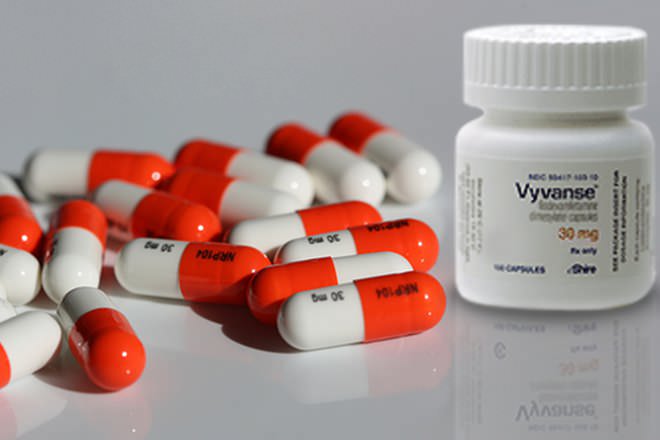
Fairly recently, Vyvanse – a drug known for treating ADHD – was approved to treat binge eating disorder (BED). I was first made aware of this drug via a message sent to my blog from a woman living in the US who was angry about the effects this could potentially have on people who were prescribed it. I did a bit of reading up about it, but soon forgot about it. The topic came up again when a friend linked me to an article about the drug being used for treating BED, which I read, and my interest was piqued. I started thinking about the problems that would arise from it’s approval to treat BED that are both numerous and highly concerning.

In May 2013, the DSM-V was published, with BED being newly recognised as a psychiatric disorder. On the surface, this sounds great: sufferers of BED were finally being recognised and validated, but a further look into this and the subsequent approval of Vyvanse to treat it raises some serious questions.

In a society where almost two in five (37%) women and one in six (18%) men in the UK are dieting “most of the time”, and 108 million people are on diets in the US, a huge amount of us are restricting on a daily basis, and when we “fail”, we feel shame, guilt, hopeless, and anger at ourselves. And failing is inevitable, because diets do not work. Dieters often end up in a restriction/binge cycle, and mistake their dieting for normal behaviour, and so only take note of their binging and see this as a weakness rather than a normal biological response to starving the body. If the body has an energy deficit due to restriction, it will seek to restore balance by compensating later on. So with that in mind, we can now look at the criteria for BED:

  • Recurrent episodes of binge eating. An episode of binge eating is characterized by both of the following:
    • eating, in a discrete period of time (for example, within any 2-hour period), an amount of food that is definitely larger than most people would eat in a similar period of time under similar circumstances
    • a sense of lack of control over eating during the episode (for example, a feeling that one cannot stop eating or control what or how much one is eating)
  • The binge-eating episodes are associated with three (or more) of the following:
    • eating much more rapidly than normal
    • eating until feeling uncomfortably full
    • eating large amounts of food when not feeling physically hungry
    • eating alone because of feeling embarrassed by how much one is eating
    • feeling disgusted with oneself, depressed, or very guilty afterwards
  • Marked distress regarding binge eating is present.
  • The binge eating occurs, on average, at least once a week for three months.
  • The binge eating is not associated with the recurrent use of inappropriate compensatory behavior (for example, purging) and does not occur exclusively during the course Anorexia Nervosa, Bulimia Nervosa, or Avoidant/Restrictive Food Intake Disorder.

For me, this criteria is extremely problematic. This criteria is pretty vague, and in conjunction with a society that vehemently fears over-eating and weight gain, becomes a fit for a large proportion of people. Let’s take a look at it in more detail:
– “an amount of food that is definitely larger than most people would eat in a similar period of time under similar circumstances” – this is particularly non-specific, and in our society, many people have a distorted view on what is larger than most people, especially when so many are restricting. It is also normal for someone who has been restricting to experience eating more than normal, because of the body trying to restore itself to being energy-balanced.
– “a sense of lack of control over eating during the episode” – many people feel out of control when it comes to food because we are made to feel that out of control if we are not eating in some strict and regimented way. That feeling is even more accentuated when the drive to survive overcomes the person’s desire to diet, and the body makes up for lost energy by “binging”.
– Eating rapidly is also part of the drive to get energy in as fast as possible when it needs it.
– Eating until uncomfortably full is easy to do when the body requires more energy than the stomach has room. The desire for food is just another way for the body to communicate hunger, and people often do not recognise this as a type of physical hunger (the brain is part of our physical being as well).
– Eating alone when eating what someone considers more than normal, or when someone is experiencing reactive eating in response to restriction, is – unfortunately – normal because of the way our society has surrounded food in a thick layer of shame.
– And if you are dieting, or misinterpreting your eating as a “binge” (because I would argue that many people have a distorted view of what a binge actually is), this is likely to happen “at least once a week for three months”.

“With these diagnostic criteria [for BED], there is huge potential for a false positive. Do a lot of people struggle with binge-eating? Absolutely. Are all of these people actually ill? That is the major question around this diagnosis and the Vyvanse treatment,” said Lisa Cosgrove, a professor and clinical Psychologist at the University of Massachusetts, Boston.

So what we have here is a list of things that those with BED suffer from, but written in a way that it could easily fit someone misinterpreting their eating habits because they have distorted ideas of what binging is, or are not aware of the effects that dieting has on the body. This means that these people could go to the doctors, tick all the boxes, and receive a diagnosis. Our fatphobic society steeped in diet culture would have no problem with that. A quote from Ray Moyniham in  Motherboard talks about this:

“You have to be extremely sensitive to the fact that there are people who are really suffering severe and debilitating symptoms from a condition,” said Ray Moynihan, a senior research fellow at Bond University in Australia and the author of Selling Sickness: How the World’s Biggest Pharmaceutical Companies Are Turning Us All Into Patients. “But when we put so much energy into medicalizing normality, it takes resources and attention and care away from people who are seriously ill.”

Now on to June 2014, where Shire wins the key patent ruling for the drug Vyvanse. The Telegraph writes:

Shire hopes to increase sales of the drug by broadening its uses into other patient groups, such as very young children and sufferers of the newly-recognised psychiatric problem binge-eating disorder (BED).
The drug maker told investors on Monday that it expected to make $300m from sales of Vyvanse to BED patients by 2020, following a successful clinical trial showing the drug helped control binge eating.

This raises a red flag for me: Shire will desperately want to make as much money as possible before its patent expires, and this means expanding its treatment to those with other illnesses other than ADHD. Shire had already thought of BED as an option, and already had that idea in the pipeline. Is the fact that BED was finally recognised and put into the DSM-V just when Shire needed a new illness to treat a convenient coincidence, or something more dubious?

In January 2015, Vyvanse was approved to treat BED. The fairly vague criteria for BED could mean that BED is over-diagnosed and over treated, with a drug that is an amphetamine. Hang on, what?

Amphetamines became extremely popular in the mid 1900s as a weightloss drug, before concerns about the dangerous side effects caused the FDA to ban amphetamines from diet ads.

The most serious risks include psychiatric problems and heart complications, including sudden death in people who have heart problems or heart defects, and stroke and heart attack in adults. Central nervous system stimulants, like Vyvanse, may cause psychotic or manic symptoms, such as hallucinations, delusional thinking, or mania, even in individuals without a prior history of psychotic illness. The most common side effects reported by people taking Vyvanse in the clinical trials included dry mouth, sleeplessness (insomnia), increased heart rate, jittery feelings, constipation, and anxiety. – take from here.

Vyvanse was approved for treating BED after only two 12-week studies.

“I tried (and failed) to persuade the DSM 5 group that BED was a premature and dangerous idea precisely because I feared it would be a backdoor excuse for drug companies to promote stimulant diet pills,” Dr. Frances Allen, a psychiatrist and frequent critic of the DSM-5, told Motherboard in an email. He has had particular concerns about the new criteria for diagnosing eating disorders. “The rushed approval of Vyvanse realizes my worst fears”

People actually suffering from BED are desperate to get rid of their mental illness, but therein lies the issue: BED is a mental illness. I have severe reservations about an appetite suppressant being used to combat an eating disorder that for a lot of people has roots in trauma, and other deep-seated emotional problems. The appetite of that person isn’t the issue: the drive to eat as a coping mechanism is. And not only are we going to be dealing with actual sufferers, but those misdiagnosed because of the ill-defined criteria, and those faking the illness to get a hold of Vyvanse, either because of its street value, or because of its use as a weightloss drug. Which brings me to the dangers of those with restrictive eating disorders reeling off the list of BED symptoms, and getting a prescription of Vyvanse to continue their downward spiral that only leads closer and closer to death. Because a binge eating disorder diagnosis relies on self-reported behaviour, it means that it is not difficult to fake, and consequently, it is not difficult to get a diagnosis. Pro-ana sites are already sharing their experiences with Vyvanse, and tips on how to get hold of the drug. The consequences of this could be catastrophic.

I received a message to my blog recently when the subject of Vyvanse came up:

I was recently diagnosed with BED and prescribed Vyvanse. My psychiatrist gave it to me because he said I was gaining too much weight. He gave it to me to use as a weightless pill. I don’t think that’s okay. In the past I have suffered from anorexia and bulimia. So of course, I accepted the pill. Hoping it would be easier to not eat at all. I think this may be a problem for a lot of people very soon.

This shows that already Vyvanse is being misused by doctors themselves, who are supposed to be people that we trust with our healthcare. But with the pharmaceutical industry being all about the money-making, it’s hardly surprising.

In my opinion, the inclusion of BED in the DSM-V, the vague diagnosis criteria, the subsequent research into using Vyvanse to treat BED, and the swift approval of that usage, are linked together. The pharmaceutical company have helped themselves to make more profit off both those with BED, and so many without it, with a drug that in my opinion will not successfully treat the disorder it has been approved for. And this drug is likely to have devastating consequences.

Food is Not a Moral Issue

cake

“I’m being naughty today”, the woman in front of me paying for her coffee and brownie says to the cashier. I grit my teeth and bite my tongue. I want to tell her that the word “naughty” does not apply to food. I wanted to tell her that being naughty is doing something wrong, and food is not a matter of right and wrong. I wanted to tell her that food is not a moral issue.

“I’m treating myself today” is another one I hear often when in the queue at coffee shops; the women looking guiltily at the cashier, wanting to justify their hesitant decision to buy a slice of cake. The underlying message is always “I’m disciplined usually! I swear it’s just this one time! I don’t usually eat cake!” And underneath that, is the belief that cake is bad.

How can a food be bad? It doesn’t make sense when you really think about it. Food fits into the category of inanimate objects. They are not alive, and do not possess a personality or a concept of right and wrong. Food cannot be good, and it cannot be bad. Food is food. Food provides energy, and different types of nutrients dependent on the type. Eating one type of food doesn’t make you good, and eating another type of food doesn’t make you bad. It just means that you are eating a food type. Having cake does not have an impact on your morality, and therefore, neither the cake nor you are bad.

Bad, indulgent, naughty, sinful – these are all words to describe a personality or moral status, and yet we – and the advertisements that we watch – use them to describe some of the foods that we eat. Why only certain types of food? Who decided that cake, chocolate, or ice cream was indulgent or sinful? Who came up with the idea that eating a burger is bad? Who suddenly felt that consuming a bag of crisps was naughty?

But what about gluttony? you ask, gluttony is one of the sins. If you are of a certain religion, then you’re right: gluttony is, in some Christian denominations, viewed as a sin. I also want to point out that, according to the Bible, wearing two types of material together is a sin, as is divorce, eating shellfish, and your wife defending your life in a fight by grabbing your attacker’s genitals (no seriously: “If two men, a man and his countryman, are struggling together, and the wife of one comes near to deliver her husband from the hand of the one who is striking him, and puts out her hand and seizes his genitals, then you shall cut off her hand; you shall not show pity.“). We seem to over-exaggerate some “sins” and ignore others entirely to suit our society. Gluttony – derived from the Latin “gluttire” (to gulp down or swallow) – means to over-consume food, drink, or wealth items to the point of extravagance or waste. Note that it is not limited to food and is about the immoral actions of wasting food or wealth that could be given to the needy. Note again how it does not specify certain types of foods and is not related to weight or healthy but rather to greed – having so much that it goes to waste. That does not mean eating a piece of cake because you fancy one. It means buying two cakes, eating to the point of nausea, vomiting so that you can fit in more, eating again, and throwing away the rest. (In this example I want to make it very, very clear that I am not talking about vomiting as an eating disordered behaviour. Vomiting to fit more food in was something that historically was used by wealthy citizens so that they could continue to eat more when extremely full, and I would imagine is linked to how gluttony was historically viewed in its accurate portrayal rather than our ridiculous twisted version of “gluttony” in our diet culture orientated society).

Even when I’m aware of all of this and have a healthy and happy relationship with food, it is still sometimes near impossible to not become sucked into the feeling of shame for buying foods that are considered “bad” in our diet culture, even though I myself do not feel that way. Standing in the queue at a store, chocolate in hand, I have felt anxious that I might be being judged for my choice of purchase. This is heightened by the fact that I am not someone who is super slim, and people are far more likely to judge those who are not super slim for their food choices than those who are. This type of judgement becomes more prominent the bigger the body – which is utterly inappropriate and stems from the incorrect belief that food and weight are intrinsically linked and that those who are bigger should eat less or differently to those who are smaller (check out my section on set point theory under “links” for more information), so I dread to think of the way those without any kind of thin privilege might feel at the prospect of being harshly judged for buying chocolate and the like.

I was talking with a friend recently about how people feel they have to behave in a society like ours in regards to food and exercise. My friend, for your information, is the epitome of the “ideal” woman that our society says we should strive to be: a blonde beauty: very slim but with curves in all the “right” places, but she is not exempt from the multitude of insecurities that our society pushes upon us. You can be the “ideal”, and you are still not ideal enough, and that is how the diet and weight loss industry makes billions of dollars per year, because we are always striving to change our body and make it “better”. She says, “I can be dressing up to go out on a night out, and I will have the same amount of insecurities as someone else [with a completely different body type] – they are just different insecurities about different things.”  In our second year of university she was miserable, and on reflection, she now puts a lot of that negativity down to the fact that she was forcing herself to go to the gym and eat salads, just because she felt that was the “right” thing to do. She was restricting her body in the name of being “healthy” and being “good”, when in actuality she was starving her body and subsequently destroying her emotional state at the same time. She has no history with an eating disorder in any shape or form, and even so, our diet culture told her that what she was doing was “right” – something she continued to do for the majority of that year, in spite of  both mental and physical effects.

The message our society gives out about food is toxic and damaging. Start trying to repair your relationship with food. It’s okay to eat what you want, when you want. You do not have a moral obligation to eat in a certain way (the same applies to exercise). Don’t label foods as “healthy” and “unhealthy” (read: “good” and “bad”), as this perpetuates a negative and unhealthy relationship with food. Enjoy your food. See it as a wonderful thing that provides for your body, brings people together, and gives you pleasure.

Food is food. Food is not a moral issue.

Men Get Eating Disorders Too

eating-disorder-mirror-drawing

Eating disorders are stereotypically seen as an illness that young, white, females develop. Whilst this is obviously an outdated myth and anyone of all ages, genders, and races can experiencing eating disorders, there are still a huge amount of people ignorant to the fact that many men suffer from eating disorders too and it is just as serious when men suffer from them as when women do.

Studies suggest that eating disorders are on the rise in men. However, it is also theorised that this may be because eating disorders in men are becoming less stigmatised and more men are coming forward and seeking help and treatment for their illness. Out of those with eating disorders, it is reported around 10% of sufferers are male, although again, these statistics are unreliable due to the fact that so many men do not come forward for treatment, and a recent study on a large university campus found that the female-to-male ratio of positive screens for eating disorder symptoms was 3-to-1 (Eisenburg, Nicklett, Roeder, & Kirz, 2011). As it says on the website MGEDT:

“Conflicting and poor quality data is one of the biggest problems in pinning down the full extent of eating disorders in the UK and indeed the world. According to Beat information from the Department of Health only shows how many individuals received inpatient treatment. This only captures only a very small percentage of cases, since as much as 50 per cent of treatment is provided by private clinics and only the most severely ill will receive inpatient care.”

Through large scale surveys it was found that in the past thirty years, male body image concerns have increased severely, with 15% to 43% of men being dissatisfied with their bodies; rates that are comparable to those found in women (Garner, 1997; Goldfield, Blouin, & Woodside, 2006; Schooler & Ward, 2006). In adolescent and college samples, between 28% and 68% of males of normal weights saw themselves as underweight and reported that they had a desire to increase their muscle mass through dieting and strength training (McCabe & Ricciardelli, 2004; McCreary & Sadava, 2001).  (Statistics and sources taken from the NEDA site)

So why do boys and men get eating disorders? Just like with girls and women, the reasons are vast and complex. Bullying, abuse, dieting, feeling pressured whilst engaging in sport, having a career that demands thinness (such as modelling or acting), and diet culture can all be a catalyst in the develop of an eating disorder in men (and these are just a tiny selection of the things that can trigger an eating disorder). It is also shown that the media is having an effect too, and that exposure to male body ideals are causing men to compare themselves to these ideals and this is positively correlated with the drive for muscularity in men. The fact that we are living in a society that still places importance on gender roles and traditional masculine ideals means that males have negative attitudes towards seeking psychological help. In addition to that, we are not identifying eating disorders in boys and men:

“Doctors are reportedly less likely to make a diagnosis of eating disorders in males than females. Other adults who work with young people and parents also may be less likely to suspect an eating disorder in boys, thereby delaying detection and treatment. A study of 135 males hospitalized with an eating disorder noted that the males with bulimia felt ashamed of having a stereotypically “female” disorder, which might explain their delay in seeking treatment. Binge eating disorder may go unrecognized in males because an overeating male is less likely to provoke attention than an overeating female.  This inferior image, among other things, contributes to the reality that 1 in 10 cases of eating disorders involve males. Particularly, for the disorder anorexia, up to one in four children referred to an eating disorders professional is a boy.” (ANAD)

Even though the stigma may be dissipating, it’s still there, as illustrated by the experiences I have been hearing about. One male wrote to my blog to tell me that his doctor told him he could not have anorexia because he could not experience amenorrhoea as he had no menstrual cycle to lose. Another man told me his doctor thrust a leaflet about eating disorders into his hands and offered no other information or support. It is extremely worrying to hear that even professionals are dealing with males with eating disorders in a way that is so dismissive and also shockingly ill-informed.

Men also find it extremely hard to talk to other people about it, because of the sense of shame they may experience in relation to having an eating disorder, and again, this is down to stigma in our society. They are afraid of being judged, and they are afraid of the negative reactions of friends who might laugh it off and dismiss it or make fun of them for suffering from an eating disorder, because it is still to some extent seen as a “girl’s illness”.

Eating disorders can also be harder to spot in some men because it is more likely for women to have dramatic weightloss, whereas in men their eating disorders can expressed through “bulking up” and hitting the gym, which is not seen as particularly suspect in a society so keen on advocating exercise and showing male body “ideals”. as lean and muscular.  It is important to note that if an individual is taking performance-enhancing supplements in their attempt to become more muscular and then engages in weight lifting, they are at increased risk of suffering a heart attack or stroke.

It is of paramount importance that we recognise eating disorders in boys and men as much as we recognise them in girls and women. It is of paramount importance that we start treating them just as seriously and it is of paramount importance that we continue to reduce the stigma surrounding males and eating disorders so that those suffering will come forward for help and support, from their doctors, from their friends, and from their families.

MinnieMaud: Is It the Only Way to Recover from a Restrictive Eating Disorder?

your eatopia

I have had quite a few people ask me if I believe that MinnieMaud is the only method of recovery that will result in remission. The answer to that question is not simple, so I have gone ahead and written over three thousand words on the topic.

MinnieMaud (MM) is the name of a recovery method with guidelines constructed by Gwyneth Olwyn, on her site Your Eatopia. Whilst MM has received much criticism, and is seen by some as controversial, many inpatient and outpatient facilities do enforce methods alike to MM, such as similar calorie requirements, and remaining sedentary. Other people find that they end up recovering in a way much like MM without having ever heard of that particular recovery method (for example Caroline, from The Fuck It Diet), and I would argue that that is because this type of recovery is normal and natural for the body.

As I see it, the main goals are:

– To eat minimums, and respond to any additional hunger and cravings
– To not engage in exercise
– To eat whatever you want, whenever you want
– To not weigh yourself (be blind-weighed if needed)
– To accept your body, and anyone else’s body, at whatever size it is naturally, and not try to control your weight, as your body does that for you (weight set point theory)

To the present me, these aren’t particularly controversial ideas, but with diet culture being so prominent in our society, I can see why some find it hard to accept, and in the past, I myself was one of those people doing furious amounts of further research and questioning what I read when I first came across Your Eatopia. I looked all over the internet. I asked other people about it. I relentlessly emailed Gwyneth about my doubts (and she always took the time to reply). I didn’t agree with all of it (and arguably I still don’t agree with some of the content of her blog posts), but I knew deep down that so much of the information was making sense to me. A lot of the posts were talking about things I had experienced during recovery and up until that point had had no idea what it was that was happening to my body. Reading the articles gave me a great deal of relief in finally having a logical explanation for the processes that my body was going through. So much of it clicked into place for me, and in hindsight seemed obvious.

I believe that during recovery it is crucial to eat “minimums”. When it comes to these “minimums”, I find it so important that people should follow them because if you let there be a grey area during recovery, it will be easier for the eating disorder to wedge its way into those cracks and convince you that you require less calories than other people (and less, and less, until you realise you have relapsed). It is necessary for everyone to stick to the “minimums” for at least most of their recovery journey, until they are stable and responsible enough to listen intuitively to their hunger. When this happens, things are slightly different, as appetites naturally vary from person to person. For example, my hunger generally leads me to on average 2800 calories, whereas someone else’s hunger may lead them to on average 3200 calories, and someone else may find themselves eating on average 2900. For older people, calorie requirements are often a bit lower (this is also taken into account with the “minimums”). Gwyn says that minimums are for life, and I interpret that to mean around minimums are for life, leaving room for natural variation. Eating minimums during the recovery process and then eating a slightly lower amount intuitively will not result in more than needed weight gain, as your body will burn off excess calories, or use them for the essential repair of the body. In fact, you are almost certain to experience extreme hunger at some point during recovery, and it is pivotal that you respond to it.

As for exercise, in recovery it is just as crucial not to engage in it as it is to eat minimums. To me this seems extremely obvious now (hindsight is 20/20 after all), but apparently not so to some professionals, and more understandably, those in recovery. If you have a broken leg, you would rest it until it was healed. To walk on it would not only prevent the healing of it, but it would make it much worse. This also applies to a damaged body. Not only that, but physical activity is a massively used and abused technique of the eating disorder’s to burn calories and exercise control (excuse the pun). The eating disorder is also an expert at convincing you during recovery (a vulnerable time) that exercise is healthy and needed, and that you can use it in a responsible way. It is very easy to fall into the trap of denial when it comes to this topic, and this was my biggest issue when it came to my own recovery journey. Just like calorie requirements, in remission it is different. In remission you are in a place where you can make an informed choice to engage in exercise or not, but you should always be extremely aware that you are walking a fine line, and it does make relapse more likely. If you feel you are stable and responsible enough to handle exercise without any problems, then it is your decision to go ahead, but also your job to always remain vigilant and to address and resolve any thoughts or behaviours that could pop up as soon as they do (if they do).

In recovery, I believe that no food should be the enemy, and if it is, this just accentuates an unhealthy relationship with food. I do not believe that there should be any forbidden foods, and I do not believe a distinction should be made between “good” and “bad” foods. I believe that all food is good food, and I also do not subscribe to labelling foods as “healthy” or “unhealthy”. I believe that if we stop associating foods with emotions and morality, we will be able to listen to our bodies and remain healthy by responding to it. From a personal point of view, that is working extremely well. During the beginning of recovery I was very hungry, and I also craved a lot of “unhealthy” food. Looking back, that seems perfectly rational: my body was starved and in need of a high amount of energy, and it also needed foods that it had been restricted from. “Unhealthy” foods not only provide lots of energy, but are rich in fats, carbs, and sugar, which were what my body had been restricted from for a very long time. As my body healed, my cravings and hunger settled down. As someone who is now fully recovered and does not see food as being a matter of morality or emotion, I listen and respond to my body and find that it leads me to a balanced diet. Sometimes I crave cheese. Sometimes I crave bread. Sometimes I crave cereal. Sometimes I crave ice cream. Sometimes I crave apples. Sometimes I crave broccoli. Sometimes I crave chocolate. Sometimes I crave bacon. Ectetera etcetera. I crave a variety of foods, at a variety of times. I trust my body fully to lead me to what I need to eat, and it seems to be working very well in leading me to eat a varied and balanced diet.

Not weighing yourself in recovery seems to me to be the most obvious one of all. So many people with eating disorders attach such great significance to the number that the association is not reversible, and so to weigh oneself opens oneself up to a massive trigger every single time one hops on the scales. The scale is something that does not need to exist in your life. It is an object infused with so many negative emotions that I would highly advise you to take a hammer to it in your garden (it seems to be quite therapeutic for some). However, you may need to be weighed for health reasons. I suggest being blind-weighed by your doctor, or by a partner/friend/family member. They could give you a thumbs up for progress, a neutral thumb for no change, and a thumbs down for weight loss. This gives you an idea of where you are and what you need to change or continue doing without giving you the specific number which is not going to help you in any shape or form.

Lastly, we come to accepting your body, and other people’s bodies, at whatever weight they are at naturally. People come in all different shapes and sizes, and that is the way of the world. Each body has its own weight range – its set point – at which it is at its healthiest and happiest, and each individual is different. To be healthy, and to be happy, you have to let your body gain to whatever that weight is. To try and control it and maintain a weight that is not your set point would be to restrict and to focus on intake all day every day (and that is not being recovered). Our weight is not as in our control as we think it is, or would like it to be. It is our bodies that decide what weight we should be, and we can either accept that or spend our entire lives fighting it (which many people tragically do). Some people are naturally slim. Some people are naturally voluptuous. Some people are naturally chubby. Some people are naturally muscular. Some people are pear-shaped, some are an hourglass, some are an apple shape, and some are other various fruit/veg/inanimate object shapes (still finding these nicknames for body shapes slightly odd). You should never judge or ridicule someone for their body’s weight, shape, or size, and neither should you do that to your own body. Body acceptance, for both ourselves and others, is an extremely important step that needs to be made by everyone in our society. I don’t think people can recover without finding it within themselves to make peace with their body. I don’t expect people to love their bodies (I certainly don’t love mine) but to accept it and move on from hating it and berating it and focusing on it is a crucial part of recovery.

There you have my in-depth opinions and reasoning for why I believe that the key points of MM are needed for recovery.

Do I believe that you can fully recover without those things? No. I do think that you can make a great deal of progress using other methods of recovery. For the first six months of my recovery I adopted the “eating healthy and exercising” method. It helped me a great deal: I was eating enough and eating a far more varied diet, which brought me back from being very, very sick, to being sick. What I noticed from those six months was a vast improvement in the functioning of my brain. Before, my cognitive abilities were impaired, I had severe brain fog, my moods were horrendous, and the only word I can really describe my state at the time is “insane”. I was not behaving in a rational way, and I was not able to think straight. I was not able to make logical decisions, and my brain was just not working correctly at all. Eating an adequate amount really helped with that, and I was able to regain my cognitive abilities, and some of my former self. However, I was far from recovered and I knew that, but I didn’t know how to move forward until I came across FYourED, which then led me to Your Eatopia. I read the information and advice given out there, which gave me a way to continue moving forwards on my journey to living an ED-free life. I don’t think continuing to focus on intake (whether calories or macros, or even just food types without being so specific) and exercising during the recovery process will ever lead to a full recovery, because there are still so many rules and restrictions, which the ED both creates and thrives on. Whilst people without the genetic predisposition to develop an eating disorder are able to try diets, go through phases of exercise frequently to try and lose weight, and engage in acts and thoughts pressed upon us by our diet culture, those with restrictive eating disorders do not have the luxury of doing so, as it will most likely cause a relapse at some point. I believe that to attain a full recovery, diet culture must be tossed out in the trash as well as your ED.

Without the help and encouragement from the wonderful community on the forums on Your Eatopia, and without my own determination to fully recover from my eating disorder, and without the extremely extensive and valuable support network that I have in my life, I don’t think I would have been able to recover, especially not using MM. Most of it was down to being so resolute in my decision not to go back to where I had been, but I had the privilege of having a family that tried as hard as possible to provide me with support when I needed it, but also left me to recover how I saw best without question (and this was the most important part for me). I also had the privilege of my many fantastic friends who all were rooting for me, who stuck by me throughout the entire journey, and who also let me rant and vent whenever I needed to. I also have friends with eating disorders and met other friends through recovery who were also recovering, who were invaluable to me, as we walked the journey to freedom together, and propped each other up when it was needed. I also had a partner throughout the first six months of recovery, who was essential in providing motivation, and in some ways built the foundation of my journey. Our relationship, in both its triumphs and failures, became one of my main inspirations and was always a reminder to keep on moving forwards, so that I may never repeat the mistakes I made again.

This meant that I had something that so many people lack in recovery: a strong support network. and a normal life to go back to once I reached remission. Some people do not have that to look forward to. Some people do not have the support of others. This can mean that recovery is a hell of a lot harder, and sometimes that can mean that the guidelines of MM are unattainable at this point in their lives. It can mean that they are not ready to embark on that journey, which is incredibly difficult and requires a sometimes overwhelming amount of dedication that some people are not able to give right now. It can mean that the anxiety and guilt that comes with recovery is too overbearing without having people close by to help with those negative emotions and experiences. Some people do not feel strong enough to oppose diet culture and the people who subscribe to it. All of these are valid reasons for not wanting to follow MM or a similar method, or not wanting to choose recovery at all (although I would still encourage you to try, because you have no idea how strong and courageous you actually are when the ED constantly tries to overpower you).

I am also aware that some people use the guidelines as just that: guidelines, and I think that is okay too if you feel confident in doing so (although I will always condone following them pretty rigidly as that is the stance I have chosen to take as I am so aware of that “grey area” that I talked about earlier).

In conclusion, I agree with the MM guidelines, and I agree with the general ideas and opinions that Gwyneth is trying to get across. However, I do not agree with everything Gwyneth writes about, and there are lots of things that she says on Your Eatopia that I am unsure of because I have not done further research on them. I prefer not to identify with MM as a singular recovery method (although it seems I have become one of the key spokespersons for MM, on Tumblr at least). This is because I would like to move away a little from just the specific recovery method and would prefer to take on an approach more like Caroline (The Fuck It Diet), where I am not just talking about the recovery method, but also a way of life. However, the two need to still be separated as recovery is more black and white whereas remission has room for experimentation. I also think that those general ideas are for anyone, anywhere, not just those with eating disorders, and as I said, a way of life. It means that I am stuck between being black and white (MM-style) for those who are in recovery from restricting eating disorders, and my own opinions about being less rigid but still vigilant in remission, and also being an advocate for the general guidelines as a way of life for those without eating disorders as well.

I believe that the guidelines at the beginning of this post are needed to reach a full recovery. The label of “MinnieMaud” does not have to be slapped on it, but I personally found my way through Your Eatopia, and through “MinnieMaud”. It provided me with a way to regain my life, and I know it has saved countless others. So whether you recovered by finding those guidelines through Your Eatopia, or whether those guidelines just happened to you throughout your recovery process because you recognised they were part of recovery, I believe they are of paramount importance to reaching remission.

Being Open About Mental Illness

Mental illness can be a tricky topic for a lot of people. Whether you are the person suffering from a mental health issue or not, the topic can be difficult to talk about.
Most of the time this is due to ignorance. Mental health issues have stigma attached to them. Maybe you have heard someone say that someone with depression just needs to get over it and make an effort to be happy. Maybe you have heard someone tell someone with anxiety to “stop being a pussy” or to “man up” or to “get a grip”. Maybe you have heard that eating disorders are self-inflicted, or that someone with schizophrenia is a “psycho”. Maybe you have found yourself being the one that has said these things. This is due to the misunderstanding surrounding mental health problems: they are never a choice, and it does not mean that you are “crazy”.
Mental health problems are not something to be ashamed about, nor are they something that you should make someone else feel ashamed about. Mental health issues and illnesses are real, and they are extremely difficult to deal with, and often debilitating. 1 in 4 people will experience some mental health issue in the course of a year and 1 in 6 experiences this at any given time (The Office for National Statistics Psychiatric Morbidity report, 2001) . Mixed anxiety and depression is the most common mental disorder in Britain, and depression affects 1 in 5 older people. British men are three times as likely to die by suicide than British women, and self-harm statistics for the UK show one of the highest rates in Europe: 400 per 100,000 population. (source) (more statistics for Britain here). That means that a hell of a lot of us suffer from mental health issues/illnesses. It means that even if you do not suffer from any mental health issues/illnesses yourself, then you will know someone who does.
Some people seem to believe that if you are open about a mental illness or disorder, then you are looking for sympathy, shock, or pity. This is an absurd opinion. I am, and have always been, very open in the fact that I have/have had an eating disorder, but I do not want anyone to feel sorry for me. Thanks, but no thanks.  Some people think that you are attention seeking or trying to provoke a reaction. This may be true, but not in the way they perceive it to be. People with mental health difficulties are suffering, and sometimes their illness can be a way of coping, or a way of expressing to the world that they are in pain (think eating disorders and self harm). Not always, but sometimes, this is the only way they can communicate how they are feeling with the outside world. Next time you think someone is looking for attention, it might be the kindest thing to do to give them some, and show them that you care.

People with depression, anxiety, eating disorders, bi-polar, borderline personality disorder, OCD, psychosis, schizophrenia, or any other type of mental illness should not have to hide part of themselves for fear of seeming like an “attention seeker”, or labelled in any other negative way.  They should not have to feel ashamed of an issue that they have the strength to deal with every day. Dealing with mental health issues does not make a person weak. In fact, it is often mental health issues that reveal the immense courage and bravery of a person.

Just because you suffer with a mental health problem should not mean that you automatically hide that part of your life and be made to feel uncomfortable expressing the things you have to overcome in your daily life. When people have a bad day, or they break up with their boyfriends, or have a huge fight with their parents/siblings/friend/partner, they are able to express their feelings of hurt and anger without fear of being judged. However, when someone with a mental health problem has a bad day due to their condition, a overwhelming amount of the time they feel like they are unable to openly admit about their bad day purely because it was down to a mental health problem. It is important to be able to vent and communicate when you are having a hard time, so please make sure to open up to the people around you that you trust and are comfortable with, and if you are that person who someone opens up to, be sensitive and responsive and mature about the situation. Talk to them, support them, and encourage them to seek help from a professional if they are feeling overwhelmed.

Some people find my rather blunt way of stating my problems and talking about them matter-of-factly without appearing awkward or breaking down into a pool of tears quite unusual, but I am fortunate in that I have never felt inclined to hide who I am and what my day consists of just because some of it used to be down to an eating disorder that I suffered with, or anxiety, or a bout of depression. I will not edit out part of my life simply because the way society is has caused a lot of people to feel uncomfortable when the subject is brought up. They may feel uneasy talking about it, but I spent years living with it every minute of my life. We all have problems, and we should all be able to express them as much as the next person.

If you have a mental health issue, be open about it if you can. Communication is key in relationships, and it is key to getting help with whatever it is that you are struggling with. If you don’t have a mental health issue, be aware that others around you do. Be receptive. Be kind. Do some research to further your understanding. The world will be a better place once we eliminate the stigma surrounding mental health issues and illnesses.